
A New Era in Belgrade: Student-Led Opposition Sweeps Serbia’s Snap Parliamentary Election and Ends Vucic’s Decade of Dominance
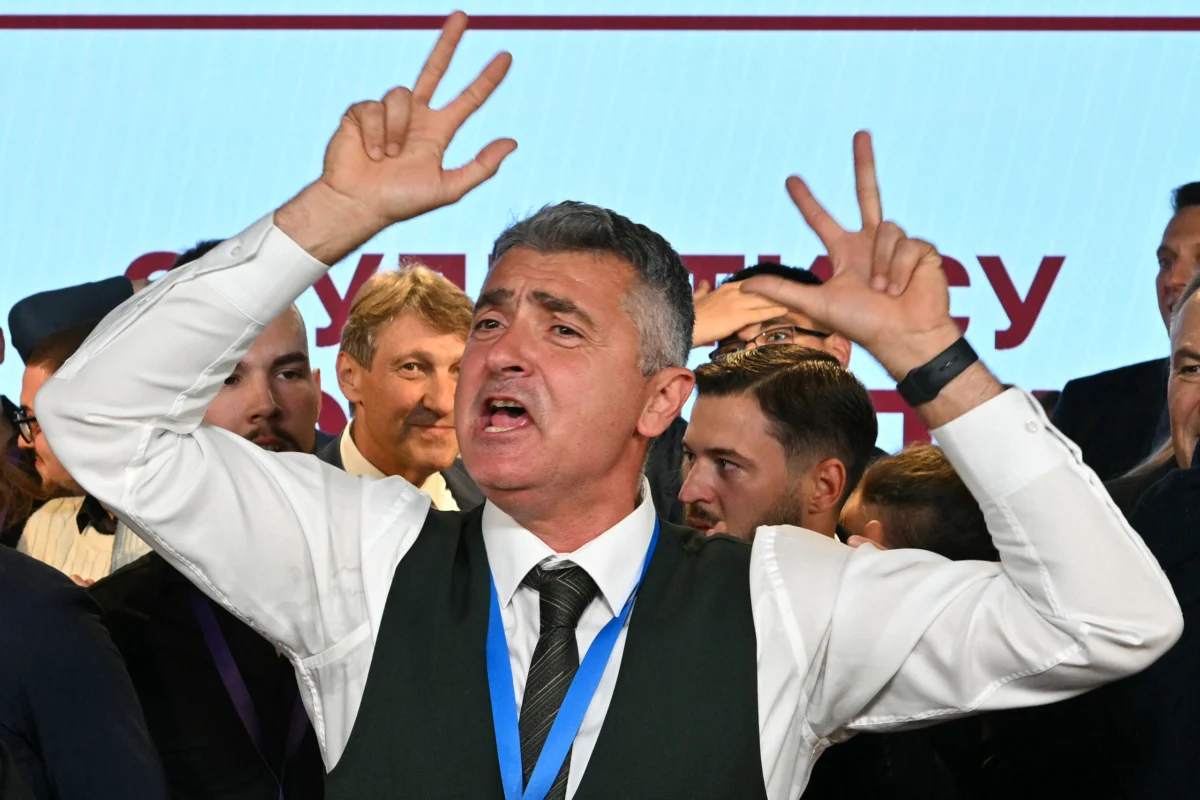
A historic political earthquake has shaken the foundations of power in the Western Balkans. A student-led opposition movement has emerged decisively victorious in Serbia’s high-stakes snap parliamentary election, effectively bringing an end to former President Aleksandar Vucic’s long and dominant grip on the nation’s political landscape. The stunning electoral triumph marks a dramatic turning point for the country, culminating nearly two years of intense, youth-driven public mobilization that fundamentally altered the dynamics of Serbian politics.
The decisive win by the political coalition known as the Student List on Sunday followed a protracted wave of street demonstrations that swept across urban centers nationwide. These protests were initially sparked by a profound national tragedy in 2024: the catastrophic collapse of a concrete railway station canopy in the northern city of Novi Sad, an industrial hub where the structural failure tragically claimed the lives of 16 people. What began as grief-stricken local demonstrations demanding immediate accountability, transparent investigations, and institutional responsibility rapidly snowballed into a much broader, highly organized political campaign. Citizens from all walks of life mobilized against systemic corruption, the erosion of democratic checks and balances, and what critics long described as the systematic capture of state institutions by the ruling party.
When the Student List formally unveiled its comprehensive electoral program in September, it laid out an ambitious agenda centered heavily on governance reform. Fighting deep-seated corruption and organized crime formed the bedrock of their platform. Beyond accountability, the movement pledged concrete measures to elevate living standards, stimulate employment opportunities for the younger generation, revamp the national education system, and fiercely protect media freedom alongside the institutional independence of the judiciary and regulatory bodies. Furthermore, in the wake of their Sunday victory, representatives of the movement emphasized a clear foreign policy and regional objective: working proactively to mend and improve diplomatic relations with neighboring countries following a prolonged period of diplomatic tension and nationalist rhetoric during Vucic’s more than decade-long tenure at the helm of the state.
What are the latest results?
The formal path to this historic political transition became significantly clearer as election authorities began releasing certified tallies. According to data announced on Monday by the Republic Election Commission (RIK), the Student List secured a commanding 52.54 percent of the total vote. This definitive figure was calculated based on results processed from 8,077 polling stations out of a total of 8,392 across the country.
Trailing behind the insurgent student movement was the United Serbia list, the formidable political machine led by Vucic’s Serbian Progressive Party, which managed to capture 39.29 percent of the ballots cast. Despite the intense polarization of the campaign and the high-stakes nature of the snap vote, citizens turned out in extraordinary numbers. RIK data confirmed that voter turnout reached an impressive 68.78 percent, marking the highest level of electoral participation recorded in Serbia in more than three decades.
What’s next?
Although the final, certified election results are still pending administrative completion, the current numbers point to an unambiguous distribution of parliamentary power. The projections indicate that the Student List will secure a comfortable outright majority in Serbia’s 250-seat National Assembly, allowing the coalition to form a government independently without the need for complex coalition negotiations or compromises with older political factions.
The movement is projected to capture approximately 140 seats in the legislature, placing it comfortably ahead of the 126 mandates required to establish a secure working majority. Meanwhile, the United Serbia bloc is expected to retain 103 seats, shifting the former ruling party into an unfamiliar position of legislative opposition. The remaining handful of seats in the national parliament are projected to be distributed among smaller minority and regional political formations: three seats for the Alliance of Vojvodina Hungarians, two seats for the Albanian political bloc, and one seat each for the Rasim Ljajc-Ljudski and SDA Sandzak lists.
Who could be the new prime minister?
A notable characteristic of the Student List’s campaign strategy was its deliberate departure from traditional Serbian political branding. Unlike the United Serbia list, which prominently designated Aleksandar Vucic as its primary candidate for prime minister long before voters went to the polls, the Student List refrained from centering its campaign around a single individual during the race.
From its formal inception, the coalition consciously avoided highlighting individual political aspirants, choosing instead to emphasize the collective, grassroots nature of a movement that successfully bridged the divides between academics, medical professionals, and everyday working citizens. Nevertheless, the public face of the movement throughout the intense weeks of campaigning was Ilija Srdanovic, a respected professor at the Faculty of Medicine at the University of Novi Sad. Srdanovic, who practices professionally as a cardiologist, has rapidly emerged as the most widely anticipated candidate to assume the role of the country’s next prime minister. Despite growing consensus regarding his potential leadership, significant questions remain unanswered regarding who will be appointed to steer other crucial governmental portfolios, particularly the sensitive and powerful ministries of internal affairs, finance, and justice.
When will the new government be formed?
The timeline for the establishment of the incoming administration is governed by strict constitutional and legal frameworks, tied directly to the formal conclusion of the electoral process. The official formation of the new government will depend heavily on when the Republic Election Commission certifies the final election results and when the newly elected parliament is officially convened.
Under Serbian electoral law, the newly constituted National Assembly must be formally established and its deputies sworn in within 30 days of the announcement of the final election results. Once the parliament is in session, lawmakers operate under a 90-day constitutional window to successfully form a government and approve its cabinet ministers. However, because the Student List commands a clear and solid majority in the legislature, analysts note that the government-formation process is expected to move swiftly, avoiding the protracted and complicated coalition talks that have frequently characterized Serbian politics in the past.
What about the president?
The broader political landscape remains subject to ongoing institutional adjustments stemming from the departure of Aleksandar Vucic. Vucic had exerted a powerful, centralized influence over Serbian politics since 2014, serving sequentially as prime minister and then as president, establishing an era of personalized political dominance.
Following his decision to call the snap parliamentary vote last month and his subsequent formal resignation from the presidency, the duties of the head of state have been temporarily assumed by Ana Brnabic, who serves as the president of the National Assembly. Under the provisions of the Serbian constitution, Brnabic is legally obligated to call an extraordinary presidential election. This contingency vote must be scheduled and held no later than three months after the official expiration or termination of Vucic’s presidential mandate.
Because Vucic formally stepped down from office on September 27, the absolute constitutional deadline for holding the extraordinary presidential election falls on December 27. While the president of Serbia is elected directly by popular citizen vote rather than through parliamentary selection, the office holds largely ceremonial and unifying powers under the country’s parliamentary system, making the concurrent transition in the executive branch and the legislature a historic turning point for the nation’s governance.
| Source | : | Finance Poetry |
| Author | : | rifanmuazin |
| Editor | : | Finance Poetry Editorial Team |