
Mach9 Secures $34M in Series A Funding to Accelerate AI-Powered CAD Software for Civil Engineering
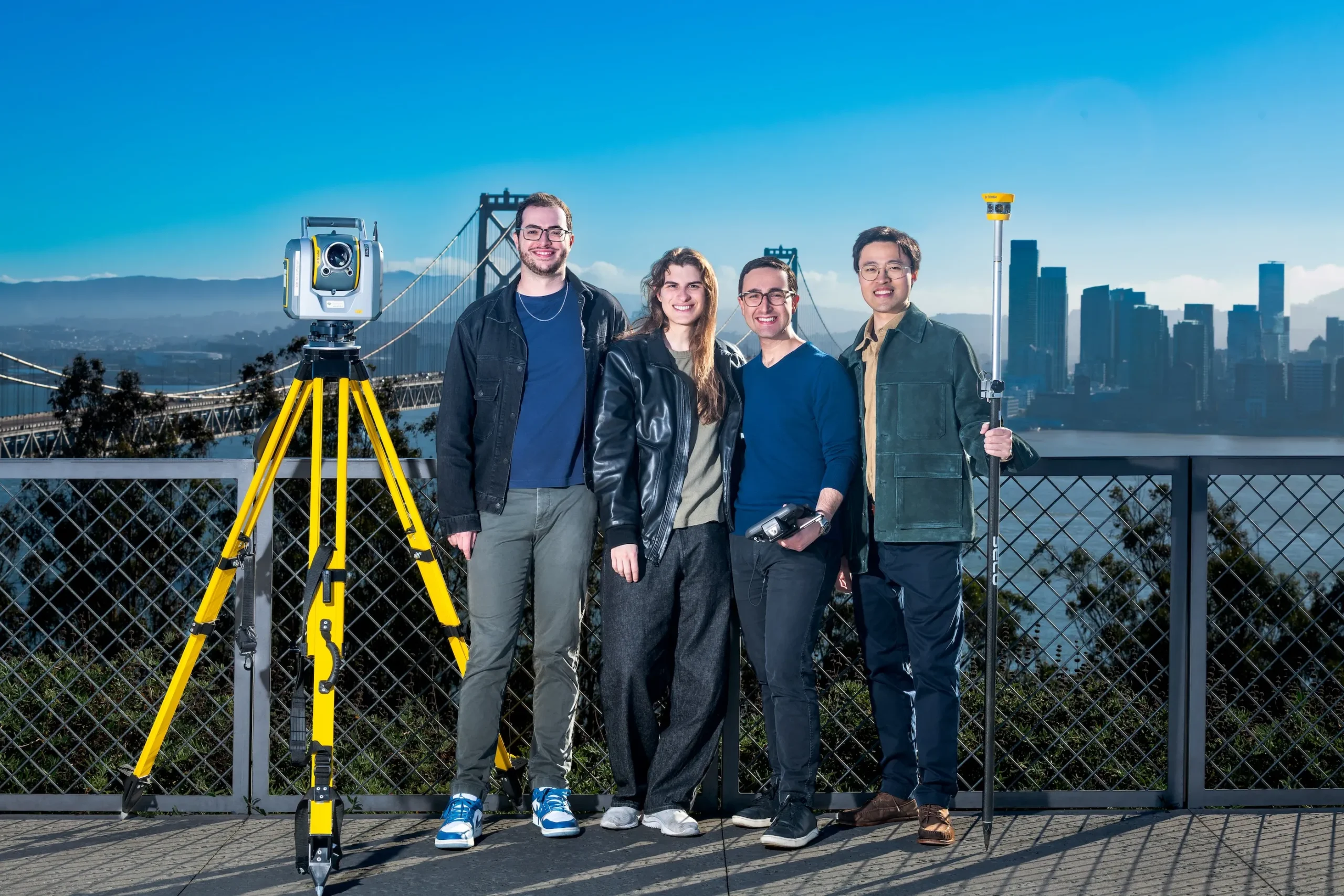
When Alex Baikovitz co-founded Mach9 Robotics in 2021, his overarching vision was relatively straightforward: he wanted to build a better, faster, and cheaper way for civil engineers to carry out visual inspections. From the outset, the startup aimed to cut through systemic red tape and modernize the notoriously slow, paper-heavy, and outdated processes that continue to bog down heavy construction and infrastructure development across the United States.
Within a few years, Mach9 Robotics successfully built the specialized hardware it had initially set out to create. However, the grueling engineering and deployment effort led Baikovitz and his team to a crucial, industry-shifting realization: hardware was never actually the true bottleneck holding back the civil engineering sector.
"We saw how tedious it was for civil engineering organizations to take data from these amazing laser scanners and image data capture systems and turn that into a usable survey," Baikovitz explained in an interview, referring to the detailed, highly accurate maps of a given site that engineers rely heavily upon for preliminary design work. "The real pain was in their workflows," he noted, adding that the major obstacle lay in figuring out "how to turn all the endless amounts of data that they’re able to collect into . . . information that people can use to make the best design and asset management decisions across the board."
Faced with this reality, Baikovitz made a decisive pivot. He dropped the word "Robotics" from the company’s official name and shifted its strategic focus entirely toward developing artificial intelligence-powered computer-aided design, or CAD, software. That high-stakes bet ultimately paid off. To date, Mach9 has quietly racked up nearly 100 enterprise customers for the private beta version of its software platform, with those clients deploying the technology across more than 2,500 distinct projects.
That mounting commercial momentum and proven product-market fit helped the startup unlock a substantial new tranche of institutional backing. On Wednesday, Mach9 officially announced a $34 million Series A funding round. The financing was co-led by prominent venture capital firms First Round Capital and Bessemer Venture Partners. They were joined in the round by Prudence, a New York-based, early-stage firm that specifically focuses on investing in artificial intelligence software use cases tailored for the construction and real estate sectors, as well as Quiet Capital, a venture capital firm that already held a stake on the startup’s cap table.
Mach9 is far from alone in its mission, operating as part of a broader wave of ambitious startups racing to completely overhaul and modernize the entire planning-to-building pipeline for modern construction and critical infrastructure. The industry is seeing a surge of venture capital interest in spatial and regulatory technology. For instance, in August, a startup known as CivilGrid raised $26 million to scale what it describes as a "Google Maps for the underground," helping utility and construction planners navigate complex subterranean infrastructure. Meanwhile, Blueprints AI—a startup that leverages generative artificial intelligence to produce code-compliant, permit-ready architectural blueprints in a matter of minutes—recently earned a spot among the top 200 companies in the competitive Startup Battlefield showcase at TechCrunch Disrupt.
According to Baikovitz, Mach9 chose to home in specifically on disrupting traditional CAD software because it remains one of the single slowest, most labor-intensive pieces of the broader construction pipeline.
"It takes months to be able to deliver a project, and about a week per mile for someone to do manually in the legacy incumbent software that’s built by the Autodesk and Bentley Systems of the world," he pointed out.
By contrast, Mach9 asserts that its proprietary software automates a massive share of that repetitive drafting and data-processing work. The company claims its platform makes the workflow roughly ten times faster while simultaneously driving down operational costs. This dramatic efficiency gain allows surveying and civil engineering firms to expand their internal capacity, take on a wider variety of work, secure much larger projects, and dramatically expand the real-world influence that reality-capture data can have on major infrastructure and public policy decisions.
To achieve the rigorous, centimeter-accurate level of precision that heavy construction and civil infrastructure work strictly demands, Baikovitz revealed that Mach9 had to develop and train its own custom, in-house artificial intelligence models from scratch.
"That’s not something that a lot of off-the-shelf models are able to do or deliver at in any capacity," he emphasized. "A big part of what our development process has looked like since 2024 has been, how do we build the industry-leading models that can turn imagery or these multimodal image and laser scan data sets into survey-grade-like geometry, like tracing out the curbs, the pavement striping, all of this exactly how our customers want it to be at the accuracies that the industry demands."
Under Mach9’s current workflow, the AI-powered CAD system ingests raw survey data and automatically generates a comprehensive first draft of a site plan, which human engineers can then review and refine. The startup is careful to position its software as an enhancement to human expertise rather than a full replacement. It provides engineers with all the necessary digital tools to draw, remove, adjust vertices, and critically assess the quality of the AI-generated model. This ensures that licensed professionals can confidently put their professional reputations and legal names behind the final deliverables, mitigating the severe liability risks inherent in an industry where safety and precision are paramount.
As for how the fresh capital will be deployed, Baikovitz stated that Mach9 plans to split the funds evenly between continuous product refinement, strategic hiring of seasoned industry experts, and scaling "all parts of our organization to keep up with where the market is taking us."
Reflecting on the company’s evolution, Baikovitz admitted that he is ultimately thankful he initially pursued a hardware-first approach. Venturing down that path provided the young startup with a tangible product to showcase to potential customers during its formative stages. More importantly, it was those very conversations with civil engineering leaders that revealed the true nature of their operational pain points, steering the company away from hardware and toward software.
"I’m not interested in getting this cheaper, lower-cost hardware," Baikovitz recalls one enterprise vice president telling him during a customer discovery session. Instead, that executive stressed that drastically better software was what was truly missing—tools that could genuinely "improve our efficiency in delivering these big statewide transportation mapping initiatives." Baikovitz added that executing such large-scale modernization projects efficiently helps make states Mach9 has actively worked with, such as Texas, significantly safer and more effective in managing their public assets.
| Source | : | Finance Poetry |
| Author | : | rifanmuazin |
| Editor | : | Finance Poetry Editorial Team |