
Navigating Making Tax Digital: How Sole Traders Can Choose the Right Accounting Software
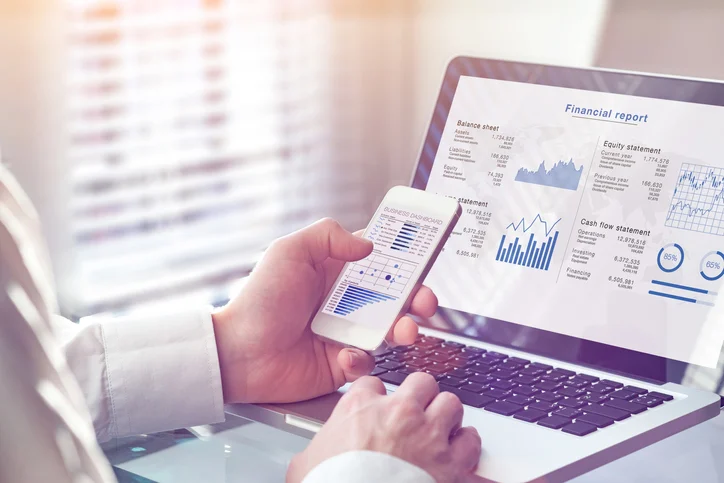
For sole traders balancing client work, business development, and the day-to-day survival of running an enterprise, keeping on top of finances can often feel like an insurmountable challenge. Long gone are the days when a shoebox overflowing with crumpled paper receipts and a basic spreadsheet would suffice. Today, having the right accounting software helps a sole trader business immeasurably, saving hours of administrative work while sharply reducing the risk of costly errors on annual tax returns.
Yet, selecting the right digital tool is no longer just a matter of operational convenience; it has become an urgent regulatory requirement. With Making Tax Digital (MTD) for Income Tax being phased in from April 2026—with the exact implementation timeline depending on a taxpayer’s gross self-employment income—the sooner business owners invest in compliant software for record-keeping and filing, the better positioned they will be to navigate the transition smoothly.
With so many options crowding the market, finding a platform that balances cost, functionality, and ease of use is critical. To understand what business owners should look for when browsing the market, industry experts from leading accountancy and finance firms have shared their insights on how sole traders can separate the essential features from the marketing noise.
How do I find the right accounting software for my sole trader business?
Before diving headfirst into a multi-year subscription, business owners must weigh several crucial factors. What makes one platform a dream to use while another becomes an expensive administrative headache? To find out, financial professionals emphasize that taking a measured, strategic approach from the outset will save considerable time and money down the line.
One of the most effective ways to evaluate a platform is to take advantage of free trials. Testing a system before making a financial commitment allows sole traders to get a genuine feel for the user interface and platform capabilities, which is especially useful for those who might be uncertain about the exact level of functionality they require.
Rick Smith, managing director at Forbes Burton, emphasizes the importance of hands-on experimentation. If business owners have the opportunity to experiment and try a few platforms out, they certainly should. While most software packages perform a fundamentally similar core function, the objective is to select a system that feels natural and intuitive to use. The ultimate aim should always be to simplify financial administration rather than make life more difficult for the sake of perceived convenience.
Once a shortlist of potential platforms has been established, cost inevitably becomes a primary consideration. Most packages on the market are fairly evenly priced, but hidden pitfalls often lie within the subscription tiers. Business owners must carefully verify which features are included in the baseline cost. Locking into a long-term contract only to discover that critical elements are restricted or require expensive add-ons can prove difficult and costly to resolve later.
Functionality itself is another area requiring a delicate balancing act. Sole traders must be careful to avoid platforms that offer too little capability, leaving them exposed to compliance risks, or conversely, too much complexity. The introduction of Making Tax Digital for Income Tax on 6 April 2026 for sole traders and landlords with a combined qualifying income exceeding £50,000 from self-employment and property has fundamentally changed the compliance landscape. This threshold is scheduled to fall further to more than £30,000 in April 2027, and subsequently to more than £20,000 in April 2028.
Under these rules, affected individuals must keep digital records of their income and expenses, submit quarterly updates to HMRC, and complete their annual tax returns using compatible software. Consequently, verifying whether a chosen accounting package fully supports MTD for Income Tax—along with MTD for VAT for those who are VAT-registered—is an absolute prerequisite. Beyond tax compliance, operational requirements such as running payroll, submitting VAT returns, and linking business bank accounts directly to the system must also be factored into the decision-making process.
Modern accounting software has also introduced sophisticated automation tools that transform day-to-day operations. According to Clare Bowen, director at Monahans accountancy, one of the most significant technological developments for sole traders in recent years is optical character recognition (OCR) technology. This capability allows the accounting package to self-populate expense data simply from a photo taken of a physical receipt on a smartphone.
This innovation removes the onerous chore of manual filing and makes the expense-tracking process instantaneous. Such functionality proves invaluable when users are constantly on the road, traveling from job to job. Furthermore, when these platforms are linked to integrated card payment systems, invoices can be sent directly to clients instantly, helping business owners get paid significantly faster.
Streamlining business processes also relies heavily on how easily data can move between applications. Smith points out that evaluating how effortlessly information can be exported from the software is vital. Whether the accounts need to be exported into another package or integrated with existing business tools, poor interoperability will inevitably slow operations down.
Naturally, even the most sophisticated technological capabilities hold little value if the software is clunky, unintuitive, and difficult to navigate. Bowen notes that accounting should be something a professional can manage while out and about, anywhere and at any time, rather than being chained to a desktop spreadsheet on a Sunday afternoon. The key for these platforms to truly benefit sole traders is that they need to remain relatively basic and streamlined, avoiding the heavy, high-end corporate capacity that larger enterprises require.
Some accounting platforms offer advanced features tailored specifically for VAT-registered businesses, which are generally required to register once their taxable turnover exceeds £90,000 over a rolling 12-month period. For sole traders operating well below this threshold, a much simpler, streamlined package may prove entirely sufficient, provided it still adequately handles their MTD for Income Tax obligations.
Looking to the future is another essential strategy. Business owners should strive to select software that addresses tomorrow’s needs just as effectively as today’s operations. Thorne advises investing in accountancy software that evolves alongside the business, offering the agility to grow and incorporate new capabilities as required. Choosing a platform that can be easily updated to reflect shifting tax legislation, such as ongoing MTD rollouts, remains critical for long-term peace of mind.
For those feeling overwhelmed by the sheer volume of choices, professional advisers can offer a valuable sounding board. An accountant can provide tailored guidance on the right accounting software for a sole trader’s specific circumstances. In some cases, they may even be able to provide access to software licences at a reduced rate. However, business owners should be prepared for the possibility that their accountant may prefer working with a specific platform they are already intimately familiar with.
Which accounting software is right for me as a sole trader?
When turning attention to the specific accounting platforms available on the market, business owners will find that most products offer a broadly comparable core functionality designed to streamline financial administration. However, subtle differences in user interface, specialized add-ons, and pricing structures mean that certain platforms naturally stand out depending on the unique requirements of an individual enterprise.
As sole traders prepare for the broader implementation milestones of Making Tax Digital and seek to banish the traditional shoebox of receipts to the past, taking the time to research, trial, and select the most appropriate digital partner will lay a secure foundation for sustainable business growth in the years ahead.
| Source | : | Finance Poetry |
| Author | : | rifanmuazin |
| Editor | : | Finance Poetry Editorial Team |