
Wall Street Celebrates Four Years of the AI-Fueled Bull Market as the S&P 500 Nears New Milestones
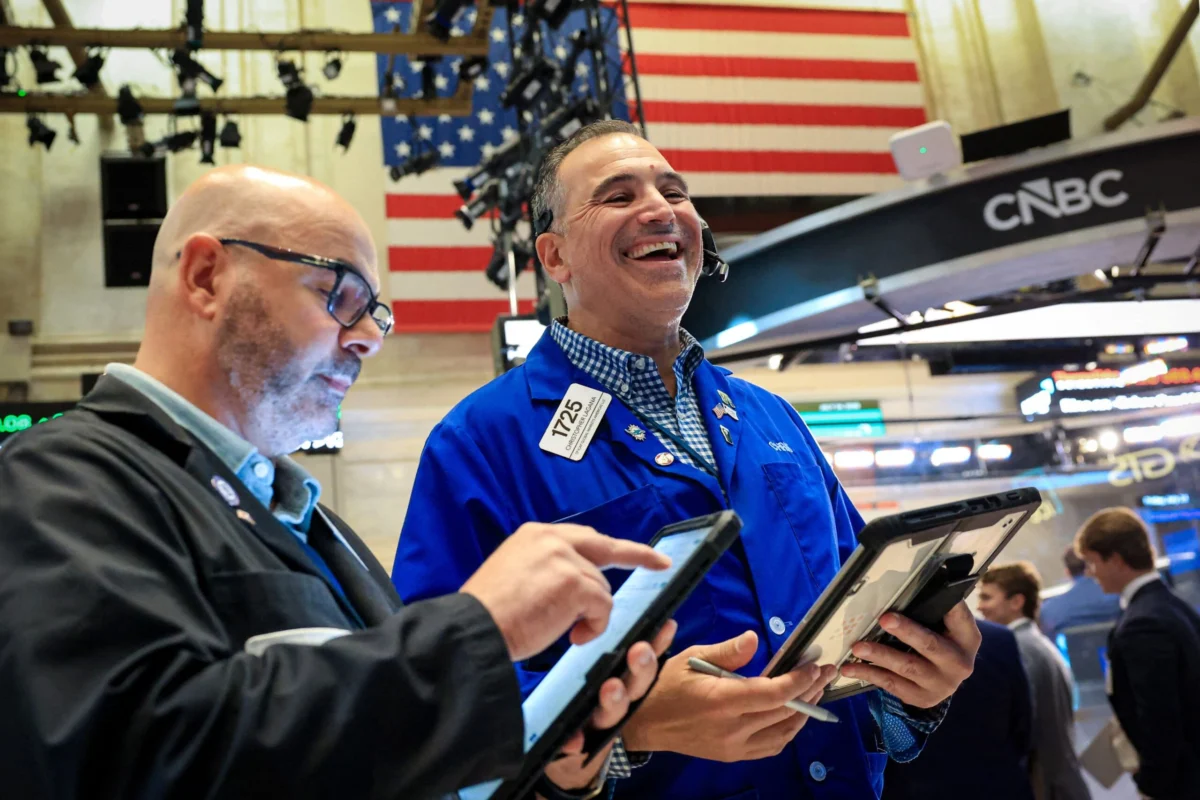
Happy birthday to the bull market, which has officially reached its four-year milestone. Monday marks the fourth anniversary of the current run for equities, a period defined by extraordinary gains and persistent investor enthusiasm. Since hitting its closing low on October 12, 2022, the S&P 500 has climbed nearly 120%, an astonishing performance that reflects Wall Street’s unwavering faith in the transformative, long-term power of artificial intelligence.
The genesis of this remarkable multi-year rally traces back to late 2022, following the public release of OpenAI’s ChatGPT. Since that pivotal moment, investors have displayed an insatiable appetite for virtually all assets connected to the artificial intelligence trade. Companies positioned at the center of the hardware and infrastructure build-out—frequently described on trading desks as the "picks and shovels" of the AI gold rush—have experienced meteoric rises, propelling their valuations into completely unprecedented territory.
Nvidia, widely recognized as the poster child for the artificial intelligence revolution, exemplifies this phenomenon. Once best known for designing specialized graphics cards for high-end video games, the semiconductor giant has transformed into a corporate behemoth valued at approximately $5.5 trillion. This astonishing trajectory includes crossing the historic $1 trillion market capitalization threshold for the first time in 2023. Other major players in the semiconductor and hardware ecosystem have enjoyed similar tailwinds, with Micron Technology officially joining the trillion-dollar club following a milestone valuation achieved this past May.
These monumental gains have provided the necessary muscle for the broader stock market to successfully climb a daunting wall of worry over the intervening years, including persistent macroeconomic hurdles throughout 2026. Benefiting heavily from its substantial exposure to mega-cap technology names—which currently account for roughly 40% of the broader index—the S&P 500 achieved another major psychological milestone last week by topping 7,800 for the first time in history. The index continues to hover near these record highs, defying skeptics who anticipated that higher borrowing costs and shifting economic landscapes would derail the momentum.
Despite the celebratory mood surrounding the four-year anniversary, the sheer magnitude of the advance has left many market participants pondering a pressing question: How much longer can this extraordinary rally continue? This uncertainty is compounded by a complex macroeconomic backdrop featuring lingering anxieties regarding persistent inflation, surging bond yields, and an increasingly hawkish Federal Reserve determined to manage monetary policy against a backdrop of stubborn economic resilience.
From a technical perspective, the road ahead appears increasingly challenging and less than ideal. According to analysis from Oppenheimer chief market technician Ari Wald, the current bull market stands as the sixth longest out of 24 distinct cycles dating all the way back to 1932. By reviewing historical market data, Wald noted that the median time remaining before a typical cycle reaches its ultimate peak is roughly 13 months. This historical pattern suggests that 2027 could potentially mark the final, culminating leg of the current secular run.
At the same time, historical precedent offers a measure of reassurance for equity investors navigating the later stages of a cycle. Wald pointed out that the median return for a bull market during its fifth year historically sits at 21%. This suggests that even as the cycle matures, there may still be meaningful capital appreciation and further gains to be captured before the market ultimately tops out.
However, the question of how much longer the current cycle can sustain its upward trajectory may hinge heavily on the health of market breadth, which has shown notable signs of deterioration in recent months. The fragility beneath the surface of the headline indices became particularly evident in September, when a striking 75% of individual stocks within the S&P 500 closed the month in negative territory. During that period, lingering fears over elevated interest rates spurred institutional and retail investors alike to retreat from smaller enterprises and concentrate their capital once again within a handful of mega-cap technology leaders.
Small-cap equities, in particular, have borne the brunt of this cautious reallocation. Oppenheimer’s Wald highlighted that he is closely monitoring the Russell 2000 index as it tests its critical 200-day moving average, a technical threshold that will likely determine whether the broader bull market retains the underlying participation required to keep running. "In our view, relative weakness remains a warning, not an opportunity, until stronger market conditions can be reestablished," Wald wrote in a note to clients.
Corporate earnings also present a potential hurdle for the market moving forward. While the upcoming third-quarter reporting season is generally expected to deliver solid fundamental results, market observers express concern that earnings growth may simply not be strong enough to justify further expansion in stock prices, particularly given how high Wall Street’s expectations have climbed over the past several quarters.
The technology sector, which has served as the primary engine of the bull market, faces its own specific scrutiny regarding valuation and concentration risk. Deutsche Bank strategist Parag Thatte recently suggested in a note to investors that the aggressive sector rotation into technology may now be overdone, leaving the risk-reward proposition considerably less favorable than it was during the earlier phases of the AI build-out.
Even so, a significant segment of the investment community remains optimistic about the trajectory of the stock market. Proponents argue that the remarkable resilience demonstrated by equities over the past four years is solidly anchored in robust fundamental earnings power generated by the ongoing deployment of artificial intelligence infrastructure. Nevertheless, market veterans acknowledge that navigating the next phase of the cycle will likely require a much more selective approach, as identifying future winners grows increasingly difficult.
"In order to outperform, investors need a combination of owning stocks that grow fast and don’t miss—which remains our mantra," Adam Parker, founder of Trivariate Research, wrote in a note to clients. Offering a reassuring outlook on the broader economic landscape, Parker added, "We continue to think that the US stock market will perform well."
| Source | : | Finance Poetry |
| Author | : | rifanmuazin |
| Editor | : | Finance Poetry Editorial Team |