
Human Connection Remains Paramount as AI Reshapes Wealth Management, Says HSBC’s Racquel Oden
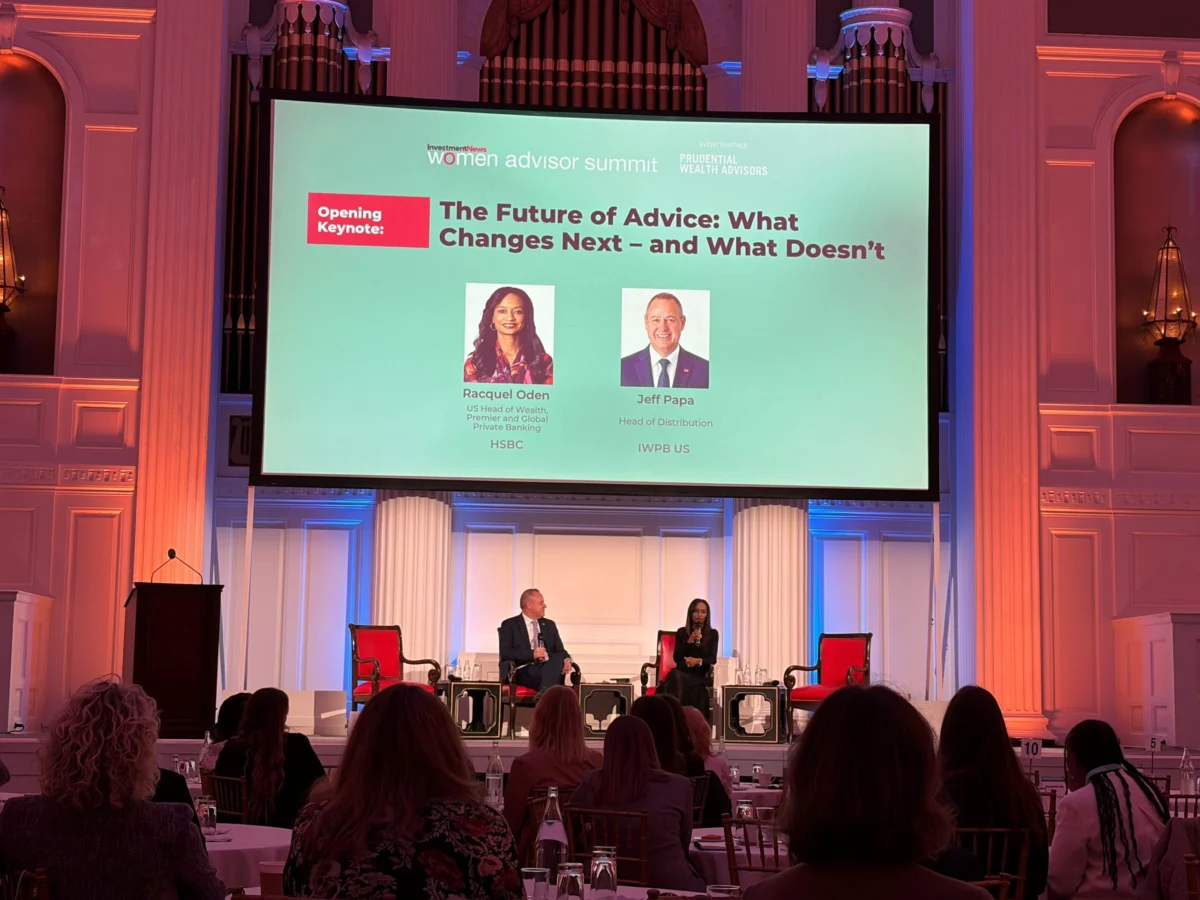
Artificial Intelligence is no longer a futuristic concept hovering on the periphery of the financial sector; it is a fundamental force reshaping the landscape of wealth management. Yet, despite the rapid proliferation of sophisticated algorithms and machine learning tools, the human element of financial advisory remains not only relevant but increasingly vital. This was the central message delivered by Racquel Oden, the US head of wealth, premier, and global private banking at HSBC, during her opening keynote at the Women Advisor Summit in New York City.
Addressing a room full of industry professionals, Oden offered a balanced perspective on the technological tide currently sweeping through financial firms. While acknowledging the inevitability of AI’s growth and the tangible benefits it brings to operational efficiency, she emphasized that the technology is intended to be a force multiplier for human advisors, not a substitute for the nuanced, empathetic guidance that clients require.
“I am excited about what AI will do for us,” Oden remarked, framing the technology as a catalyst for productivity. Her perspective is rooted in the belief that by offloading time-consuming administrative tasks to automated systems, advisors can reclaim the most valuable commodity in their profession: time. This reclaimed time, she argued, should be directly reinvested into the client relationship, allowing advisors to engage in more frequent, high-quality, one-on-one consultations. For Oden, the “true, one-on-one” nature of financial advice is the cornerstone of the profession, a service that remains deeply personal and inherently human.
The urgency of this evolution is underscored by a looming demographic challenge in the United States. During her address, Oden highlighted a significant shortfall of qualified advisors compared to the massive number of Americans seeking professional financial guidance. Citing data from McKinsey & Co., she pointed out that approximately 53 million people are currently seeking advice, a number that is projected to swell to roughly 75 million by 2030. “The reality is there is demand for advice,” Oden noted, suggesting that the industry must leverage every tool at its disposal—including AI—to bridge this widening gap.
However, Oden was careful to delineate the boundaries of what technology can achieve. While AI is rapidly improving in its ability to process data, manage workflows, and provide analytical insights, it lacks a critical component that defines the advisory role: emotional intelligence (EQ). She cautioned that even with the current pace of innovation, it will likely take generations of technological development before machines can replicate the nuanced understanding of human fears, goals, and complexities that define a trusted advisor’s practice. Consequently, she remains steadfast in the belief that AI will not usurp the role of the advisor; instead, it will elevate it by handling the technical heavy lifting, thereby leaving the human to handle the human-centric work.
The sentiment expressed by Oden echoes a broader trend across the industry. Recent research from Morningstar reveals that 80% of advisors now utilize AI in some capacity, a significant increase from 67% just one year ago. Perhaps more telling is the improvement in perceived efficacy; 48% of surveyed advisors reported that AI had moderately or significantly improved their efficiency, up from 36% in the previous year.
This trend was a recurring theme throughout the Women Advisor Summit, held on November 5 at 583 Park Avenue on Manhattan’s Upper East Side. The event, which featured more than 20 speakers across 10 content sessions, served as a forum for advisors to grapple with the practicalities of integrating these tools into their daily practices.
During a panel discussion at the summit, Lisa Salvi, the head of business consulting and education at Schwab Advisor Services, encouraged her peers to move past the theoretical discussions of AI and begin hands-on experimentation. “Nothing at all can replace trying it,” Salvi said, emphasizing that the barrier to entry is often psychological rather than technical. She noted that her organization has been actively hosting roundtables and AI summits to foster a culture of adoption, adding, “I would love to see more women show up for these events.”
The stakes for such engagement are high. According to Denise Milano Sprung, the chief marketing officer at Mitlin Financial, the cost of inaction could be detrimental to firm growth and talent retention. She observed that the pace of change is so rapid that firms failing to harness these tools risk falling behind, potentially driving their most talented advisors to seek out more AI-savvy competitors. For those trapped in firms that remain “AI laggards,” she suggested that the competitive pressure might soon force a career reassessment.
The data supports the idea that the industry is at a turning point. Research released in January by Schwab Advisor Services, based on a study conducted in late 2025, found that 63% of independent registered investment advisors (RIAs) are now utilizing AI in some capacity—more than double the participation rate observed in 2023. This rapid acceleration suggests that the "wait and see" approach is quickly becoming an obsolete strategy.
For those who have embraced the change, the results can be transformative. Stacy Francis, president and CEO of Francis Financial, shared her personal experience with how AI can act as an objective, albeit critical, sounding board. During the summit, she recounted a scenario where a client meeting did not go as expected. After the meeting, she used an AI-powered note-taking tool, Jump, to review the interaction and asked the AI for feedback on her approach.
Francis admitted that she was initially taken aback by the tool’s candid critique. “I was like, ‘Oh my god, you’re right!’” she said, noting that the tool identified blind spots in her communication that she had not considered. This experience reinforced her view that AI serves as a powerful instrument for professional development. “I feel like there’s a lot of really good pieces that we can use,” she added, highlighting the benefit of having a non-judgmental, data-driven observer that can help advisors refine their interpersonal skills.
As the financial services sector continues to navigate this digital transformation, the consensus among industry leaders at the Women Advisor Summit was clear: the technology is here to stay, and its adoption is essential for remaining relevant in a growing market. However, the future of the profession is not defined by the machines themselves, but by the professionals who wield them. By combining the efficiency of artificial intelligence with the irreplaceable empathy of the human advisor, the industry aims to meet the needs of the millions of Americans seeking guidance.
The Summit served as a testament to this ongoing evolution, culminating in the Women to Watch Awards, which celebrate the influential women helping to shape the future of wealth management. With Prudential Wealth Advisors serving as the headline partner for the event, the day underscored a commitment to fostering leadership and innovation in an industry that remains firmly rooted in the value of human connection. As advisors look toward 2030 and beyond, the path forward appears to be one of integration—using technology not to replace the advisor, but to empower them to serve more clients with greater depth and understanding.
| Source | : | Finance Poetry |
| Author | : | rifanmuazin |
| Editor | : | Finance Poetry Editorial Team |