
Fed’s Goolsbee calls inflation report ‘borderline disturbing’ as central bank weighs more hikes
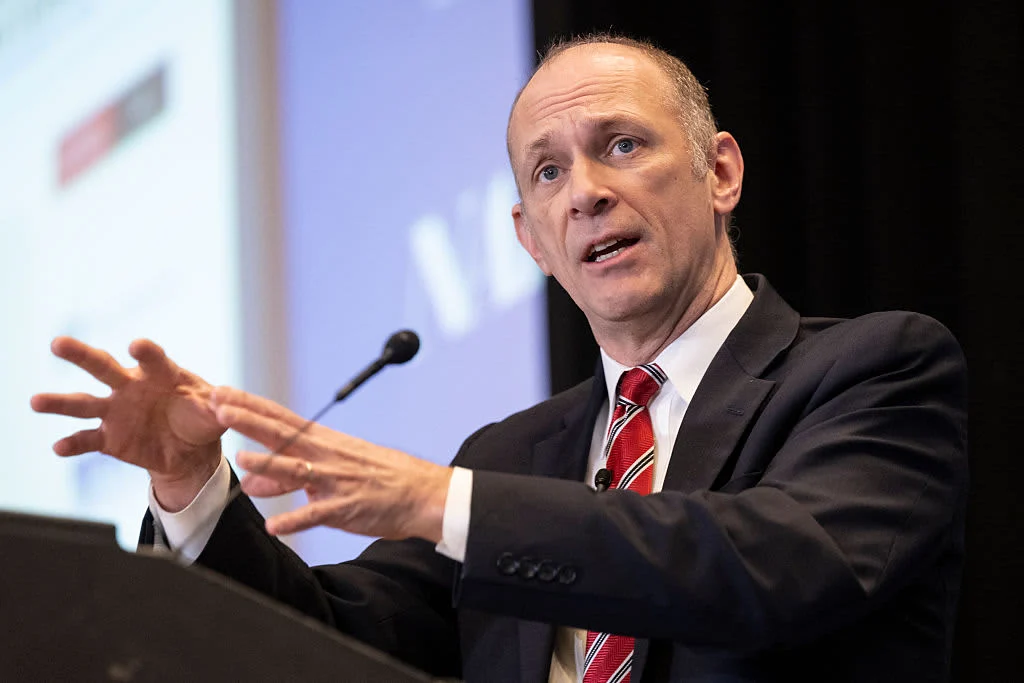
Speaking in an interview with "PBS NewsHour," Goolsbee did not mince words regarding the trajectory of consumer costs, which have refused to cool at the pace policymakers had previously anticipated. "It’s another distressing report—borderline disturbing," Goolsbee said. "We’ve got a real inflation issue on our hands that has been developing. We’re going to have to deal with that."
The remarks came in the wake of the latest consumer price index (CPI) release from the Bureau of Labor Statistics, which showed that prices rose 0.4% on a seasonally adjusted basis in October. The reading outpaced economists’ projections and marked the third consecutive month of outsized price increases, putting renewed pressure on the Federal Reserve as it weighs its next steps on interest rates.
Goolsbee pointed to specific structural pressures that have complicated the inflation fight, noting that he had not seen traditional drivers of prices, such as tariffs, fade over time as economic models had suggested they might. Furthermore, he expressed ongoing unease regarding persistently high inflation within the services sector, which has proven exceptionally sticky compared to goods.
The Chicago Fed chief emphasized that elevated prices remain the foremost concern for ordinary citizens, business leaders, and nonprofit directors alike. "It’s on everyone’s mind," Goolsbee said. "It’s on business’ mind. It’s on nonprofits’ minds. It’s on ordinary consumers’ mind."
Tuesday’s inflation report arrived at a critical juncture for central bankers at the Federal Reserve, forcing them to reevaluate their monetary policy trajectory. The central bank is currently considering its next interest rate move, as well as the path of tightening it may need to pursue in the months ahead if inflation figures continue to come in hot.
Goolsbee’s comments followed closely on the heels of remarks from several other Fed officials on Tuesday, suggesting that the rate-setting Federal Open Market Committee (FOMC) may need to act more decisively to rein in consumer price growth. Traditionally, when the Fed adjusts monetary policy by raising or lowering benchmark borrowing costs, it moves in increments of a quarter-percentage point. However, the unexpected persistence of inflation has opened the door to more aggressive action.
Fed Governor Christopher Waller, speaking in London early Tuesday ahead of the domestic data release, indicated that a hot inflation report could push him toward advocating for an outsized half-point increase at the upcoming December policy meeting. Waller specifically noted that such a hike should be squarely on the table if the core CPI—a widely watched metric that strips out volatile food and energy costs—came in around 0.3%. Hours later, the official data confirmed a core reading matching that threshold.
Other regional Fed presidents weighed in with varying perspectives on the appropriate pace of monetary tightening. Dallas Fed President Lorie Logan remarked following the inflation report that she sees a clear need for two additional quarter-point rate increases, suggesting that "it may be possible to move more rapidly this winter than the FOMC has moved so far this fall."
In contrast, Philadelphia Fed President Anna Paulson adopted a more measured stance. While she acknowledged that "inflation pressures are still very much with us," Paulson argued that the central bank does not need to rush its policy adjustments. "For now, further gradual tightening seems appropriate," Paulson said, adding that the exact path forward will depend on evolving economic conditions and close monitoring of incoming data.
The debate among policymakers comes after the committee raised rates by a quarter point in September, bringing the benchmark federal funds rate to a range of 3.75% to 4%, before pausing and voting to hold rates steady at their October meeting.
Beyond the immediate monthly figures, Goolsbee voiced deep concern over the psychological aspect of prolonged inflation. After years of price growth running higher than the Fed’s preferred target, he warned that businesses and consumers could begin to permanently bake high inflation expectations into their economic decisions. If such a dynamic takes root, Goolsbee cautioned, the subsequent process of cooling the economy down and restoring price stability could become significantly more painful.
Despite these mounting pressures, Goolsbee declined to commit to a specific policy action for the upcoming December gathering. "I’m not a fan of being very specific and tying our hands at the next meeting or meetings in the future," he said.
The voting dynamics of the FOMC add further intrigue to the upcoming policy debate. Waller, Logan, and Paulson are all voting members of the committee this year, meaning they will hold direct influence over whether to raise rates at the final meeting of the year in December. Goolsbee, meanwhile, is scheduled to rotate into a voting position on the committee next year.
Financial markets have reacted swiftly to the confluence of hotter-than-expected inflation data and hawkish commentary from central bank officials. According to CME’s FedWatch tool, fed funds futures are now fully pricing in a rate hike at the December meeting.
Attention among traders has quickly shifted to the magnitude of the anticipated move. Current fed funds futures price the probability of a more aggressive half-percentage-point hike at the upcoming December gathering at 15%.
Looking slightly further ahead, the odds of the benchmark rate reaching between 4.25% and 4.5% by the January meeting—the mathematical equivalent of either a single half-point increase or two successive quarter-point rises—now stand at 60%. Meanwhile, markets are pricing in a 10% chance that rates could climb even higher, reaching the 4.5% to 4.75% range by the start of the new year.
| Source | : | Finance Poetry |
| Author | : | rifanmuazin |
| Editor | : | Finance Poetry Editorial Team |