
Federal Reserve Scales Back Rate-Setting Votes in 2027 Under Chairman Kevin Warsh
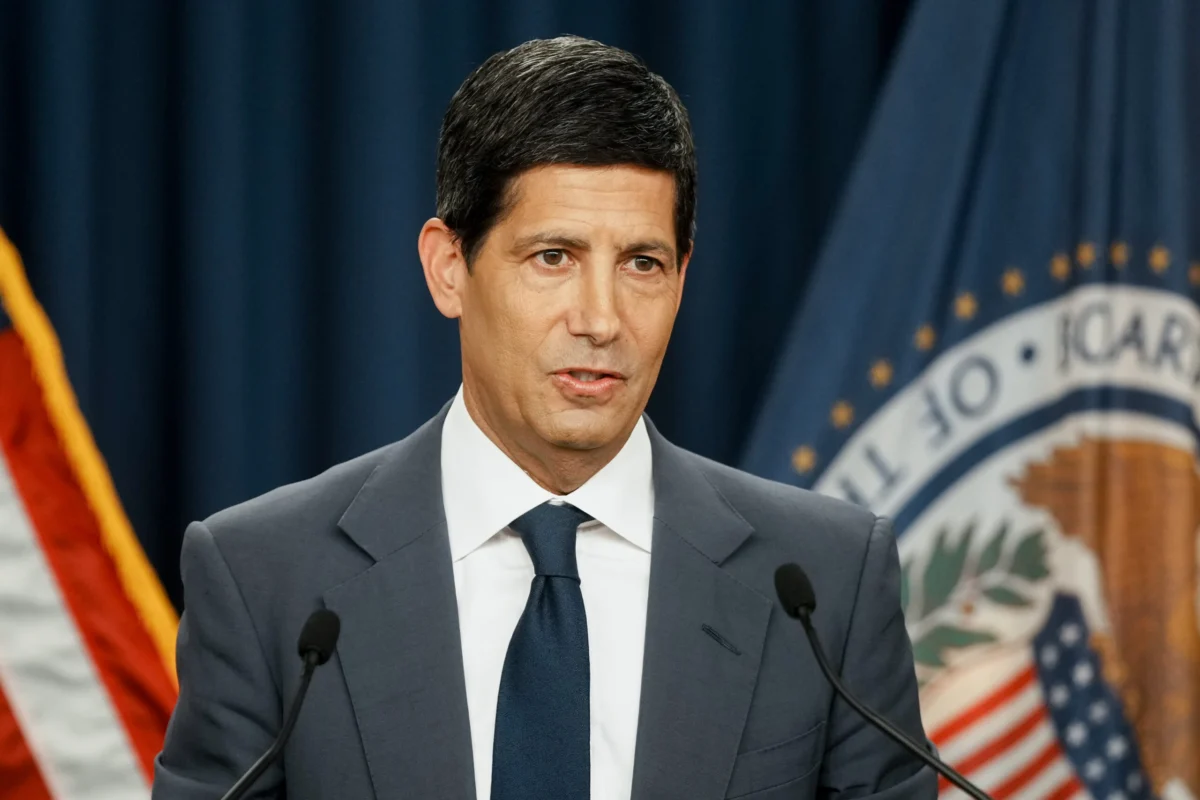
The Federal Reserve will not hold a vote on potential interest-rate changes at its October 2027 meeting, marking a significant structural departure that forms part of a broader, ongoing initiative by Chairman Kevin Warsh aimed at reducing the central bank’s overarching footprint in financial markets.
According to an official announcement released Thursday, the rate-setting Federal Open Market Committee (FOMC) will set aside its scheduled Oct. 26-27 session entirely for the discussion of broad monetary policy strategy issues. Rather than focusing on immediate rate adjustments or economic data releases typical of standard gatherings, policymakers will use the time for long-range analytical reflection.
Chairman Warsh first previewed the move during his news conference following the FOMC’s October meeting, though he did not specify at the time which exact future meeting would be affected by the strategic pivot. The newly released calendar confirms that 2027 will feature seven voting meetings in total. The October session will instead function as dedicated extra time for deep policy deliberation, devoid of any formal vote or post-meeting policy statement. Additionally, the revised calendar indicates that the final meeting of the year will now take place in November, shifting forward from its previously anticipated December slot.
Explaining the institutional rationale behind the adjustment, Chairman Warsh emphasized that modern central banking requires a deliberate balance between immediate responsiveness and long-term intellectual preparation.
"Now, what’s the reasoning behind this change? To me, it’s quite straightforward," the chairman said. "Getting policy right involves assessing near-term developments at timely, regular, and information-rich intervals."
He elaborated that while monitoring short-term economic data is vital, central bankers must also protect time for visionary analysis. "But it’s equally important we reserve time and space, as an intellectually diverse group, for strategic deliberations—for thinking anew about big questions, looking out over longer time horizons, focusing, as I say, on the left side of the decimal point," Warsh added.

The decision to trim the number of active rate-setting meetings reflects Warsh’s broader skepticism regarding the Fed’s communication strategies in recent years. Since taking the helm, the chairman has frequently been critical of prior practices, arguing that policymakers previously spent an excessive amount of time providing granular forward guidance on policy moves. In his view, such rigid communications frequently handcuffed central bankers, limiting their tactical flexibility and narrowing their focus when the time arrived to make critical interest-rate decisions.
Under typical operating practices, the Federal Reserve convenes eight times a year. Each standard meeting concludes with a formal vote on the benchmark federal funds rate, immediately followed by a press conference hosted by the chair to explain the committee’s rationale to the public and the financial markets.
However, since Warsh assumed leadership of the central bank, several tangible operational changes have already been implemented to reshape how the Fed interacts with the public. The post-meeting statement, traditionally a dense document parsed for every subtle shift in language, has been shortened dramatically. Furthermore, the accompanying press question-and-answer sessions have been compressed, cut down to roughly half an hour from their customary duration of approximately 45 minutes.
During his October remarks, Warsh noted that adjusting the annual meeting schedule represents yet another deliberate step in his overarching plan to streamline communication and refocus the institution. He also indicated last month that the structural shift would continue to evolve, with the number of nonvoting, strategy-focused meetings projected to increase to two in 2028.
"I believe the setting of the meeting schedule and agenda is more than some administrative detail," Warsh said, underscoring the philosophical weight he places on the calendar adjustments. "It’s an institutional choice, affecting the nature and the quality of our deliberations and, ultimately, the wisdom of our decisions. It’s yet another change to get the conduct of monetary policy on the right track."
Financial markets and economic analysts continue to evaluate the long-term implications of Warsh’s adjustments, which are designed to shift the central bank away from micro-managing market expectations and toward deeper contemplation of structural macroeconomic trends.
In the near term, the FOMC maintains its regular operational cadence. The committee’s next regular gathering is scheduled for Dec. 8-9, where policymakers will address current economic conditions and determine the path of interest rates. Looking ahead to the subsequent year, the Fed’s first meeting of 2027 is slated for Jan. 26-27.
| Source | : | Finance Poetry |
| Author | : | rifanmuazin |
| Editor | : | Finance Poetry Editorial Team |