
Wave of Suspected Car Bombings Shakes Russia as Moscow Blames Kyiv for Target Attacks
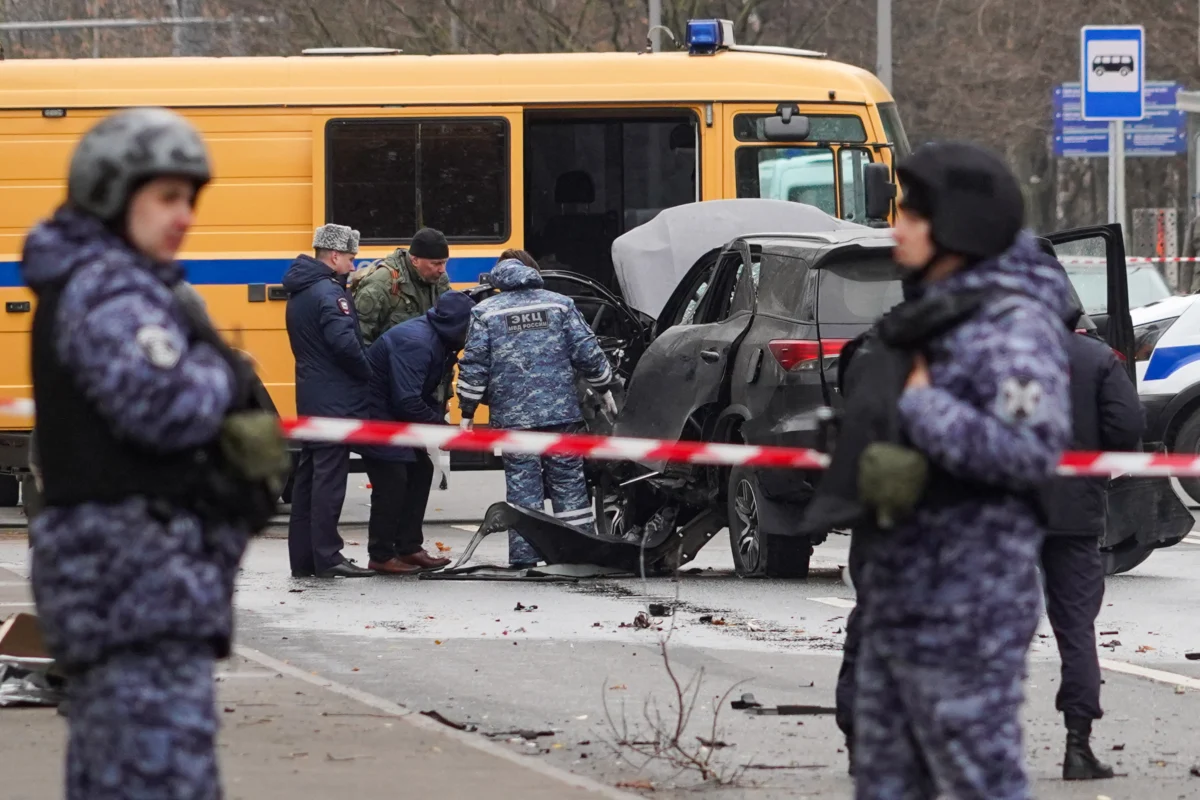
MOSCOW — A violent wave of suspected targeted attacks has rattled Russia over the span of 48 hours, culminating in a devastating car bombing in Moscow that critically injured a prominent political adviser and former journalist linked to the Russia-aligned administration of ousted Ukrainian President Viktor Yanukovych.
The high-profile explosion on Friday struck a vehicle driven by 72-year-old Sergei Zavorotnyi in the Russian capital. The attack occurred just a day after a similar vehicle bombing in St. Petersburg claimed the life of a senior Russian military serviceman. Russian authorities and state media have directly blamed Ukrainian intelligence and security services for orchestrating both incidents, which mark the latest in a continuous campaign of targeted violence against individuals involved in or sympathetic to the ongoing war with Ukraine.
According to preliminary findings released by Russia’s Investigative Committee, the Moscow explosion was triggered by an improvised explosive device that had been covertly planted underneath Zavorotnyi’s car. The device was detonated remotely while Zavorotnyi was actively driving through the city streets. The blast resulted in catastrophic injuries. Russian television channel REN TV reported that Zavorotnyi lost his left arm, sustained numerous other severe traumatic injuries, and was rushed to a local hospital where he remains in a medically induced coma.
The Investigative Committee immediately launched a formal criminal investigation into the bombing. As of Friday afternoon, investigators had not officially named any suspects, noting that the inquiry remains in its early stages.
Zavorotnyi is a well-known figure within political and media circles connected to the pre-2014 Ukrainian political landscape. Before transitioning into political advisory roles, he worked as a journalist for the prominent Russian daily newspaper Komsomolskaya Pravda. He later served as an official adviser to Mykola Azarov, who held the position of prime minister under Viktor Yanukovych.
Yanukovych’s government collapsed in February 2014 following months of massive, pro-Western street protests known as the Euromaidan movement. Facing ouster, Yanukovych fled Ukraine and sought refuge in Russia, where several members of his inner circle, including Azarov, eventually relocated. In the years following his exile, Zavorotnyi authored a book detailing the political upheaval and downfall of the Yanukovych administration and operated an online media outlet heavily critical of the current post-revolutionary authorities in Kyiv.
Mykola Azarov, who continues to reside in Russia, spoke with state-run television networks shortly after Friday’s bombing. Visibly shaken by the news, Azarov expressed deep shock and asserted his belief that his former adviser was specifically targeted because of his long-standing, vocal criticism of the Ukrainian government and his political alignment with Moscow.
Explosive Devices Triggered Remotely
Reporting from the Russian capital, Al Jazeera’s Yulia Shapovalova detailed the chilling similarities between Friday’s attack in Moscow and the lethal incident that unfolded in St. Petersburg just twenty-four hours earlier.
"The investigative committee has already launched a criminal case into this explosion," Shapovalova reported, noting that the mechanics of the attacks point to sophisticated planning and remote execution.
A day prior to the Moscow bombing, a separate vehicle explosion in St. Petersburg killed a military serviceman. While Russia’s Investigative Committee initially confirmed the fatality, officials did not immediately release the identity of the victim or speculate on the potential perpetrators. However, local Russian media outlets provided conflicting details regarding the victim’s exact military rank. The prominent regional news outlet Fontanka reported that the deceased was a military colonel, while other domestic online news sources claimed the victim was a senior officer within the Russian Air Force.
Shapovalova noted that preliminary assessments from the ground suggest the victim was a serving member of the military rather than a high-ranking air force commander, though the exact details remain under official review by investigators. Crucially, the operational pattern of the St. Petersburg attack mirrored the bombing that would take place in Moscow the following day. The victim was driving his personal vehicle when the explosive device, also planted underneath the chassis, was detonated remotely.
"In both cases, an explosive device was triggered remotely, and it was planted under their car," Shapovalova explained. "Here in Russia, all the attacks are considered to be orchestrated by the Ukrainian side."
The twin attacks fit into a broader, unsettling pattern of sabotage, assassinations, and targeted bombings that have struck individuals associated with the Russian military apparatus, state media, and pro-Kremlin political movements since the escalation of the full-scale conflict in Ukraine. Russian security services have frequently accused Ukrainian intelligence agencies of running clandestine networks inside Russian territory to carry out such operations.
To date, Ukrainian authorities have maintained a policy of official silence regarding both the Moscow car bombing and the St. Petersburg explosion, offering neither confirmation nor denial of any involvement in the incidents. As Russian law enforcement agencies ramp up security measures and continue their forensic examinations of the blast sites, the investigation into the coordinated wave of violence remains ongoing.
| Source | : | Finance Poetry |
| Author | : | rifanmuazin |
| Editor | : | Finance Poetry Editorial Team |