
Eric Trump-Backed Military Robot Startup Foundation Misses Payroll as Cash Reserves Dwindle
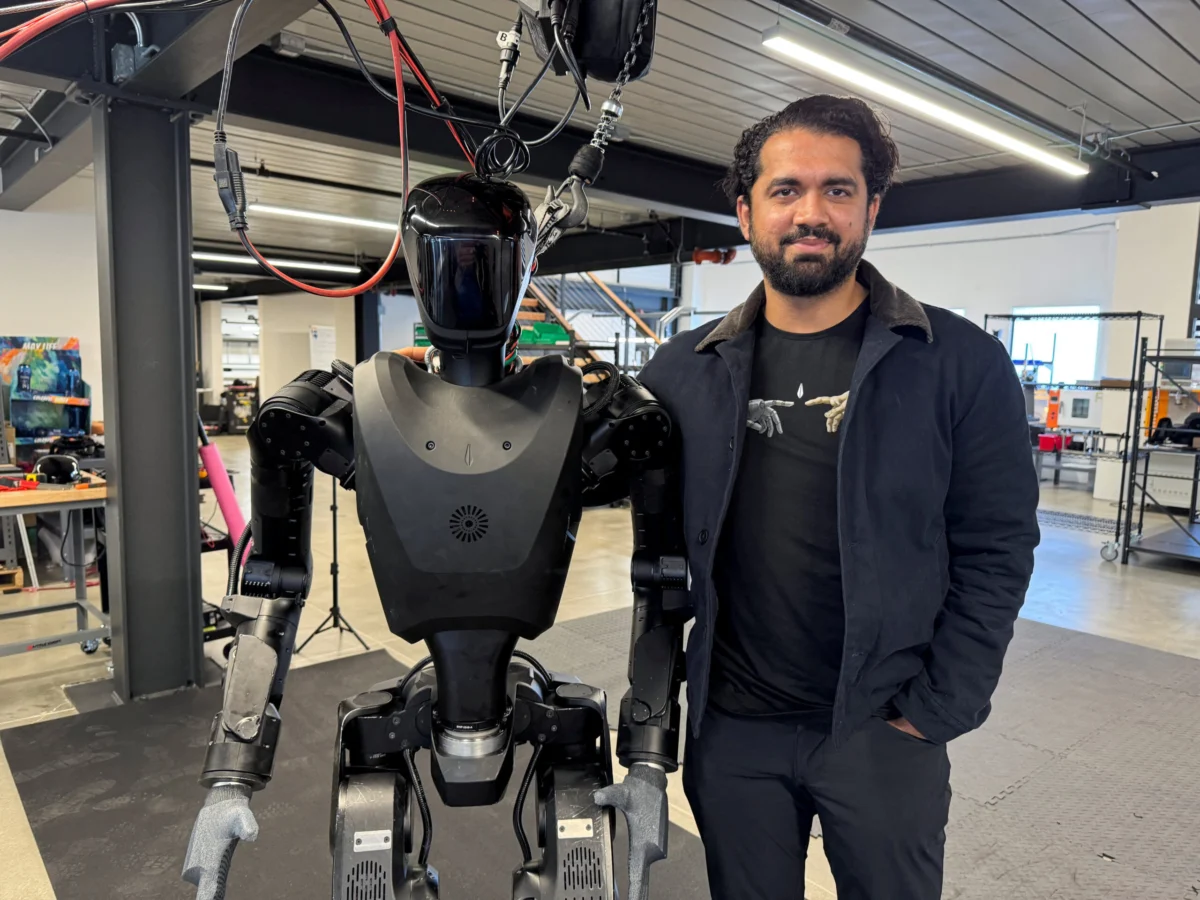
Foundation Future Industries, the San Francisco-based maker of military humanoid robots advised and backed by Eric Trump, failed to pay its employees last month as its cash reserves rapidly dwindled, according to individuals with direct knowledge of the matter.
Workers across the company have yet to receive their regular paychecks after Foundation missed its October 30 payroll deadline. The sources, who spoke on the condition of anonymity to discuss sensitive internal company matters freely, described a worsening financial atmosphere inside the startup as management scrambles to secure emergency capital.
The unfolding situation has sparked significant anger and frustration among internal staff, particularly because CEO and co-founder Sankaet Pathak borrowed $4.6 million from the company last year to purchase a luxury residential property. Employees and insiders note that the substantial sum diverted by Pathak could have easily been utilized to cover staff wages and stabilize the company’s precarious financial footing.
Public property records reveal that a limited liability company listing Pathak as its sole principal finalized the purchase of a $4.6 million estate in Sausalito, California. The property features sweeping, cinematic views of the San Francisco Bay and was acquired in October 2025, just as the robotics startup was scaling its operations and pitching aggressive military applications.
A spokesperson for Pathak acknowledged receiving a detailed list of inquiries containing the major points of this report on Thursday, but ultimately did not respond to multiple requests for comment. Pathak’s previous entrepreneurial venture, a high-profile fintech firm named Synapse, collapsed in 2024, leaving thousands of everyday Americans locked out of their savings accounts in an ongoing banking scandal.
Foundation’s acute cash crunch arrives at a critical and precarious juncture for the company. Pathak has repeatedly claimed that the firm is on the verge of unveiling a next-generation, weapons-ready humanoid robot designed to help the United States maintain a technological edge against Chinese rivals. Simultaneously, Pathak has been aggressively seeking to raise hundreds of millions of dollars in fresh venture capital funding at a lofty $3 billion valuation.
The startup has captured substantial media headlines over the past year due to Pathak’s ambitious public assertions that his robots could soon be deployed to handle complex battlefield tasks in active combat zones like Ukraine or patrol the southern border of the United States alongside law enforcement. Numerous broadcast interviews and major print articles about Foundation have also heavily highlighted claims that the company secured $24 million in lucrative Pentagon research and development contracts.
"What we’re about to unveil in the next couple of months [is] going to be the strongest humanoid robot that exists anywhere in the world, including China," Pathak declared during an April television interview discussing the company’s aggressive technological roadmap.
‘Plain sight’
That same April media blitz prominently introduced Eric Trump, son of the U.S. president, as an active investor and chief strategy advisor to Foundation. It remains unclear how large of an equity stake Eric Trump holds in the private defense technology venture.
Eric Trump and his brother, Donald Trump Jr., have increasingly invested across a wide array of defense and dual-use technology firms, including manufacturers of military-grade drones and autonomous weapons systems. An extensive investigative report published in July by The Washington Post revealed that early-stage startups backed by investment vehicles linked to the Trump brothers had collectively secured at least $3.2 billion in federal government business and defense contracts.
"We have to win robotics in the United States of America," Eric Trump said during an April television appearance promoting the startup. "When you go up and interact with these robots … they fist bump you, they high five you, they follow your commands."
Eric Trump’s high-profile involvement with Foundation drew swift and pointed criticism from prominent lawmakers, including Senator Elizabeth Warren, D-Mass., who publicly questioned whether Foundation managed to secure its U.S. defense contracts through political nepotism and conflicts of interest.
"Eric Trump went on FOX to brag about winning ANOTHER multimillion-dollar contract from the Trump administration," Warren wrote in an April 23 post on social media. "ዚህ looks like corruption in plain sight."
Eric Trump did not respond to requests for comment regarding his advisory role or investments. However, a spokesperson for Eric Trump recently told the Financial Times that he maintains "no involvement in Foundation’s management, operations, strategic decisions or commercial activities, including the solicitation, negotiation, procurement or execution of any government contracts."
While the high-profile announcement of Eric Trump joining the company generated intense speculation within Foundation that a Democratic-led Congress might launch formal congressional investigations into the startup, corporate records show Foundation did not actually win the widely reported $24 million in direct government contracts.
Instead, the defense business originated from a different corporate entity. Foundation quietly acquired Florida-based Boardwalk Robotics in late 2024, and government research contracts originally won by that firm account for the financial figures cited by leadership, according to a person with direct knowledge of the transaction. Furthermore, Foundation utilized Boardwalk’s proprietary robot, known as Alex, as the technical foundation for its own debut machine, the Phantom MK-1, the source noted.
Another person with direct knowledge of the Boardwalk acquisition stated that the deal included specific performance milestones for the robotic technology that have not yet been successfully achieved.
The situation mirrors previous marketing controversies surrounding Pathak. In 2024, CNBC reported that investment pitch letters sent by Pathak to prospective backers cited an imminent major partnership and a $300 million purchase order from General Motors, claims that the major automaker quickly rejected. Foundation co-founder Mike LeBlanc admitted publicly at the time that he was deeply "embarrassed" by the misleading marketing materials distributed to investors.
Rescue loan?
Industry insiders and company insiders increasingly fret that Foundation could soon face total collapse if Pathak fails to secure substantial new funding injections soon. Pathak has been actively attempting to raise hundreds of millions of dollars at a $3 billion valuation since at least January.
Corporate governance structures at the firm have further alarmed prospective investors. Pathak currently serves as Foundation’s sole board member, a centralized governance design that has raised significant red flags among institutional venture capitalists, according to individuals familiar with the matter. Pathak also retains majority ownership of the firm’s equity shares.
This unique corporate setup enabled Pathak to secure the $4.6 million personal loan from the company last year—an arrangement he characterized at the time as a short-term financial maneuver, sources said. Existing venture capital investors were made aware of the substantial loan through formal corporate financial disclosures.
"This is what happens in a company with no governance," said one individual familiar with the internal operations. "Are you just going to let it ride into the ground, and you ride off into the sunset?"
Financial stress is not entirely new for the young startup. Foundation similarly exhausted its available cash reserves for employee payroll in August, though workers experienced only a brief two-day delay before receiving their wages after management secured an emergency bridge loan from an existing investor, sources noted.
In an effort to calm mounting internal panic, Pathak issued an internal memo to employees this week assuring them that he was actively working on securing capital to pay back wages owed to the workforce.
Foundation was originally established in April 2024 by Pathak, Tribe Capital CEO Arjun Sethi, and Mike LeBlanc, who previously co-founded Cobalt Robotics, a maker of autonomous corporate security machines, according to initial fundraising pitch documents.
Following its formation, Foundation aggressively recruited dozens of specialized robotics engineers and artificial intelligence experts, successfully luring top-tier talent away from major industry leaders like Tesla and Amazon-owned autonomous vehicle subsidiary Zoox.
Missing money
Before launching Foundation into the robotics sector, Pathak was widely known as the founder of Synapse Financial Technologies, a middleware fintech company that allowed firms like Mercury, Dave, and YieldStreet to offer FDIC-insured savings accounts and credit card products by partnering with small, regional community banks.
Synapse operated largely behind the scenes of the digital banking ecosystem until its sudden and catastrophic bankruptcy collapse in 2024. The failure left more than 100,000 everyday Americans with a combined $265 million in customer deposits completely locked out of their accounts.
While some affected consumers received partial restitution payments during lengthy bankruptcy court proceedings, thousands of account holders remain entirely without access to their hard-earned money more than two years later. A court-appointed bankruptcy trustee, former FDIC chair Jelena McWilliams, estimated that as much as $96 million in customer funds went missing during the firm’s final months.
The complex bankruptcy proceedings concluded last year without investigators fully uncovering where the missing customer funds ultimately went. Pathak publicly blamed a primary banking partner, Evolve Bank & Trust, while Evolve countered by placing the blame squarely on Synapse for the ledger discrepancies. Federal financial regulators did not aggressively intervene until the Consumer Financial Protection Bureau filed a formal enforcement lawsuit against Synapse last year, establishing a $55 million relief fund for impacted consumers.
Furthermore, financial records and independent reporting by consultant and journalist Jason Mikula revealed that Pathak withdrew $320,000 in personal loans from Synapse as the company spiraled toward bankruptcy in 2024 amid intense disputes over unmatched financial ledgers.
Federal prosecutors subsequently convened a grand jury to investigate potential criminal misconduct surrounding the Synapse missing fund scandal, The Wall Street Journal reported last year, though those investigative reports did not explicitly name Pathak in connection with the criminal probe.
Despite the sweeping controversies surrounding his previous fintech venture, Eric Trump remained undeterred, choosing to invest in Foundation and publicly praising Pathak as a close personal friend during their shared television appearance in April.
"I walked into his factory, and I couldn’t believe what I saw," Eric Trump said during the broadcast. "I’m telling you, he’s doing a phenomenal job."
| Source | : | Finance Poetry |
| Author | : | rifanmuazin |
| Editor | : | Finance Poetry Editorial Team |