
Maersk Investigates Data Breach Following Extortion Claims Against Legacy System
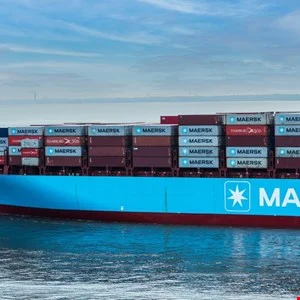
Shipping and logistics giant A.P. Moller-Maersk has confirmed that it is currently investigating a data security incident involving unauthorized access to one of its IT systems. The breach came to light after a burgeoning extortion group, known as WhiteArmor, claimed responsibility for the theft of 100GB of sensitive logistics data, sparking concerns about the security of legacy infrastructure within large, acquisitive multinational corporations.
In a formal statement released on November 11, Maersk acknowledged the incident, stating that it had "identified unauthorized access and data extraction" within its network. While the company did not specify the exact timeframe during which the breach occurred, it was quick to characterize the scope of the event as highly contained. According to the company, the compromise was limited to a "local legacy system" originating from a previous corporate acquisition, rather than a breach of its core operational platforms.
Maersk’s leadership emphasized that, based on preliminary internal findings, there is no evidence that sensitive data has been exposed or compromised. The company maintained that the incident remains strictly isolated to the specific local environment identified. Furthermore, Maersk confirmed that its broader systems, as well as those belonging to its extensive network of partners and customers, have remained unaffected. Specifically, the company noted that integrations such as APIs and electronic data interchange (EDI) platforms—the digital arteries through which the global shipping industry operates—remain secure.
"We do not anticipate disruption to operations for customers at this time, and customers can continue to use Maersk platforms to book and manage their shipments as usual," the statement read. By providing these assurances, the logistics behemoth sought to preempt market panic, particularly given the company’s history with high-profile cyber incidents.
The Vulnerability of Acquired Legacy Infrastructure
The incident has reignited a long-standing debate among cybersecurity professionals regarding the risks associated with mergers and acquisitions (M&A). When large corporations absorb smaller entities, they often inherit a patchwork of legacy IT infrastructure that may not meet the security standards of the parent organization.
Seemant Sehgal, founder and CEO of the cybersecurity firm BreachLock, noted that ownership of these acquired systems often becomes obscured during the rapid pace of M&A activity. According to Sehgal, the lack of rigorous penetration testing during the due diligence phase frequently leaves these systems as "soft targets" for sophisticated threat actors.
"Acquired systems arrive with their own credentials, their own patch schedule, and connections into the parent network that were set up during integration and rarely revisited," Sehgal explained. This "set-it-and-forget-it" mentality creates a significant security debt that organizations often fail to reconcile until a breach forces their hand.
Darin Fredde, senior director and offensive security evangelist at Ridge Security, echoed these concerns, emphasizing the importance of visibility. For Fredde, the incident underscores a critical need for companies to map their digital footprint accurately. Investigators tasked with remediating such breaches must focus on three core questions: exactly what data was accessed, how the attackers managed to bypass perimeter defenses, and whether the network segmentation—the boundaries intended to isolate legacy systems from the wider enterprise—functioned as intended.
"The lesson for organizations isn’t simply to replace every legacy system," Fredde argued. "It’s to know what you own, understand how inherited systems connect to the business, and continuously validate that the security controls protecting them work."
WhiteArmor’s Escalating Campaign Against Logistics
The threat actor behind the claim, a group identifying itself as WhiteArmor, appears to be an emerging player in the digital extortion landscape. Screenshots circulating on social media platforms, including X, suggest that the group is demanding a payment of $5 million in Bitcoin to prevent the public release of the stolen information.
WhiteArmor claims to be in possession of 100GB of data linked to Maersk’s OCF/LF logistics platform. The alleged cache includes a troubling array of operational information, such as driver records, plaintext passwords, internal staff accounts, delivery receipts, purchase orders, and inventory logs. Perhaps most concerning to the privacy of those involved are claims that the data includes mobile device logs containing sensitive identifiers such as phone numbers, email addresses, and International Mobile Equipment Identity (IMEI) numbers.
The emergence of WhiteArmor is being closely monitored by security analysts. Nick Harris, CISO at the cyber-insurance firm Assured, has tracked the group’s activity over the past month, noting that it has been behind a string of extortion demands ranging from $140,000 to as much as $20 million. The group appears to be specifically targeting the logistics and transportation sector. Other high-profile companies, including J.B. Hunt, Ryder, and Echo Global Logistics, have reportedly been targeted by the same entity.
According to Harris, WhiteArmor represents a evolving threat profile. "The group describes itself as focused on data-theft extortion, intending to expand into ransomware, and says its encryptor is nearly complete," Harris noted. This transition—from pure data extortion to the destructive deployment of ransomware—is a common progression for criminal syndicates seeking to maximize their leverage over victims.
Strengthening Resilience in an Age of "Assumed Compromise"
For industry leaders, the Maersk incident serves as a stark reminder that even companies with robust security postures are not immune to the risks inherent in decentralized IT environments. Maersk, in particular, carries the memory of the 2017 NotPetya campaign, a devastating state-sponsored wiper attack that crippled the company’s global operations and resulted in estimated losses of approximately $300 million. While the current situation appears significantly more contained, the psychological and operational stakes remain high.
To mitigate such risks, experts advocate for a strategy of "assumed compromise." This approach acknowledges that perimeter defenses can and will be bypassed, necessitating a focus on internal access controls, data loss prevention (DLP) alerts, and the constant cycling of credentials. Furthermore, the reliance on third-party integrations requires companies to maintain a rigorous audit cycle for every connection that feeds into the corporate backbone.
"The protections include cycling credentials, strong access controls, data loss alerts and validating third parties," Harris advised. "If they aim to recruit insiders, treat security as ‘assumed compromise’ and set controls and alerts accordingly."
As the investigation into the Maersk breach continues, the focus will remain on the efficacy of the company’s internal segmentation. If the legacy system was indeed as isolated as the company claims, the incident may be viewed as a successful, if unfortunate, test of the firm’s containment capabilities. However, if the breach reveals deeper systemic weaknesses, it will likely serve as a catalyst for a broader industry-wide re-evaluation of how legacy assets are managed in the age of global digital logistics.
For now, Maersk remains focused on its operational continuity, working to ensure that the incident does not impact the flow of goods that the global economy depends upon. The situation underscores a reality that many large organizations have yet to fully embrace: that the security of a modern enterprise is only as strong as its most forgotten, least-monitored legacy connection.
| Source | : | Finance Poetry |
| Author | : | rifanmuazin |
| Editor | : | Finance Poetry Editorial Team |