
Bank of America Faces Class Action Lawsuit Over Alleged Concealment of Anti-Money Laundering Failures
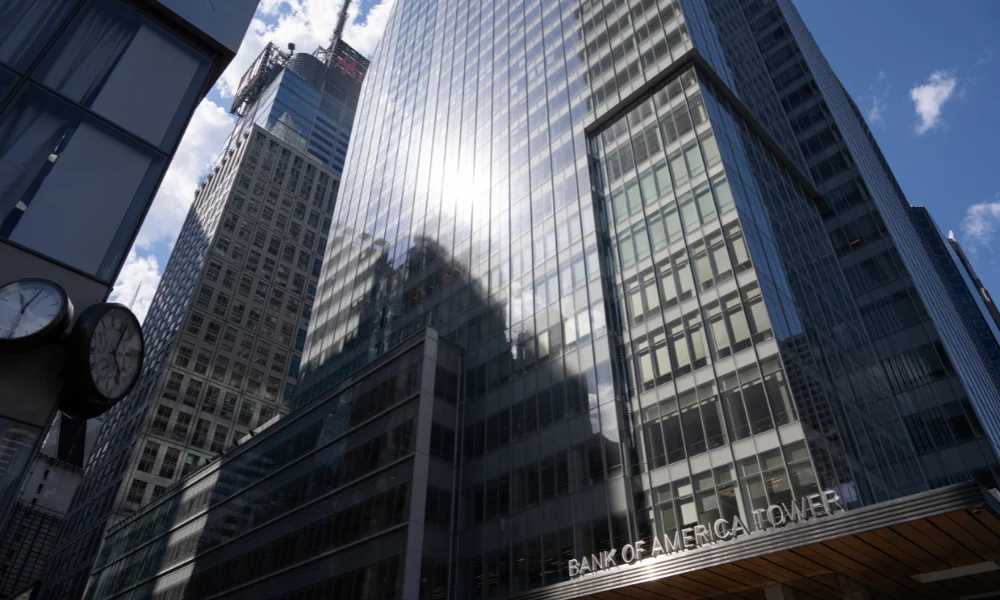
Bank of America is confronting a significant legal challenge that strikes at the core of its corporate governance and regulatory integrity. On November 12, 2026, a class action lawsuit was filed in the U.S. District Court for the Southern District of New York, accusing the banking giant of systematically misleading investors regarding the efficacy of its anti-money laundering (AML) and sanctions compliance programs. The complaint asserts that while the institution repeatedly assured shareholders that it maintained robust risk management frameworks, its internal systems were suffering from profound and long-standing operational breakdowns.
The litigation centers on a series of regulatory disclosures that culminated in a staggering $1.21 billion enforcement action by the U.S. Department of the Treasury. According to the filing, this penalty was the direct result of "willful" violations of federal anti-money laundering laws, a revelation that caught investors off guard and triggered a sharp decline in the bank’s share price.
A Pattern of Regulatory Warning
The seeds of the current legal battle were sown in late 2024. On December 23, 2024, the Office of the Comptroller of the Currency (OCC)—the federal agency tasked with the supervision of national banks—issued a formal consent order against a key banking subsidiary of Bank of America. The order explicitly stated that the subsidiary had failed to maintain reasonably effective anti-money laundering and sanctions compliance programs.
The OCC’s findings were comprehensive, identifying critical deficiencies across the bank’s internal controls, staff training, transaction testing, and overall executive oversight. For a major financial institution, such findings are typically viewed as a "red flag" regarding the firm’s ability to manage its exposure to illicit financial flows. However, the lawsuit alleges that Bank of America’s management sought to minimize the severity of these findings in subsequent public communications.
In the company’s 2024 annual report, Bank of America presented a narrative of remediation and stability. The report stated that the bank had "already completed significant steps to satisfy requirements of the Consent Order" and explicitly told shareholders that it did not "believe that these issues relating to the Programs will have a material adverse financial impact on the Corporation." The plaintiffs contend that these statements were materially misleading, serving to mask the reality that the bank’s compliance apparatus remained fundamentally broken.
The October 2026 Disclosure and Market Reaction
The veneer of regulatory compliance finally fractured on October 13, 2026. Shortly after the close of the trading day, the U.S. Department of the Treasury announced a massive $1.21 billion settlement to resolve findings of systemic violations of AML and sanctions laws. The scope of the failure, as outlined in the complaint, was staggering. The subsidiary reportedly admitted to "willfully" violating federal law, with monitoring failures so severe that they resulted in the failure to report over $5 billion in suspicious transactions to the Financial Crimes Enforcement Network (FinCEN).
Of that total, the filing highlights that more than $1 billion was tied specifically to "national security-related and other priority illicit finance risks." These figures represent a profound failure to identify and flag potential criminal activity, a core pillar of the Bank Secrecy Act (BSA) and international anti-money laundering protocols.
The morning after the disclosure, the financial implications for the bank became clear. Bank of America confirmed that the $1.2 billion settlement charge would negatively impact its diluted earnings per share by $0.17. The market’s reaction was immediate and punishing. On October 14, 2026, Bank of America’s common stock dropped $2.57 per share, or approximately 4.7%, closing at $51.39. Its preferred depositary shares also saw a decline of $0.11, or roughly 0.72%, closing at $15.21.
Systemic Prioritization of Profit Over Compliance
The lawsuit offers a scathing critique of the bank’s internal culture and decision-making processes. According to the complaint, the bank’s compliance function was not merely under-resourced, but systematically deprioritized in favor of revenue generation. The filing alleges that the institution consistently "prioritized its revenues and minimized the impact on its required compliance resources," effectively creating an environment where profit took precedence over the rigorous monitoring of transaction flows.
Perhaps most damning is the accusation regarding how the bank handled its detection obligations. Rather than relying on its own internal, proactive monitoring systems—which are mandated by federal regulations—the bank allegedly leaned heavily on "law enforcement inquiries, requests by other financial institutions, and similar interventions" to identify suspicious activity. The lawsuit characterizes this as a strategy of "outsourcing to third parties a substantial portion of its proactive detection and reporting obligations," effectively abdicating its responsibility to monitor its own ledger.
The scale of the alleged negligence is described by the OCC as involving the failure to properly monitor trillions of dollars in transactions. This lack of oversight led to a massive backlog of late Suspicious Activity Reports (SARs) involving billions of dollars. Furthermore, the complaint alleges that the OCC determined the company had been aware for years that it was failing to escalate potentially suspicious activity to investigators, yet failed to take the necessary corrective actions to rectify these serious violations.
Industry and Analyst Perspective
The fallout from the disclosure prompted immediate scrutiny from financial analysts. The class action complaint cites a report from J.P. Morgan titled "BSA/AML Consent Orders Include Surprising Comments From Regulators." The report described the regulatory action as "much more punitive" than typical settlements, specifically because the regulators concluded that Bank of America had failed to demonstrate sufficient progress following the initial 2024 consent order.
The J.P. Morgan analysts characterized the compliance deficiencies as "quite extensive," and notably expressed surprise at the "lack of oversight by the Board on this matter." For an institution of Bank of America’s stature, such criticism from peer analysts underscores the gravity of the situation. It suggests that the failures were not merely technical, but a failure of governance at the highest levels of the corporation.
Scope of the Litigation
The class action lawsuit is brought on behalf of all investors who purchased Bank of America common stock or its Series QQ preferred depositary shares between January 20, 2022, and October 13, 2026. The complaint asserts that the company’s alleged misconduct, including the failure to address the systemic compliance breakdowns, occurred over a prolonged period, spanning from at least January 1, 2018, through July 1, 2025.
The litigation seeks to recover damages for shareholders who suffered losses due to the decline in stock price following the eventual revelation of the AML violations. By framing the case under federal securities laws, the plaintiffs aim to hold the company accountable for what they describe as a deliberate effort to conceal the true state of the bank’s risk management infrastructure.
As of this filing, the allegations remain claims in a pending lawsuit. No court has yet ruled on the merits of the case, and the bank has not had the opportunity to present a full defense in the courtroom. However, the legal proceedings promise to shed further light on the intersection of corporate profitability, regulatory compliance, and investor transparency within one of the world’s largest financial institutions. The case stands as a stark reminder of the potential financial and reputational costs when a banking giant fails to meet its fundamental obligations to detect and report illicit finance.
| Source | : | Finance Poetry |
| Author | : | rifanmuazin |
| Editor | : | Finance Poetry Editorial Team |