
Fed Chairman Kevin Warsh stresses importance of AI to economy, but says it could ‘disappoint’
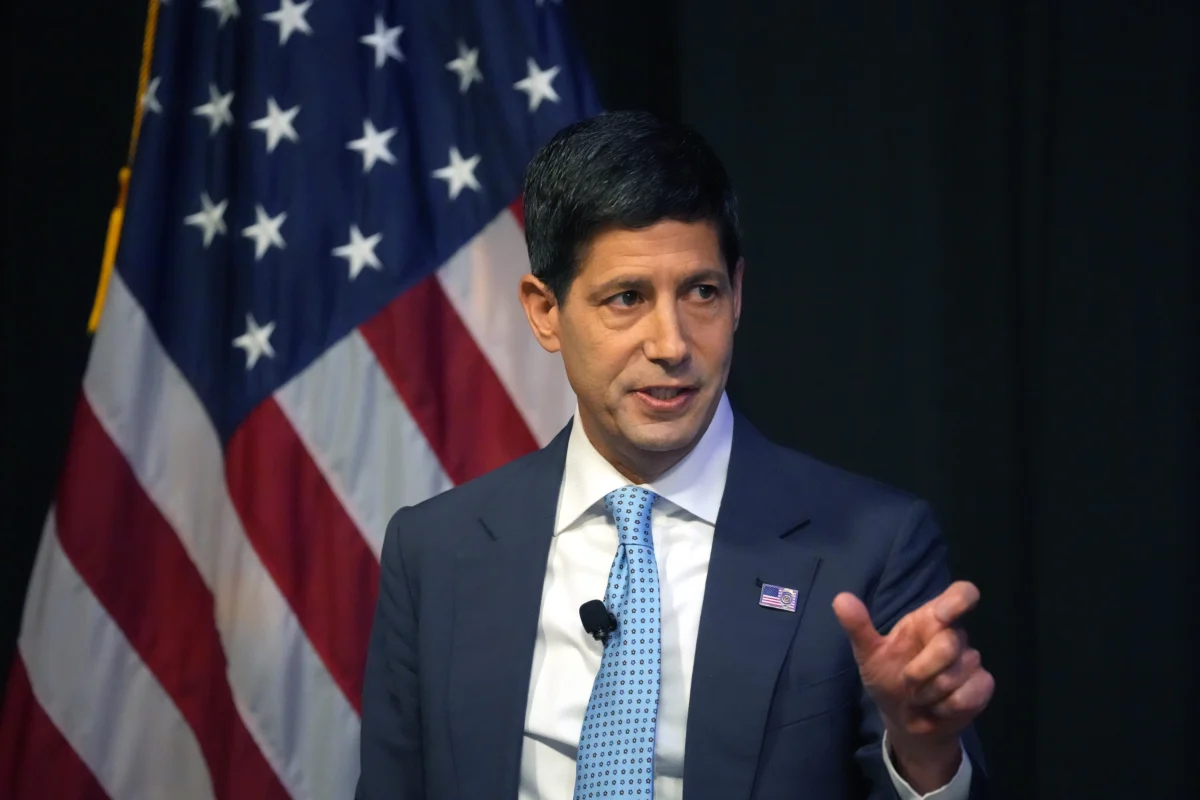
Speaking in San Francisco before a blue-ribbon task force he assembled to examine productivity and employment, the central bank leader stressed that AI "will have significant impact on the economy, with important implications for monetary policy down the road."
"I stress that while I’m not here to offer predictions, I’m not exactly impartial about American leadership in a time so filled with both challenge and possibility," he said in prepared remarks before his productivity and jobs task force, marking a major milestone in how the central bank is beginning to formally integrate technological shifts into its macroeconomic outlook.
In his remarks, Warsh used the term "super intelligence" instead of artificial intelligence and described it as "an entirely new force in economic life and society" that has already begun to transform economic activity. President Donald Trump recently ordered that the U.S. government now use the term "super intelligence" almost exclusively instead of AI, aligning federal discourse with the rapidly evolving terminology of the tech sector and executive priorities.
Since taking the Fed chair position, Warsh has emphasized the importance of AI and its potential to improve productivity and ultimately to be a disinflationary force on the economy. As central bankers grapple with sticky price pressures, labor market shifts, and structural changes in global supply chains, the prospect of technological efficiency altering the traditional Phillips curve dynamic has become a central point of discussion among monetary policymakers.
In his remarks Monday, he noted that AI could lead to productivity gains that could accelerate real economic growth beyond its current range while keeping employment near full capacity. On the downside, he said "less positive" outcomes include job displacement through automation that could raise unemployment, creating a turbulent transition period for workers whose specific skill sets are rapidly absorbed by algorithmic systems and advanced automation platforms.
At the same time, he outlined a third scenario where AI could simply "disappoint."
"After significant capital investment and stock market gains, expected returns could turn down and equity valuations could fall, leading to an economic slowdown and a more notable rise in unemployment," he said. "In time, the economy would recover, but without the productivity gains." This alternative outcome captures lingering concerns among institutional investors and economists that the staggering amounts of capital currently being funneled into data centers, specialized chips, and foundational models might not yield the sweeping operational efficiencies required to justify their massive costs.
The potential for AI advancement has driven stock market valuations higher and led to companies raising capital to continue competing in an arms race that has reshaped corporate finance, venture capital, and capital expenditure budgets across multiple industries. Wall Street has closely monitored how central bank officials view these financial market dynamics, particularly as equity markets remain heavily concentrated around technology leaders spearheading the commercialization of advanced intelligence systems.
Monday’s conference features discussion panels with business leaders, economists and academics, bringing together diverse perspectives from the private sector and higher education to evaluate how digital automation is altering firm-level decision-making and labor demand. The final session will be a fireside chat that will include Warsh and task force leader and AI advocate Marc Andreessen, co-founder of Andreessen Horowitz, providing a direct dialogue between top monetary authority and a prominent venture capitalist heavily invested in the technology sector’s future.
Warsh created four other task forces addressing topics such as Fed communication, data reliance, balance sheet policy and inflation frameworks, marking a comprehensive structural review of how the central bank gathers information, communicates its policy path, and manages its vast institutional responsibilities. These internal initiatives reflect a broader effort to modernize the Federal Reserve’s analytical toolkits in an era defined by rapid structural transitions, shifting macroeconomic data streams, and profound technological disruptions.
The chairman noted that this was the first visit he has made to a regional bank since assuming leadership of the central bank, underscoring the significance he places on engaging directly with Federal Reserve regional branches and local economic stakeholders as the institution navigates these complex and fast-moving technological frontiers.
| Source | : | Finance Poetry |
| Author | : | rifanmuazin |
| Editor | : | Finance Poetry Editorial Team |