
High-Stakes APEC Summit Concludes in Shenzhen With Historic Trilateral Meeting and Omissions on Trade and Taiwan
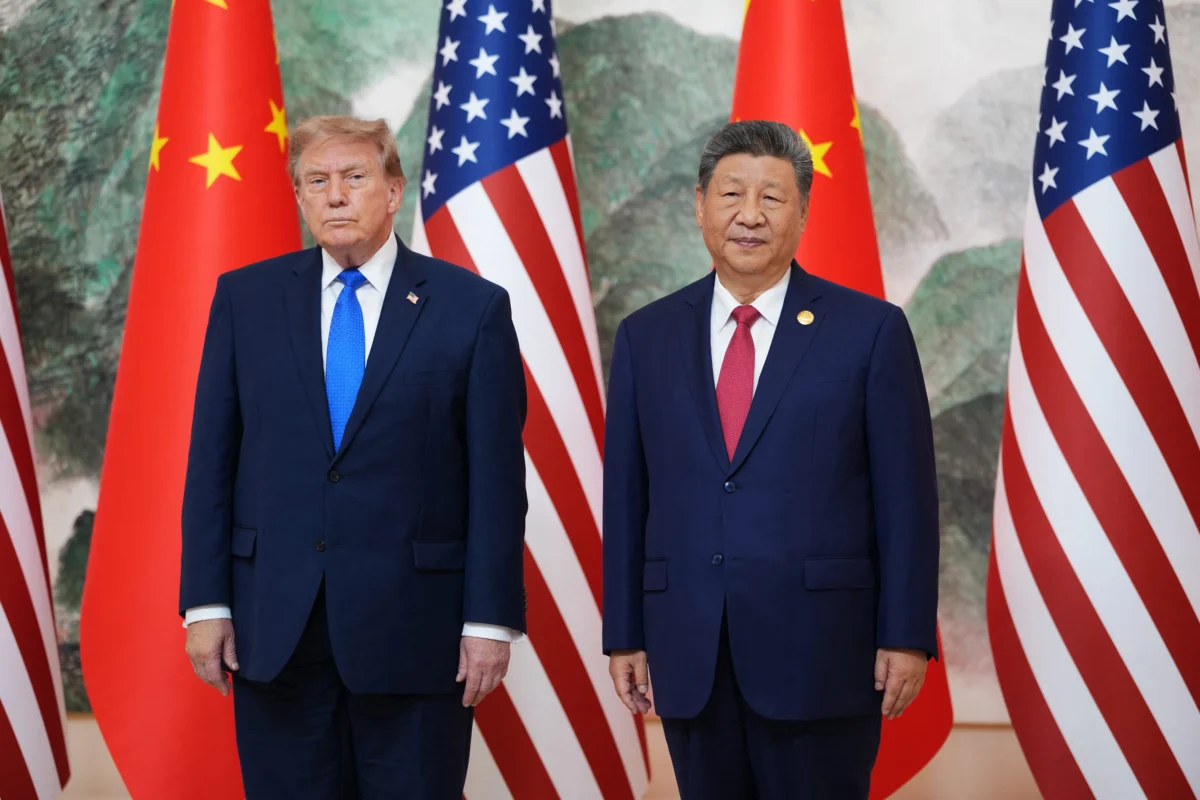
SHENZHEN, China — As leaders from across the Asia-Pacific Economic Cooperation gathered for high-profile group photographs at the close of the summit in China’s southern Guangdong Province, the true legacy of the gathering appeared defined less by what was accomplished than by the critical, high-stakes issues left unaddressed.
The diplomatic week in Shenzhen, anchored by bilateral talks and a surprising trilateral meeting, brought together some of the world’s most influential and controversial leaders. Yet, persistent geopolitical friction points—ranging from the future of Taiwan and strategic technology supply chains to ongoing conflicts in Eastern Europe and shifting alliances in Southeast Asia—remained largely unresolved.
"The intrigue is around not what was said, but what remains unresolved," said Gary Dvorchak, managing director at Blueshirt. "Taiwan remains a major source of strategic uncertainty. North Korea was notably absent from the trilateral nuclear declaration, and Southeast Asia, which is increasingly central to global manufacturing and investment, was overshadowed by major-power diplomacy."
President Donald Trump traveled to Shenzhen following a brief stop in the Philippines, where he met with leaders from Australia, India, and Japan on the sidelines of the ASEAN Summit as part of the Quad grouping. Despite widespread speculation ahead of the trip, Trump did not meet with North Korean leader Kim Jong Un.
Meanwhile, Taiwan—one of the 21 official member economies of APEC—was represented at the summit by Acer Group founder and honorary chairman Stan Shih. However, the self-governed island, which Beijing claims as part of its sovereign territory, did not feature in any significant official capacity during the proceedings, even as Taipei prepares to hold crucial local elections for mayor and other key posts on November 28.
Instead, the undisputed visual and political centerpiece of the APEC summit was a closed-door trilateral meeting on Thursday at Kylin Villa between Trump, Chinese President Xi Jinping, and Russian President Vladimir Putin. For the first time, the three leaders sat down together, ultimately issuing statements reaffirming their shared interests in reducing nuclear risks and coordinating plans to increase global oil production.
The meeting immediately drew skepticism from international policy experts and markets alike. "The optics are impressive, but there’s not much happening," Ian Bremmer, president and founder of Eurasia Group, said during an appearance on CNBC’s "Squawk Box Asia." Bremmer noted that any substantive resolution to the years-long war in Ukraine would ultimately require the direct participation of Ukrainian President Volodymyr Zelenskyy and European allies rather than a trilateral framework involving Washington, Beijing, and Moscow.
Little Progress on Tariffs or High-Tech Restrictions
Ahead of the trilateral summit, Trump and Xi held their third bilateral meeting of the year. Xi greeted Trump upon his arrival at the airport late Wednesday, reciprocating the diplomatic hospitality shown by Washington when the Chinese leader visited the U.S. capital in September.
Despite the pomp surrounding the bilateral discussions, little information was shared publicly regarding whether the two economic superpowers had agreed to reduce punitive tariffs, extend the January deadline allowing critical rare earths to flow freely across borders, or ease mounting tensions over bilateral technology competition.
The shadow of tech regulation loomed large over the delegation talks. Recent reports linking Jensen Huang to an alleged Chinese spy led to the executive’s high-profile resignation as CEO of Nvidia, triggering intense scrutiny in the U.S. Congress regarding the efficacy of American export controls designed to restrict China’s access to the advanced semiconductors required to train cutting-edge artificial intelligence systems.
Trump told Fox News that the Nvidia situation came up briefly during his conversations with Xi. White House officials had previously indicated that Trump did not explicitly plan to raise the matter, though noted that Tesla and SpaceX CEO Elon Musk was scheduled to accompany the U.S. president on the trip.
No other corporate executives were publicly named as part of the official presidential delegation, though other prominent American business leaders—including Visa CEO Ryan McInerney, who also chairs the U.S.-China Business Council—participated in the APEC CEO Summit and attended a welcome banquet held Wednesday evening.
However, Musk’s presence at the official APEC proceedings proved complicated. While CNBC reporters observed the opening portions of Wednesday’s banquet and Thursday’s Economic Leaders’ Meeting, Musk was notably absent from Trump’s side at major APEC events.
Instead, corporate sources and social media posts confirmed that Musk flew to Shanghai on Thursday morning to visit Tesla’s local manufacturing facility. Musk also appeared in an online video alongside Ren Hongbin, chairman of the China Council for the Promotion of International Trade. Earlier, Musk had addressed the DealBook Summit in New York via video conference, having previously signaled on social media that he would be joining remotely from China.
Neither Tesla nor the White House responded immediately to requests for comment regarding Musk’s itinerary.
"We still don’t have a durable resolution of the U.S.-China trade dispute," Dvorchak observed, emphasizing that international commerce requires substantive structural clarity rather than diplomatic ceremony.
U.S. Cultivates Strategic Ties Across the Wider Indo-Pacific
While high-level talks dominated Shenzhen, the broader diplomatic landscape revealed an aggressive U.S. effort to build security and economic partnerships across Asia outside the direct orbit of Beijing. U.S. Ambassador to ASEAN Kevin Kim told reporters that discussions during Trump’s stop in the Philippines focused heavily on regional cooperation, trade frameworks, and critical mineral supply chains.
Kim underscored that Southeast Asia stands at the very heart of artificial intelligence development moving forward, making it vital for Washington to ensure advanced American technology reaches the right partners through structured regulatory frameworks.
The emphasis on regional coalitions was echoed by Japanese Prime Minister Sanae Takaichi. Speaking to reporters in Shenzhen, Takaichi shifted attention away from traditional APEC communiques toward the outcomes of the Quad Summit. She highlighted through an official English translation that the four member nations expressed strong opposition to any unilateral attempts to alter the regional status quo by force or coercion, while condemning arbitrary export controls.
Takaichi’s presence in China marked a historic milestone, making her the first Japanese leader in seven years to visit the country. She received a notably cool reception upon her arrival in Shenzhen, reflecting deep-seated bilateral tensions that have escalated since November 2025, when Takaichi asserted that a Chinese military attack on Taiwan could provoke a direct Japanese defense response.
Addressing reporters on Thursday, Takaichi reaffirmed that Tokyo’s core position on Taiwan remains completely unchanged from the parameters established in the 1972 Japan-China Communique. That historical document notes that Japan "understands and respects" Beijing’s territorial claims over Taiwan, without explicitly endorsing the People’s Republic of China’s sovereignty over the island.
| Source | : | Finance Poetry |
| Author | : | rifanmuazin |
| Editor | : | Finance Poetry Editorial Team |