
Fed’s Goolsbee calls inflation report ‘borderline disturbing’ as central bank weighs more hikes
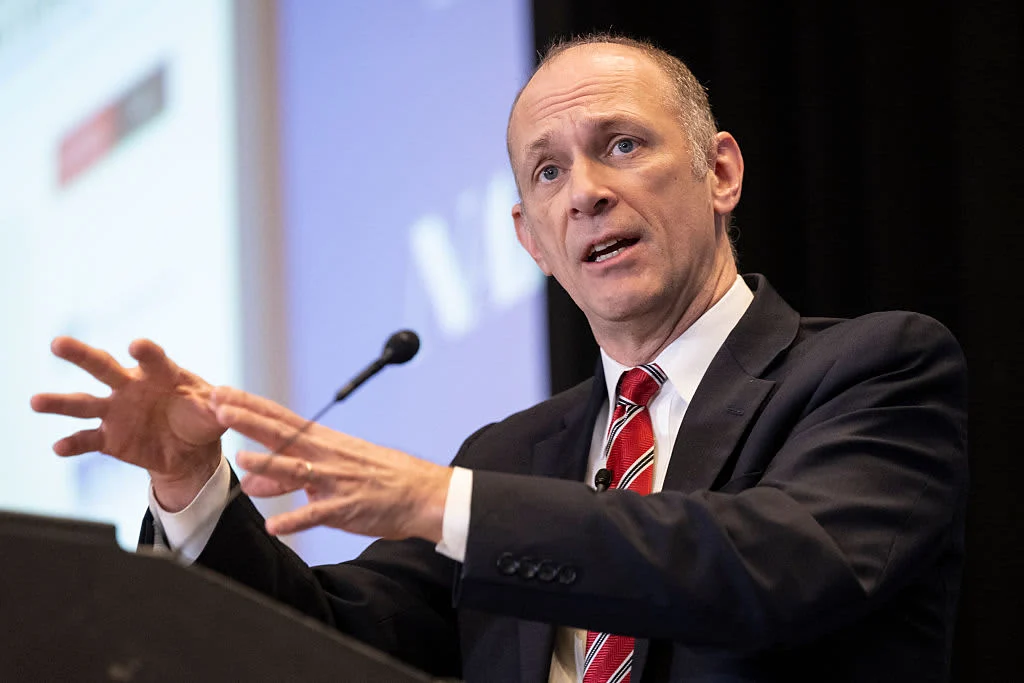
Speaking in an interview with "PBS NewsHour" on Tuesday, Goolsbee emphasized that the United States is facing a bona fide inflation problem that has been building momentum over time and will require decisive action to subdue. His remarks followed the release of the Bureau of Labor Statistics’ consumer price index report on Tuesday morning, which showed that prices rose 0.4% on a seasonally adjusted basis in October.
That monthly increase exceeded what most economists had anticipated, marking the third consecutive month of outsized price growth. The steady climb in the cost of living has forced a profound reassessment among policymakers at the Federal Reserve, who are now grappling with whether their current policy stance is sufficiently restrictive to cool the economy.
Goolsbee pointed out that several primary drivers of inflation, such as tariffs, have not faded over time in the manner that many forecasters had originally hoped. Furthermore, he noted that the persistently high inflation rate within the services sector remains a major source of unease for monetary policymakers.
Beyond the macroeconomic indicators, Goolsbee stressed that lofty prices have firmly entrenched themselves as the dominant concern for everyday Americans. He noted that the pinch of rising costs is universally felt across society, weighing heavily on the minds of ordinary consumers, business leaders, and nonprofit operators alike.
Tuesday’s troubling inflation report arrived at a critically sensitive juncture for the Federal Reserve. Central bankers are currently weighing their next interest rate maneuvers, as well as the broader policy path they may be forced to pursue in the coming months if price pressures refuse to subside.
Goolsbee’s cautious warnings came on the heels of statements from several other high-ranking Fed officials on Tuesday, suggesting that the rate-setting Federal Open Market Committee may need to act with greater aggressiveness to keep inflation anchored. When executing monetary policy, the central bank typically adjusts benchmark interest rates by a standard quarter-percentage point. However, shifting economic conditions are rapidly changing that calculus.
Speaking in London earlier on Tuesday, Federal Reserve Governor Christopher Waller indicated that a hot inflation report could compel him to advocate for a more aggressive half-point increase at the upcoming December policy meeting. Waller specifically noted that such an outsized move should be firmly on the table if core CPI—a widely watched metric that strips out volatile food and energy costs—came in around 0.3%. Hours later, the October data confirmed those exact figures.
Meanwhile, Dallas Fed President Lorie Logan echoed a similar sense of urgency following the report’s release. Logan stated that she sees a clear necessity for two additional quarter-point increases, adding that it may be necessary for the central bank to move more rapidly through the winter than the FOMC has managed during the fall.
A more measured perspective was offered by Anna Paulson, president of the Philadelphia Fed. While Paulson readily acknowledged that inflationary pressures remain very much alive within the economy, she argued that the central bank is not obligated to rush its policy tightening. For the time being, Paulson maintained that a strategy of further gradual tightening remains appropriate, noting that the ultimate path of monetary policy will depend on incoming economic data.
The Federal Open Market Committee previously raised rates by a quarter point in September, bringing the benchmark federal funds rate to a range of 3.75% to 4%, before opting to pause and hold rates steady during its October gathering.
Following years of price growth that have consistently exceeded the central bank’s preferred targets, Goolsbee warned that another psychological threshold is beginning to fray. He highlighted the genuine risk that consumers and businesses might begin to bake higher inflation expectations into their long-term planning, a development he described as a major concern that would ultimately render the broader inflation-fighting process significantly more painful.
Despite these mounting pressures, Goolsbee refrained from committing to a specific policy action for the upcoming December meeting. He noted that he is not a proponent of unnecessarily tying the hands of the committee far in advance.
The policy debates carry added weight given the composition of the central bank’s voting roster. Waller, Logan, and Paulson are all voting members of the FOMC this year, positioning them to cast definitive votes on interest rates at the committee’s final meeting of 2026 in December. Goolsbee, meanwhile, is slated to become a voting member next year.
In the immediate aftermath of the inflation data release and the subsequent commentary from Fed officials, financial markets adjusted rapidly. According to CME’s FedWatch tool, fed funds futures are now fully pricing in a rate hike at the December meeting.
Attention among traders and analysts has now shifted toward the magnitude of the impending move. Current fed funds futures price the probability of a larger half-percentage-point rate hike at the December gathering at 15%.
Looking slightly further ahead, the odds of benchmark rates climbing to between 4.25% and 4.5% by the January meeting—an outcome that would equate to either a single half-point increase or two successive quarter-point hikes—stand at 60%. Meanwhile, markets are pricing in a 10% probability that rates could reach as high as 4.5% to 4.75% by that same timeframe.
| Source | : | Finance Poetry |
| Author | : | rifanmuazin |
| Editor | : | Finance Poetry Editorial Team |