
European Consumers Wary of AI Shopping Agents Despite High Interest in Digital Assistance
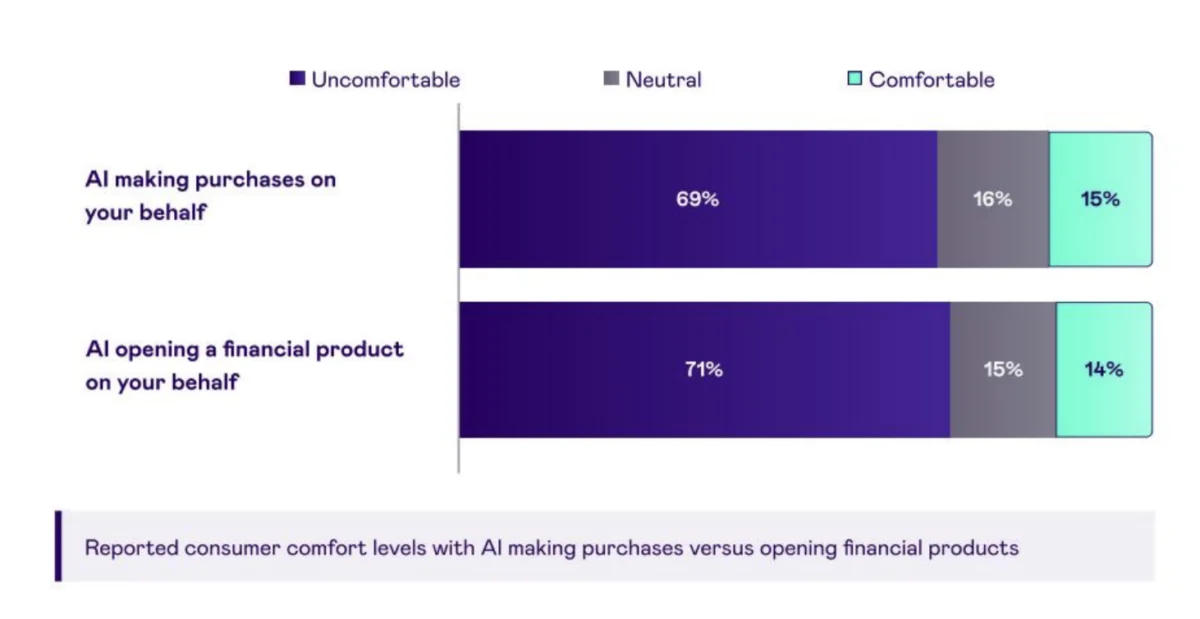
Most European consumers remain deeply uneasy about the prospect of artificial intelligence acting as autonomous shopping agents on their behalf, according to comprehensive new research published by digital identity and trust solutions provider Signicat. While everyday users are increasingly embracing AI to streamline tedious administrative tasks, the transition from gathering information to actually executing financial transactions and purchasing goods reveals a sharp divide in consumer trust.
According to the findings of the Signicat survey, which polled thousands of consumers and business leaders across nine European nations, 65% of respondents actively welcome AI assistance for routine digital tasks. Consumers are largely comfortable utilizing artificial intelligence to scour the internet for product specifications, compare competing offers across various retail platforms, or populate complex online application forms.

However, that willingness to delegate evaporates rapidly when the technology is granted the authority to spend money. The survey revealed that 69% of European consumers would feel uncomfortable letting an artificial intelligence shopping agent make purchases for them. Furthermore, consumer trust drops precipitously as the monetary value of the transaction increases.
When stratified by price point, the friction becomes even more pronounced. Only 19% of respondents stated they would feel comfortable allowing an AI agent to execute a small, low-value purchase. That figure plummets to a mere 8% when considering high-value purchases or significant financial commitments.
The underlying anxiety surrounding financial autonomy and digital authorization is further highlighted by what consumers demand in exchange for greater trust. When asked what specific safeguards would make them feel more at ease allowing an AI system to open a financial product or execute a contract on their behalf, 39% of respondents insisted on retaining final approval over the transaction. Another 32% emphasized the absolute necessity of having the power to override or intervene in the AI’s decision-making process at any given point during the interaction.

Emma Bauer, Chief Product Officer at Signicat, noted that the chasm between utilizing AI as an information-gathering tool and empowering it as a financial proxy represents a critical juncture for the digital economy.
"There’s a big difference between asking AI for help and giving it the authority to act on your behalf," said Emma Bauer, Chief Product Officer at Signicat. "Our research shows that 69% of European consumers are uncomfortable letting AI make purchases for them today. And when it comes to spending money, using someone’s identity or signing agreements, control really matters."
The hesitation among consumers unfolds against a backdrop of escalating digital threats faced by the financial sector. Payment firms and fintech institutions are currently grappling with a dramatic surge in identity fraud and sophisticated cyberattacks. Previous research conducted by Signicat revealed that 67% of payment and fintech companies have observed an increase in identity fraud attempts directed at their platforms.

Compounding the problem, 54% of these surveyed institutions reported an increase in successful fraudulent attacks, with account takeover emerging as the single most common method utilized by malicious actors. The integration of artificial intelligence into the threat landscape has only intensified the pressure on financial institutions. Fully 71% of the surveyed payment and fintech firms reported that fraudsters are already weaponizing artificial intelligence to execute attacks against their infrastructure and customer bases.
As artificial intelligence evolves rapidly from a passive comparison tool into an active commercial agent capable of making transactions, Signicat emphasizes that the hurdles facing the industry extend far beyond mere technological capability. Retailers, e-commerce platforms, and financial services institutions will be forced to establish rigorous frameworks that clearly define legal and operational parameters. Specifically, these organizations must determine who is legally acting in a given transaction, what exact actions an autonomous AI is permitted to perform, and at what precise milestones human buyers must step in to grant mandatory approval.
The underlying data for these insights was gathered through comprehensive online research managed by Sapio Research in August 2026. The scope of the study was broad, encompassing a total of 4,050 individual consumers alongside 450 business leaders distributed across nine distinct European markets. To ensure the relevance of the consumer responses, every single consumer participant had actively applied for and navigated the onboarding process for a financial product within the twelve months preceding the survey.
| Source | : | Finance Poetry |
| Author | : | rifanmuazin |
| Editor | : | Finance Poetry Editorial Team |