
TC Energy Seeks FERC Approval for Virginia Natural Gas Pipeline Anchored by Data Center Developer
TC Energy’s Columbia Gas Transmission (TCO) has officially petitioned the Federal Energy Regulatory Commission (FERC) for authorization to construct and operate a major new natural gas pipeline project located in Louisa County, Virginia. The proposed infrastructure initiative, designed to transport up to 390,000 dekatherms per day (Dth/d) of natural gas, highlights the rapidly growing intersection between digital infrastructure expansion and regional energy grids, with a prominent data center developer serving as the anchor shipper for the project.
The formal application submitted to FERC represents a significant step in addressing the surging energy demands driven by the rapid proliferation of data centers, particularly within the mid-Atlantic region. Virginia, and specifically Northern and Central Virginia, has long maintained its position as a primary global hub for data center operations. The concentration of server farms and cloud computing infrastructure in the region has created unprecedented electricity consumption patterns, placing heavy demands on local and regional power generation facilities. As electric utilities scramble to secure reliable, dispatchable power supplies to maintain grid stability amidst this digital boom, natural gas has emerged as an essential transition and baseline fuel source to support continuous power generation.
The proposed TCO project in Louisa County is structured around this exact operational necessity. By securing a data center developer as the anchor shipper, the pipeline underscores a broader structural shift in energy markets, where large technology and digital infrastructure companies are increasingly engaging directly with midstream energy providers and pipeline networks to secure dedicated fuel supplies. Rather than relying solely on existing, potentially constrained distribution networks, anchor shippers of this scale provide the commercial backing necessary to justify multi-million-dollar midstream investments. This arrangement guarantees long-term capacity utilization for the pipeline operator while offering the data center developer a direct and reliable energy supply path to fuel onsite or nearby power generation facilities.
The application before FERC initiates a comprehensive regulatory review process, one that will scrutinize the environmental, economic, and public convenience aspects of the Louisa County pipeline. Federal regulators will evaluate the potential environmental impact of construction, the economic necessity of the pipeline based on projected regional demand, and the terms of service offered to shippers. Throughout this regulatory proceeding, stakeholders ranging from local landowners and environmental organizations to state energy officials and competing market participants will have the opportunity to submit comments, interventions, and testimony concerning the project’s viability and ultimate public utility.
From an infrastructure perspective, the project adds to a complex tapestry of pipeline expansions, system modernizations, and capacity enhancements that midstream operators are undertaking across North America. Columbia Gas Transmission operates an extensive interstate natural gas transmission system spanning multiple states, connecting major supply basins with high-demand consumer and industrial markets. Integrating a new 390,000 Dth/d conduit into this existing network requires careful engineering coordination to ensure that downstream and upstream pressures remain balanced and that the broader system can accommodate the substantial injection and delivery volumes required by the Louisa County facility.
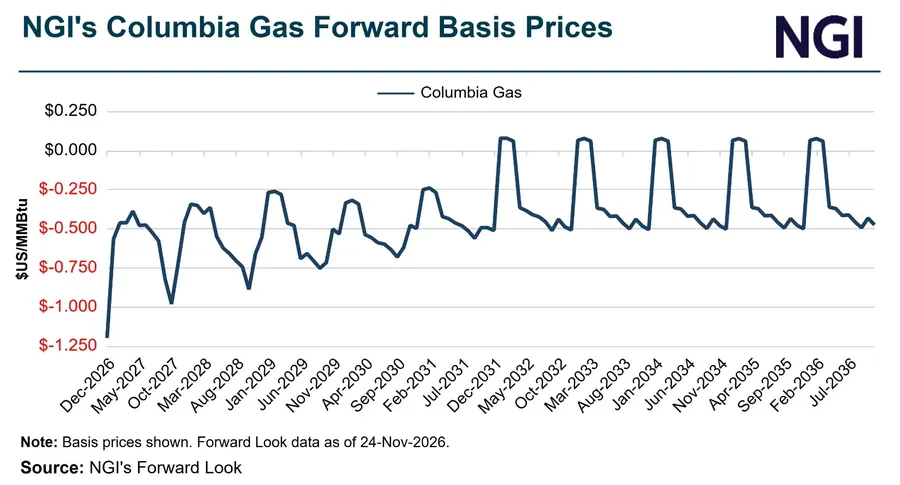
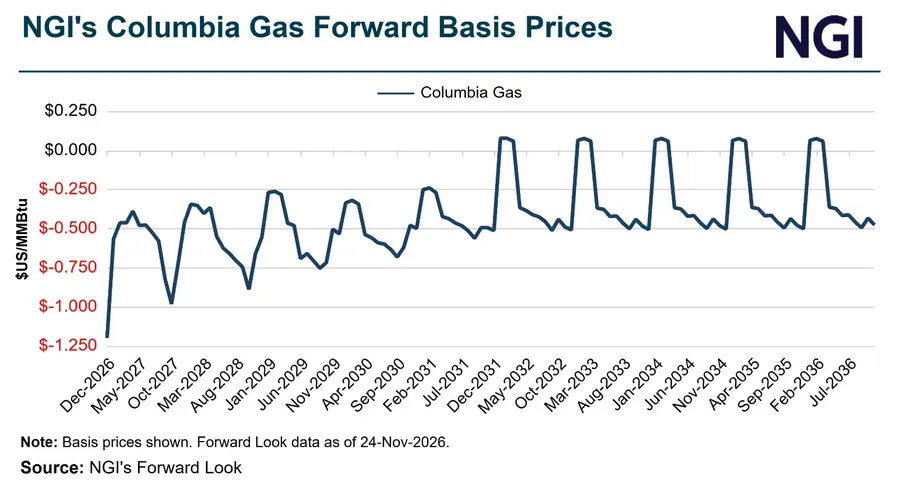
The timing of the TCO filing aligns with evolving dynamics within regional natural gas basis markets and forward pricing curves. As regional demand centers shift to accommodate massive industrial and technological loads, local basis pricing differentials and seasonal demand profiles are increasingly influenced by the continuous, year-round operational requirements of data centers. Unlike traditional residential and commercial heating loads, which experience dramatic seasonal peaks during winter months, data centers operate on a 24-hour, 365-day schedule. This constant baseload demand fundamentally alters how midstream assets are utilized and how forward price curves develop across various market hubs.
The proceeding before FERC is expected to unfold over the coming months as federal regulators examine the technical specifications, route alignments, and contractual commitments underpinning the Louisa County pipeline. As the review advances, the project will serve as a key indicator of how regulatory bodies adapt to the unique infrastructural demands of the technology sector, balancing the imperative for rapid digital expansion with traditional oversight of interstate commerce, environmental stewardship, and energy market reliability.
| Source | : | Finance Poetry |
| Author | : | rifanmuazin |
| Editor | : | Finance Poetry Editorial Team |