
Northeast and West Primed for Manufactured Housing Boom Under New Federal Law, Report Finds
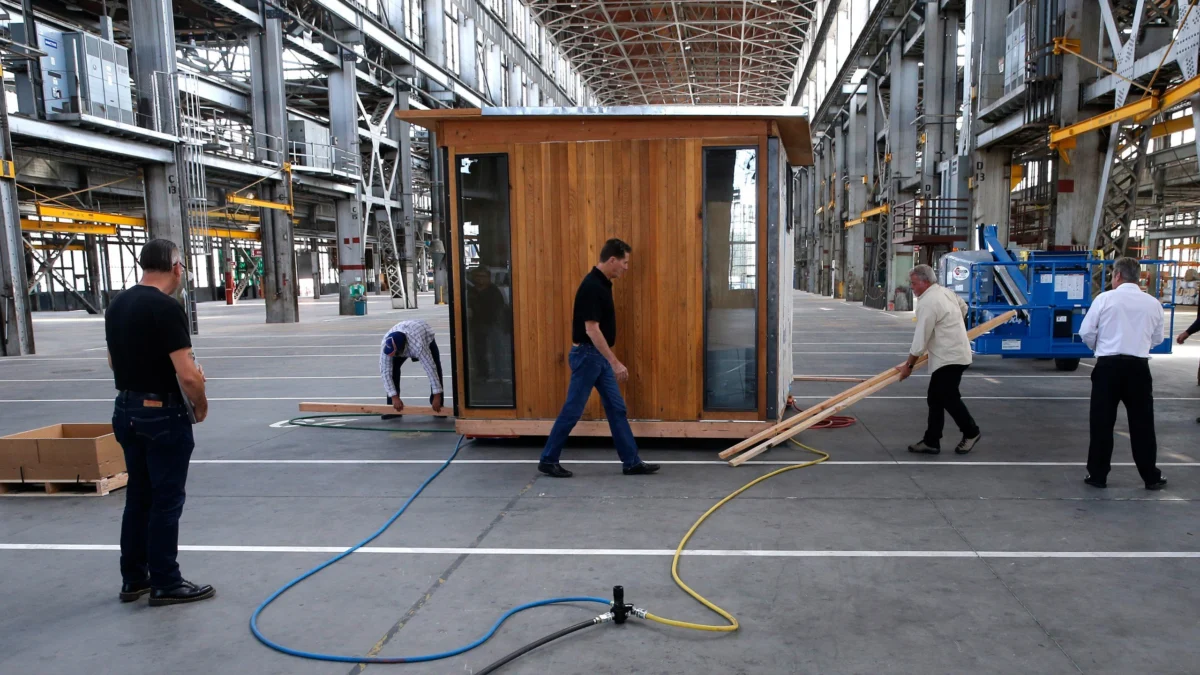
While the typical American image of manufactured housing often involves sun-drenched mobile home parks sprawling across the South and Southeast, a major shift may soon bring these factory-built residences to the Northeast and the West. A comprehensive economic research report from Realtor.com senior economist Joel Berner examines the manufactured housing guidelines established by the 21st Century Road to Housing Act, which was signed into law in June. Berner’s findings reveal that several cities across the Northeast—including Hartford, CT, Allentown, PA, and Albany, NY—possess ideal economic conditions for a manufactured housing boom, driven by affordable land, escalating costs for traditional new construction, and a critically low share of single-family starter home inventory.
For anyone unfamiliar with the terminology surrounding manufactured housing, the confusion is understandable. For decades, the terms "mobile home" and "manufactured housing" have been used interchangeably by the general public, despite representing distinct regulatory classifications. The official federal classification of "mobile home" was actually retired in 1980, replaced legally and structurally by the term "manufactured home." Broadly defined, manufactured homes are structures built entirely inside a climate-controlled factory setting and then transported piece by piece or unit by unit to a permanent residential site.
For years, strict federal Housing and Urban Development codes required every single manufactured home to feature a permanent steel towing frame, commonly known as a chassis, underneath the structure. However, new provisions introduced in the Road to Housing Act are specifically designed to spur the production of more affordable housing options by eliminating that mandatory steel chassis requirement. The landmark legislation goes a step further, entitling these new chassis-free manufactured homes to the exact same financing terms, titling processes, insurance policies, tax structures, transport protocols, and installation standards as conventional site-built homes.
The primary objective behind creating this modernized category of manufactured housing is to help blunt one of the housing industry’s sharpest and most persistent pain points: the severe shortage of affordable starter homes. Since the onset of the COVID-19 pandemic, the overall availability of affordable starter homes for sale has experienced a dramatic and sustained decrease across the United States. Realtor.com research indicates that there are roughly 300,000 fewer affordable starter listings on the active market today compared to the period immediately preceding the pandemic. Furthermore, the financial burden of purchasing these properties has surged dramatically, with the average cost of starter homes rising from $256,000 in 2019 to $344,000 in 2026. By stark contrast, the national median price for a manufactured home stood at a much more accessible $134,800 in April 2026.
To accurately determine which metropolitan areas across the country might experience the most significant market impact from this newly enabled type of manufactured housing, Realtor.com evaluated the 100 largest metro areas using three distinct economic metrics. These metrics included the percentage of single-family starter homes—defined specifically as listings priced at or below 80% of the local median price—available in the region; the relative price-per-square-foot premiums commanded by traditional site-built new construction; and the local availability of affordable vacant land suitable for residential development.
The resulting analysis revealed that six of the top ten opportunity metros identified in the study are located squarely in the Northeast. This cluster includes Hartford, Allentown, Albany, Rochester, NY, Syracuse, NY, and Worcester, MA. Beyond the Northeast, four other metropolitan areas made the prestigious top ten list: Denver, Colorado Springs, CO, Albuquerque, NM, and Spokane, WA.
Hartford claimed the number-one spot in the rankings. In the Hartford metropolitan area, traditional starter homes account for a mere 17.9% of the total single-family housing inventory, while site-built new construction costs a striking 29.1% more per square foot than existing homes, creating an immense affordability gap that factory-built homes are uniquely positioned to fill.
The economic mismatch is even more pronounced in other northeastern hubs. In Allentown, which ranked third in the study, single-family starter homes made up 22.9% of the local housing stock, but new-construction costs soared 33.6% higher than existing homes. In Albany, which captured the sixth spot, starter homes comprised 31.6% of the single-family inventory, yet the price per square foot for traditional new construction is a staggering 47% higher than for existing homes.
Those figures pale in comparison to Rochester, which ranked seventh on the list. In the Rochester market, 33.7% of available homes technically qualify as starter homes, but traditional site-built new construction costs an astonishing 97% more per square foot than existing homes, rendering conventional building nearly out of reach for median-income buyers looking to enter the property ladder.
While these compelling economic fundamentals create a strong financial argument for factory-built housing, another critical factor drives its potential popularity in northern climates. Frigid Northeastern winters traditionally halt or severely impede conventional housing construction for months at a time. In contrast, manufactured housing components are constructed indoors year-round, allowing for rapid assembly regardless of weather conditions.
Despite the favorable economic landscape and the new federal legislation, significant regulatory hurdles must be cleared before Hartford, Albany, or any other metro area can fully capitalize on the Road to Housing Act’s modernized manufactured housing rules. Berner’s research highlights that local municipal zoning laws represent a major bottleneck. According to data from Land Use Labs cited in the report, only about 17% of zoned land nationwide explicitly permits manufactured housing communities. Furthermore, many local municipalities continue to enforce restrictive minimum floor-size rules or stringent design mandates that effectively block factory-built units from entering their housing markets.
| Source | : | Finance Poetry |
| Author | : | rifanmuazin |
| Editor | : | Finance Poetry Editorial Team |