
XPeng Co-President Brian Gu Says Household Humanoid Robots Could Be a Reality Within Three Years
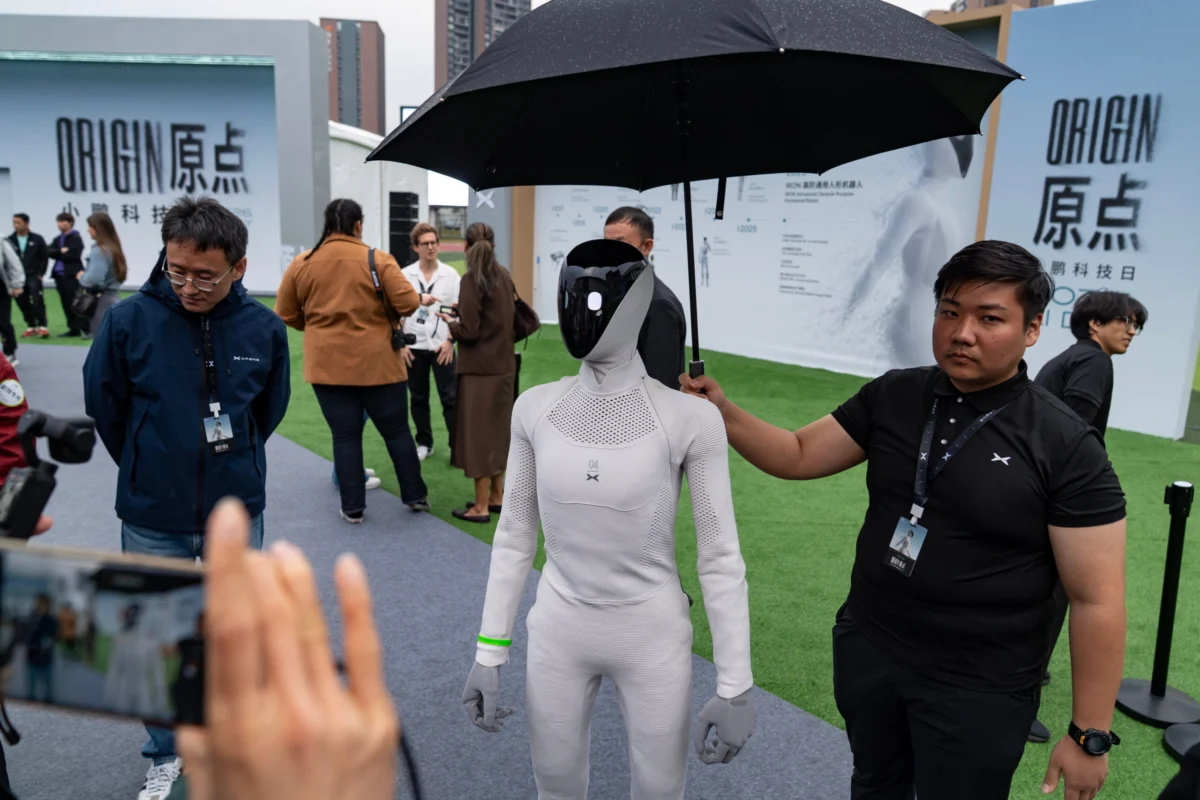
BEIJING — The concept of the household robot could soon transition from science fiction into everyday reality, according to Brian Gu, co-president of XPeng, the prominent Chinese electric vehicle manufacturer that has aggressively expanded into the humanoid robotics space. Speaking in a recent interview following the company’s high-profile AI Day event in Guangzhou, China, Gu outlined an ambitious timeline for how rapidly advanced automation technology is maturing and how soon consumers might welcome bipedal helpers into their living spaces.
"Maybe after successful deployment into commercial settings, maybe another one to two years, we can start thinking about deploying into home settings," Gu told CNBC, underscoring the rapid pace of sector development. "Technology is moving at a much faster clip."
The remarks came on the heels of XPeng’s unveiling of its latest general-purpose humanoid robot, named Iron, during its AI Day showcase. The event highlighted the automaker’s evolving identity from a pure-play electric vehicle company into a broader artificial intelligence and technology enterprise. The company has laid out a rigorous schedule for Iron’s commercial rollout, planning to initiate mass production in January before deploying the robots to train as store assistants across its retail car locations in the first quarter of next year. Commercial sales are subsequently set to begin in the second quarter, with customer deliveries expected to ramp up later in the year.
Founded in 2014 during the initial wave of electric vehicle startups, XPeng has carved out a reputation for technological agility and innovation. The company notably beat industry heavyweight Tesla to rolling out advanced driver-assist technology in mainland China, a competitive advantage in a critical and fast-moving market. Over the years, the Chinese automaker has pushed far beyond standard automotive manufacturing by launching its own proprietary artificial intelligence chips, venturing into personal flying vehicles, and building out a dedicated robotics division. That robotics unit achieved a significant milestone this past summer by securing $900 million in its first major funding round at a valuation of $6.3 billion, led by prominent venture capital firm IDG Capital.
Despite these technological milestones, investors have maintained a degree of skepticism amid a broader downturn in the Chinese domestic auto market, which has weighed heavily on the company’s financial valuation and market sentiment. XPeng’s shares, which are listed on both the New York Stock Exchange and the Stock Exchange of Hong Kong, have experienced a steep decline, dropping more than 55% over the course of the year amid broader sector-wide adjustments and macroeconomic pressures.
At the same time, China’s burgeoning humanoid robot industry has faced heightened regulatory scrutiny regarding financing and capital allocation in recent months. This increased oversight follows a wave of high-profile initial public offerings, such as Unitree’s market debut and subsequent stock slump, alongside a massive rush of speculative capital into the sector. These financial and regulatory headwinds have raised broader questions among market observers regarding the true commercial viability of the technology, the long-term sustainability of current business models, and the real-world efficacy of the core technology driving these machines.
Gu argued that XPeng’s robotics division differentiates itself from competitors through a rare and difficult-to-replicate combination of proprietary hardware, advanced software architecture, and immediate real-life use cases within its own commercial ecosystem. He expressed optimism that the company will attract additional institutional and strategic investors following Iron’s planned commercial launch next year.
The engineering hurdles associated with general-purpose humanoid robots remain formidable, requiring vast amounts of computational power and sophisticated sensory integration. "You can always make the head talk, you can always make the leg run, you can always make the hands to do certain tasks," Gu noted. "Pero doing a task while you’re walking and answering questions at the same time, that’s the most challenging part. And then doing everything well, not falling down, not getting distracted. The model has to work in sync."
Across the industry, most humanoid robot startups, particularly within China, tend to focus on isolated segments of the technology stack, such as dexterous robotic hands or the artificial intelligence-powered neural networks that act as the robot’s brain. Many players in the market operate essentially as original equipment manufacturers, relying on third-party suppliers and external partners to tie disparate mechanical and digital parts together into a finished, functioning robot. However, industry veterans note that integrating these complex components into a cohesive, reliable machine is significantly more difficult in practice than it sounds in theory.
XPeng’s co-founder and chief executive officer, He Xiaopeng, whose background is rooted in software engineering, initially harbored the belief that software could solve virtually every engineering challenge encountered by a technology company. According to Gu, that perspective shifted drastically once the leadership team immersed themselves in the physical realities of the electric vehicle industry. "And after he got into the EV business he realized how hard it is to make hardware… really do the things that you want to do safely and consistently," Gu said.
To bridge the gap between digital intelligence and physical execution, XPeng officially announced its proprietary "Turing Physical AI Architecture" during its AI Day presentation. The architecture is designed to leverage advanced artificial intelligence and real-time decision-making technologies to govern and control both the company’s smart electric vehicles and its expanding lineup of humanoid robots.
Addressing potential supply chain vulnerabilities, Gu told CNBC that XPeng’s robotics development primarily relies on the company’s existing driver-assist chips, which are already developed and integrated in-house. This indicates that the robotics division faces limited direct impact from ongoing United States export controls and regulatory restrictions targeting the sale of advanced Nvidia semiconductors to Chinese companies. "Right now we don’t see any change to our supply chain, and also ability to have these chips," Gu stated, highlighting a degree of self-reliance forged over years of proprietary hardware development.
The interconnected nature of XPeng’s talent pool and technological pipeline has deep roots. In 2023, the company’s then-head of autonomous driving, Xinzhou Wu, departed XPeng to lead Nvidia’s prominent automotive chip business, illustrating the deep technical overlap between advanced driver-assistance systems and modern robotics.
As XPeng accelerates the commercialization of its humanoid robotics business, Gu pointed out that the foundational work the company has already completed in autonomous driving technology translates seamlessly into this new product line. More importantly, he suggested that robotics could ultimately offer vastly superior economic returns compared to traditional automobile manufacturing. "It’s much easier to be profitable for the robotics business than the autos business," he said.
Looking toward the medium-term financial horizon, Gu projected that robotics will likely evolve into a meaningful and revenue-generating component of XPeng’s overall business portfolio within two to three years. He indicated that profitability for the robotics division could materialize as early as next year, with the intrinsic enterprise value increasing dramatically once the robots successfully transition out of commercial showrooms and into residential households.
Nevertheless, Gu cautioned that deploying robots into private homes presents a vastly more complex set of operational and safety challenges compared to structured commercial environments. Residential spaces require autonomous machines to navigate unpredictably, operating safely in close proximity to elderly family members, young children, and domestic pets, all while maintaining the capacity to react calmly and correctly to sudden emergency situations. These stringent operational demands, he explained, place exceptionally high requirements on battery power density, mechanical durability, and long-term performance consistency.
| Source | : | Finance Poetry |
| Author | : | rifanmuazin |
| Editor | : | Finance Poetry Editorial Team |