
Nvidia’s Interim CEO Defends Stability and Demand Following Jensen Huang’s Sudden Departure
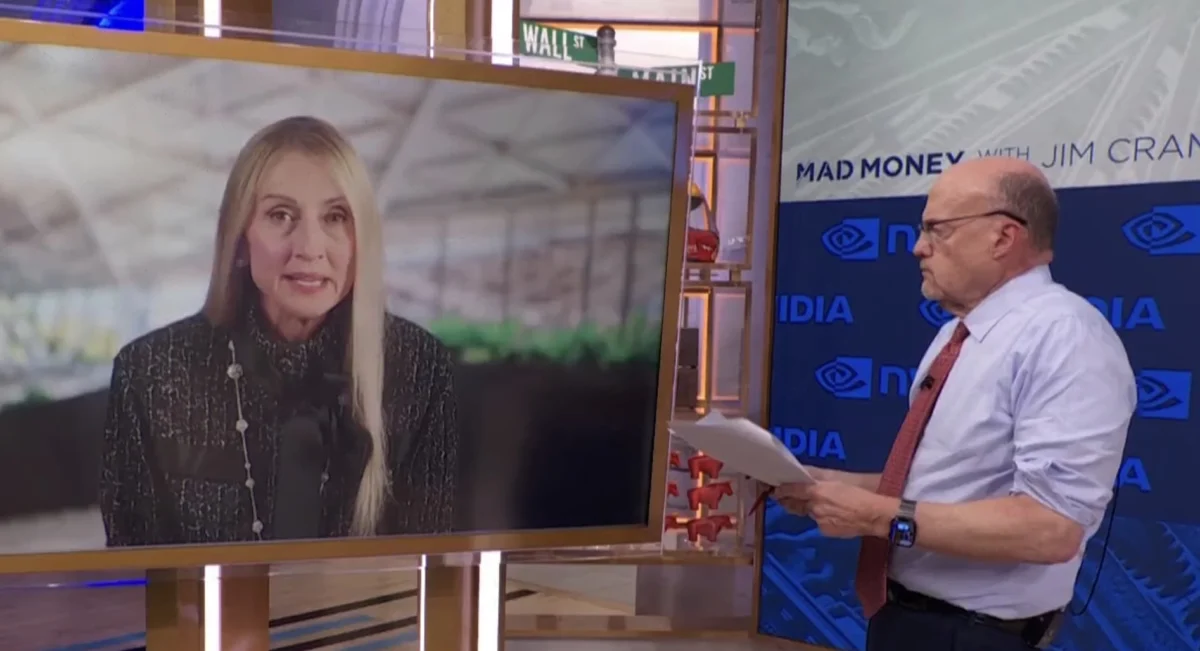
Nvidia’s customers and employees remain fully committed to the artificial intelligence chip giant, despite the abrupt and unexpected departure of longtime leader Jensen Huang last week. That was the core message delivered by interim CEO Colette Kress during an exclusive interview with Jim Cramer on CNBC’s "Mad Money," airing shortly after the company released a stellar quarterly earnings report accompanied by exceptionally strong forward guidance.
The leadership transition represents one of the most significant changes in the modern technology sector, given Huang’s long-standing role as the visionary architect behind Nvidia’s meteoric rise. However, Kress sought to reassure investors, clients, and market watchers alike that the fundamental pillars of the company’s business remain rock solid. During her conversation with Cramer, she addressed the primary anxieties gripping Wall Street since Huang’s resignation amid a widening affair scandal, arguing that market fears regarding client defection and internal disruption are entirely unfounded.
Addressing the competitive landscape and the massive demand for accelerated computing, Kress emphasized that major cloud providers and enterprise buyers are doubling down on their partnerships with Nvidia rather than seeking alternatives. Major technology firms, commonly referred to as hyperscalers, are navigating a hyper-competitive race to scale their artificial intelligence infrastructure, placing unprecedented reliance on Nvidia’s hardware and software ecosystems.
"Hyperscalers are the ones that are right now feverishly looking for more focus in terms of the compute that we have available," Kress told Cramer on "Mad Money." "This concept that anything is changing in terms of any of our types of customers — that is just not true. They are all continuing to be with us, and we have a very deep breath of different customers."

Kress’s public assurances arrived on the heels of Nvidia’s latest financial disclosure, which showcased better-than-expected quarterly earnings and revenue. Demonstrating supreme confidence in the trajectory of the business, Nvidia management also bumped up its fiscal 2028 revenue growth estimate to an astonishing 75%, up from its previous projection of 70%. The earnings report marked the very first major financial update since Huang stepped down as CEO. The sheer strength of the numbers immediately resonated across the financial markets, sending Nvidia shares rising nearly 4% in after-hours trading and going a long way toward easing immediate concerns about the chipmaker’s near-term and long-term outlook following the high-profile leadership shake-up.
In the wake of Huang’s exit, skepticism had begun to mount across Wall Street. Analysts and investors openly questioned whether the sudden vacuum at the top would prompt major technology clients to rethink their supply chains. Specifically, market participants wondered if key customers would decide to accelerate the development of their own in-house, custom-designed artificial intelligence chips, or pivot more aggressively toward traditional competitors such as Advanced Micro Devices in an effort to diversify their hardware dependencies.
Kress, however, dismissed these theoretical concerns by pointing directly to real-time interactions with the company’s client base. During the "Mad Money" interview, she stressed that major enterprise customers have not only maintained their existing commitments but have actively reaffirmed their desire to secure as much hardware allocation as possible. Rather than backing away from Nvidia during a moment of corporate transition, clients have reached out directly to executive leadership to ensure supply lines remain uninterrupted.
"I have seen already with many of these [customers] contacting me and saying, ‘Great to see everything intact. Great to see that there’s more supply. I need more demand,’" Kress noted, highlighting the insatiable appetite for the company’s cutting-edge graphic processing units and networking architecture.
While customer retention and sustained demand represent critical components of Nvidia’s ongoing market dominance, they were not the only major issues confronting the organization in the wake of the leadership transition. Huang’s abrupt exit also sparked widespread anxiety regarding talent retention. Specifically, observers questioned whether the chipmaker would be able to hold onto the elite software engineers, hardware architects, and operational leaders who built Nvidia into an undisputed titan of the artificial intelligence revolution. For decades, Huang was viewed not merely as an executive, but as the emotional and strategic driving force behind Nvidia’s unique corporate culture and relentless technological innovation.

Kress forcefully pushed back against any narrative suggesting an impending employee exodus. Speaking directly to Cramer, she underscored that the workforce’s deep-rooted dedication to the company’s mission remains entirely intact, matched only by the unwavering support of the broader leadership team. She framed Nvidia’s corporate culture as a collective enterprise built over decades by individuals who view their contributions to the firm as a defining professional achievement.
"The company has been built under the perspective that the employees look at Nvidia as their life work, and many of them have been here for many decades, working with us both from a technology standpoint or a business and operations perspective," Kress explained.
The interim CEO expressed total certainty that the day-to-day operations and groundbreaking research and development efforts inside the company are proceeding without interruption or distraction. For Nvidia, maintaining engineering momentum is paramount as the race to achieve advanced artificial intelligence capabilities intensifies globally. By emphasizing the longevity and loyalty of the internal staff, Kress sought to reassure stakeholders that the institutional knowledge and innovative spirit that propelled Nvidia to its current heights remain firmly anchored within the organization.
"We have high confidence that our employees are definitely still working, still working with us, and enjoy … the work here at Nvidia," Kress told Cramer, reinforcing the narrative of internal stability during a pivotal chapter in the chipmaker’s corporate history.
| Source | : | Finance Poetry |
| Author | : | rifanmuazin |
| Editor | : | Finance Poetry Editorial Team |