
Alibaba Plans Hong Kong IPO for Semiconductor Arm T-Head Amid Surging AI Race and Regulatory Headwinds
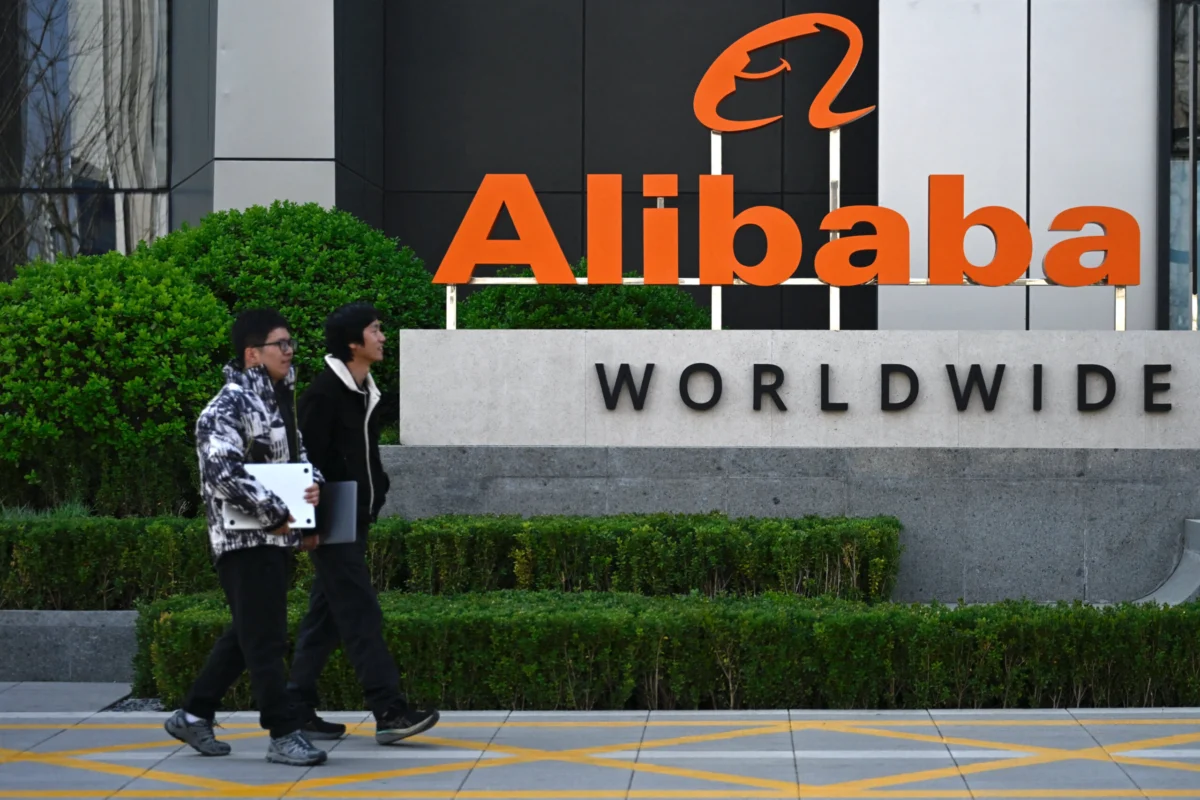
Employees walk past a company logo during a tour at the Alibaba office in Beijing on April 1, 2026, as the Chinese tech giant maneuvers through a shifting landscape of domestic semiconductor development, regulatory shifts, and international market pressures.
Chinese technology and e-commerce titan Alibaba announced late Tuesday that the Hong Kong Stock Exchange will allow the company to spin off its specialized semiconductor subsidiary, T-Head. To execute the separation, Alibaba outlined plans for a public offering of T-Head shares in Hong Kong, a move that remains subject to final regulatory approval from both the exchange itself and the China Securities Regulatory Commission. The official filing submitted by the company did not disclose an anticipated listing date nor the proposed financial size of the offering, leaving market watchers to speculate on the valuation T-Head might command in the current climate. However, Alibaba noted in its corporate disclosures that it had already filed confidentially on Sept. 11 to pursue the public listing of T-Head on the Hong Kong bourse.
In the wake of the announcement, Hong Kong-listed shares of Alibaba traded 1% lower during Wednesday morning sessions, reflecting ongoing broader caution in the market. The company’s stock has faced persistent downward pressure, falling roughly 29% year-to-date as technology equities navigate a complex web of geopolitical friction, supply chain restrictions, and changing investor sentiments across global financial hubs.
The strategic push to spin off T-Head comes at a time when hardware independence has become a paramount objective for China’s technology sector. In late September, Alibaba formally unveiled its next-generation artificial intelligence chip, the Zhenwu V900. According to the company’s technical roadmaps and public releases, the new processor delivers three times the raw performance of its predecessor, the Zhenwu M890, which had been rolled out earlier in the year in May.
Alibaba stands as one of several prominent Chinese corporations—alongside telecommunications and electronics giant Huawei—aggressively developing homegrown semiconductor solutions capable of powering advanced artificial intelligence workloads. This domestic push has been heavily accelerated by mounting U.S. export controls and trade restrictions designed to limit China’s ability to access cutting-edge foreign processors and manufacturing equipment.
The struggle for semiconductor supply supremacy has also drawn intense scrutiny from financial investigators and short sellers. In May, short-selling firm Culper Research published a report alleging that Alibaba had managed to obtain restricted Nvidia chips by indirectly financing various business entities located across Southeast Asia. Alibaba did not immediately respond to requests for comment regarding those specific allegations when they surfaced.
Compounding the delicate geopolitical and market dynamics, recent controversies involving U.S. semiconductor bellwether Nvidia have riounded through global exchanges. News surrounding Nvidia CEO Jensen Huang’s personal affair with an alleged Chinese spy—who was reportedly connected to one of the Southeast Asia-based entities scrutinized by investigators—has dragged Nvidia’s stock down to its lowest valuation since late March. This sharp correction in Nvidia’s market value has weighed heavily on the broader U.S. stock market, sending ripples of volatility across international technology sectors.
Amid this broader tech stock volatility and shifting capital flows, the primary equity markets continue to see high-stakes maneuvers from major players. U.S.-based artificial intelligence giant Anthropic revealed in an updated regulatory filing on Tuesday that it intends to offer 825 million shares in its highly anticipated initial public offering, establishing a price range between $70 and $78 per share. Trading for Anthropic on the Nasdaq exchange is widely expected to commence on Nov. 19, according to people familiar with the transaction details who spoke on the condition of anonymity because they were not authorized to discuss the matter publicly.
Despite major milestones and occasional bursts of enthusiasm—such as the widespread investor excitement witnessed last year surrounding breakthrough AI models developed by DeepSeek—Chinese tech stocks have largely underperformed their U.S. counterparts over the past year.
The cooling enthusiasm for domestic tech offerings is further evidenced by strategic delays across the industry. Chinese search engine and AI developer Baidu has reportedly delayed the public listing of its AI chip unit, Kunlunxin, which had previously been targeted for a Hong Kong IPO. Similarly, Chinese memory chip manufacturer YMTC has also put its IPO plans on hold as weaker market conditions weigh heavily on sentiment, according to reports published by financial news outlets this month. Neither Baidu nor YMTC immediately responded to requests for comment regarding their adjusted listing schedules.
These corporate hesitations arrive as China’s financial regulators implement stricter oversight across the board. Over the last few months, domestic regulatory authorities have increased their scrutiny on technology initial public offerings, closely monitoring the massive rush of capital into the artificial intelligence and advanced manufacturing sectors to ensure market stability and compliance with national priorities.
Reporting contributed by CNBC’s Fred Imbert, Ashley Capoot, and Leslie Picker.
| Source | : | Finance Poetry |
| Author | : | rifanmuazin |
| Editor | : | Finance Poetry Editorial Team |