
Alphabet’s Autonomous Ambitions Clash with Wall Street Realities as Waymo Burns Cash Despite Rapid Growth
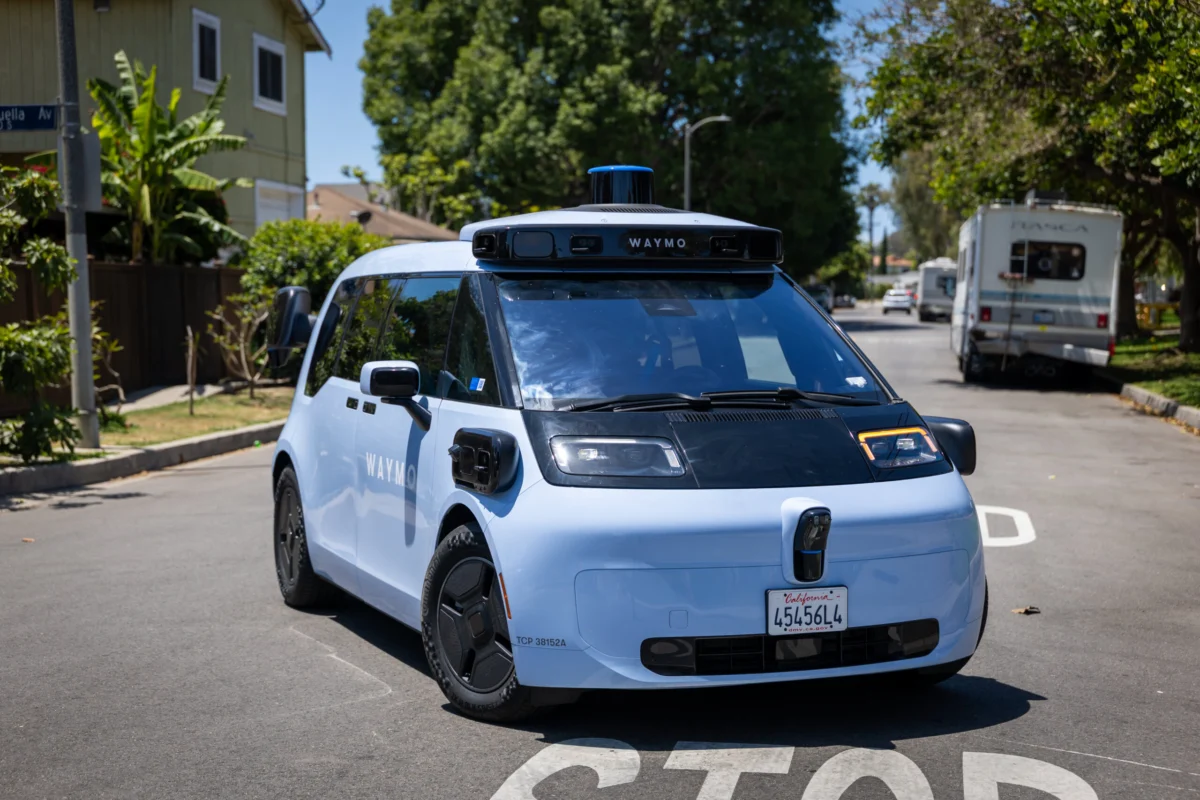
Waymo’s newest autonomous vehicle, dubbed the Ojai, quietly navigated the bustling streets of Venice Beach on a Wednesday afternoon in late May 2026, capturing the attention of onlookers and the tech industry alike. Yet, beneath the veneer of technological triumph and futuristic design, a stark financial reality looms for its parent company, Alphabet. While Waymo continues to cement its dominance as the undisputed leader in the United States robotaxi market and aggressively charts an expansion course overseas, it remains practically immaterial in terms of revenue contribution to Google’s parent company, which continues to pour staggering amounts of cash into fueling its relentless growth.
The depth of this financial paradox was brought into sharp focus during Alphabet’s third-quarter earnings report. According to the financial disclosures released on Wednesday, the company’s "Other Bets" segment—an eclectic innovation incubator that houses Waymo alongside cutting-edge enterprises like drug design research business Isomorphic—generated $372 million in revenue during the quarter. While this figure represents an 8% increase compared to the same period a year earlier, it accounts for a meager 0.3% of Alphabet’s total corporate sales, underscoring just how heavily the tech giant still relies on its foundational cash cows to subsidize its futuristic ventures.
That modest top-line revenue, however, comes at a remarkably steep price for Alphabet shareholders. Operating losses within the Other Bets segment widened dramatically during the quarter, ballooning to $2.05 billion compared to an operating loss of $1.43 billion a year prior. Beyond supporting Waymo’s sprawling autonomous fleet and massive testing infrastructure, this financial drain also funds Isomorphic, which has been leveraging Google’s advanced Gemini 4 Argon artificial intelligence models to revolutionize pharmaceutical discovery.
Despite the widening deficit, Alphabet Chief Executive Sundar Pichai remains resolutely optimistic about the trajectory of the autonomous driving unit. During his introductory remarks on the quarterly earnings conference call, Pichai frontloaded his commentary by touting Waymo’s aggressive expansion plans, framing the business as a vanguard of modern mobility. Waymo currently commands a formidable lead in the domestic autonomous vehicle landscape, though it faces an increasingly crowded field of emerging competitors, including Amazon-backed Zoox and Elon Musk’s Tesla.
Looking beyond U.S. borders, Waymo announced in August that it plans to formally launch commercial robotaxi rides in Germany by 2027. This upcoming European Union debut will represent the company’s third international market, signaling a calculated, methodical approach to global scaling. "Waymo now operates in 15 major U.S. cities and just recently opened up service to the public in San Antonio, San Diego and Tampa with planned expansions into Canada, Germany, Singapore and Spain," Pichai told analysts and investors during the call.
On the global stage, Waymo’s most formidable rival remains Baidu’s Apollo Go, which has achieved massive scale and operational footprint across various urban centers in China. The international race for autonomous supremacy is intensifying rapidly, transforming what was once a localized Silicon Valley experiment into a high-stakes geopolitical and economic contest.
For many years, Alphabet enjoyed a comfortable luxury: it could afford to operate Waymo as a visionary side project while its core online advertising engine churned out tens of billions of dollars in annual profit and threw off astronomical mounds of free cash. That financial cushion allowed the company to incubate long-term bets without inviting intense short-term scrutiny from the financial markets. However, the macroeconomic and technological landscape has shifted dramatically. With Alphabet now investing heavily in artificial intelligence infrastructure, data centers, and next-generation computing hardware, the company’s free cash flow has turned negative, and Wall Street has begun to voice palpable concerns over capital allocation discipline.
Those underlying market anxieties crystallized following Alphabet’s Wednesday earnings release, which featured an earnings and revenue miss that sent the corporate stock tumbling by nearly 10% in extended trading sessions. Compounding investor unease, Alphabet maintained its hefty full-year capital expenditures forecast at a staggering range between $195 billion and $205 billion, primarily earmarked for building out AI infrastructure. Consequently, the company reported a negative free cash flow exceeding $9 billion for the quarter, placing unprecedented pressure on side ventures like Waymo to eventually prove their economic viability.
To ease the capital burden on its parent company and secure independent financial breathing room, Waymo has increasingly turned to external markets. Earlier this month, the autonomous vehicle pioneer announced that it had successfully closed a $5 billion term loan, marking its inaugural venture into debt financing. This followed a massive capital raise in February, during which the robotaxi business announced it had secured $16 billion at a towering valuation of $126 billion. That landmark funding round was led by Alphabet itself, but also drew substantial participation from prominent institutional heavyweights and venture capital firms, including Andreessen Horowitz, Fidelity, T. Rowe Price, Sequoia Capital, and Kleiner Perkins, signaling strong external conviction in Waymo’s technological moat despite the high burn rate.
Operational milestones continue to accumulate at a rapid pace alongside these financial maneuvers. Just last week, Waymo officially rolled out driverless commercial rides to and from the busy Las Vegas airport, marking another major logistical hurdle cleared. This expansion into Las Vegas aviation transit follows similar airport deployment announcements in five other major metropolitan areas, including San Francisco and Phoenix, where autonomous pickup and drop-off operations have become an increasingly common part of daily commuter and tourist routines.
"Waymo is on a great trajectory," Pichai emphasized during the Wednesday earnings call, pointing to a monumental safety and operational milestone. "We have now driven more than 300 million fully autonomous miles."
This staggering accumulation of driverless mileage highlights Waymo’s maturity relative to its domestic competitors, particularly Tesla, which has adopted a different technical and regulatory path toward autonomous deployment. According to public disclosures on its website, Tesla’s vehicles operating within its fledgling Robotaxi network have completed approximately 3.8 million miles "unsupervised," meaning without a human safety driver behind the wheel. During Tesla’s own earnings call the previous week, CEO Elon Musk expressed strong confidence in the commercial future of the venture, telling investors that the company’s Robotaxi operations should blossom into a "meaningful" revenue contributor by the second half of 2027.
As the race toward a driverless future accelerates, the contrast between Alphabet’s cash-intensive incubation strategy and competitors’ commercial timelines underscores the immense financial hurdles inherent in reshaping global transportation. While Waymo continues to break records in cumulative driverless miles and geographic reach, the ongoing pressure from Wall Street to rein in cash burn ensures that the path to profitability will remain the ultimate test for autonomous vehicle pioneers.
| Source | : | Finance Poetry |
| Author | : | rifanmuazin |
| Editor | : | Finance Poetry Editorial Team |