
Autumn Budget 2026 summary – how it affects small businesses
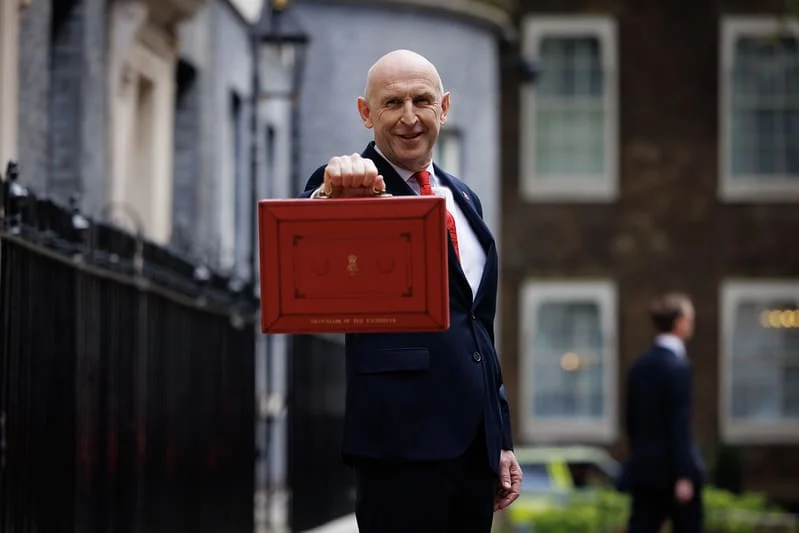
The fiscal statement, unveiled at Number 11, attempts to balance the government’s broader economic objectives with specific interventions designed to stimulate entrepreneurship and ease regulatory burdens. However, reaction from leading business organisations has been sharply mixed, with many warning that the cumulative effect of rising wage floors and persistent operational costs could stifle broader economic recovery outside of favored sectors.
Among the headline announcements is the introduction of the Young Entrepreneurs Allowance, a government pilot program specifically structured to provide eligible young business founders with an allowance covering a full year’s worth of living expenses. This initiative is designed to remove the initial financial barriers that often prevent young innovators from launching new commercial ventures.
For the country’s most successful high-growth enterprises, the Chancellor announced Founders’ Relief, which will establish a 10% tax rate on lifetime gains of up to £10 million, taking effect from April 2027. While this measure is explicitly geared toward the upper echelon of scaling businesses, smaller traders and side-business owners will benefit from an increase in the tax-free trading allowance. The threshold at which new and small-scale ventures are legally required to begin paying tax will rise significantly from £1,000 to £3,000, implemented through the Finance Bill 2026/27 and taking effect from April 6, 2027.
Capital investment incentives also received attention, with the government confirming that current full expensing rules will remain in place. However, the main rate of the writing down allowance will see a reduction of two percentage points to 12% starting in April 2027, while the main rate of the First Year Allowance is set to increase from 40% to 50% over the same period.
One of the most substantial areas of reform centers on business rates, particularly for retail, hospitality, and leisure properties in England. The Small Business Rates Relief threshold for these specific sectors is increasing from a band of £12,000 to £18,000 up to an expanded range, effectively exempting an additional 70,000 businesses from paying business rates altogether. For larger retail, hospitality, and leisure businesses, the rate threshold for tapered relief will shift from £15,000 to £21,000. Both modifications take effect in April 2027, backed by a government commitment that there will be no above-inflation rate increases for any business operating within these sectors.
This latest relief builds upon a previous 20% rate cut enacted earlier in the year for pubs, clubs, and live music venues. Furthermore, the Transitional Relief Supplement will be extended by two years from April 2027, and the Supporting Small Business Scheme in England will be prolonged for another year for those who received it in 2023. Conversely, Business Rates Relief will be formally stripped from vaping shops and adult gaming centres starting in April 2027, and development is underway on a General Anti-Avoidance Rule for business rates in England. By the end of the decade, local authorities will retain 100% of business rates, underpinned by the option to introduce an Overnight Visitor Levy, commonly referred to as a tourist tax.
Employment and labor regulations will also undergo significant transformation. For the first time, eligible self-employed fathers, partners, and adopters will receive statutory parental pay starting in April 2029. Meanwhile, the National Living Wage and National Minimum Wage are scheduled for a uniform 3.9% increase effective April 1, 2027. Under these changes, the National Living Wage will rise to £13.21 per hour. The National Minimum Wage will climb to £11.27 per hour for workers aged 18 to 20, and to £8.31 per hour for 16 to 17-year-olds and eligible apprentices, while the accommodation offset will increase to £11.53 per day.
Motorists and logistics operations received targeted support with the permanent establishment of the 55p per mile rate covering the first 10,000 miles of car and van travel for work purposes. Additionally, the higher mileage rate applied to travel exceeding 10,000 miles is being increased from 25p to 35p per mile, and the ongoing freeze on fuel duty has been extended through July 2027.
Administrative and compliance obligations will see both tightening and simplification measures. The government has published an implementation roadmap to make VAT e-invoicing a mandatory requirement by April 2029. To combat tax leakage, online marketplaces such as Amazon and Temu will become legally responsible for collecting VAT on sales made by UK VAT-registered businesses and other domestic sellers meeting a minimum annual sales threshold of £90,000 per platform, though personal sales, second-hand goods, and business-to-business transactions remain exempt.
In an effort to reduce red tape, the government plans to simplify public sector procurement bidding for small businesses, streamline Office for National Statistics business surveys to reduce repetitive data requests, and implement a single-data-entry "Tell us Once" framework.
Despite these administrative concessions, industry experts have voiced profound concerns regarding the overall impact of the fiscal package, particularly regarding employment costs.
Theo Chatha, chief financial officer at Bibby Financial Services, described the announcement as a bare minimum Budget that failed to deliver what businesses need to thrive. He noted that while support for retail, hospitality, and leisure is welcome, the broader small and medium-sized enterprise economy—including manufacturers, construction firms, wholesalers, hauliers, and service providers—remains burdened by high taxation without rate relief. Chatha added that while fair pay is essential, shifting the cost of statutory wage increases onto small enterprises already absorbing previous national insurance hikes without corresponding support will damage growth and investment confidence.
Kevin Fitzgerald, UK managing director at Employment Hero, echoed these sentiments, noting that while business rates relief is positive, a 3.9% minimum wage increase will cause anxiety among employers operating on tight margins. He emphasised that wage policy and employment costs are inextricably linked, warning that small businesses may struggle to sustain long-term investments in staff training and recruitment.
Adam Owens, head of tax for the UK North and Midlands at Xeinadin, warned that guaranteed payroll cost increases, divorced from guaranteed sales growth, would force margin-pressed businesses to raise prices, reduce headcount, or postpone investment, ultimately hampering small and medium enterprise development.
Tina McKenzie, national chair of the Federation of Small Businesses, delivered a stark assessment, stating that the Budget failed to address soaring energy bills or make hiring more affordable, leaving small businesses facing gloomy revenue forecasts and a contraction mindset. Luke Cheetham, founder and CEO of uRisk Safety Services, suggested that alternative mechanisms, such as temporary employer National Insurance rebates for newly created roles, would have offered more direct stimulus for workforce expansion.
The fiscal statement was delivered against an evolving economic backdrop. The Office for Budget Responsibility upgraded its growth forecasts for the year, projecting economic growth of 1.2% this year and 1.6% by 2031, while noting that inflation and surging gas prices continue to elevate operational costs and loan rates for businesses across the country.
| Source | : | Finance Poetry |
| Author | : | rifanmuazin |
| Editor | : | Finance Poetry Editorial Team |