
China’s exports and imports surge past expectations in September
According to official customs data released on Wednesday, China’s exports grew by 36.3% in September compared to the same period a year ago, marking the fastest expansion rate recorded since February. The sharp upward trajectory caught international markets by surprise, significantly outstripping the median forecasts compiled in a Reuters poll, which had projected a more modest export growth of 25.5%.
At the same time, the nation’s import sector also demonstrated unexpected vigor, climbing by 31% in September from a year earlier. This represented the fastest monthly increase since June and accelerated notably from the 28.2% growth rate registered in August. Like their export counterparts, these import figures comfortably outperformed the Reuters poll consensus estimate, which had anticipated an increase of 24.5%.
The twin surges in inbound and outbound shipments underscored an unprecedented month for international commerce, culminating in a record monthly trade surplus of $133.5 billion. The massive surplus easily surpassed previous marks and highlighted the enduring, formidable strength of China’s external manufacturing and trade sector, even as analysts continue to monitor lingering concerns regarding sluggish domestic consumer demand at home.
The extraordinary performance of China’s external trade was heavily underpinned by robust commercial ties with its primary individual trading partners. Customs data accessed via Wind Information revealed that China’s exports to the United States surged by nearly 39.6% in September. This remarkable growth rate outpaced the expansion of China’s overall global exports, driving the monthly trade surplus with the U.S. to its highest level since January 2025.
A primary catalyst for this export boom has been the insatiable global demand for specialized components required to build and maintain advanced data centers. As nations and technology enterprises worldwide race to scale up their computing capabilities to power artificial intelligence applications, Chinese manufacturers of hardware components and integrated circuits have experienced a historic windfall.
This technological surge was vividly illustrated in the trade figures for integrated circuit boards. The total global financial value of China’s integrated circuit board exports skyrocketed by 136% in September compared to the same month in the previous year. Interestingly, however, a closer examination of the underlying metrics reveals a striking divergence between value and physical volume. CNBC calculations based on the official figures showed that while the monetary value of these chip exports more than doubled, the actual number of individual units shipped abroad rose by only 1%. This disparity points to a profound shift toward higher-value, more advanced semiconductor products dominating global trade flows, alongside rising prices for core technology components.
Conversely, China’s raw material and energy import metrics reflected a starkly different narrative, marked by strategic shifts, export controls, and shifting domestic industrial priorities. The physical volume of China’s crude oil imports contracted by double digits for the sixth consecutive month. This persistent downward trend in volume has characterized both crude oil and natural gas imports since the beginning of the year. Yet, in a testament to shifting global commodity prices, the total financial value of crude oil imports actually rose in September for the first time since May, according to data from Wind Information.
The broader energy and commodities picture is further complicated by state-directed trade measures. Reflecting the direct impact of government export controls and domestic stockpiling strategies, the physical volume of China’s exports of rare earths and fertilizers dropped during the first three quarters of the year. In a complementary trend, fertilizer imports surged over the same period, illustrating how Beijing continues to actively manage and protect its critical resource reserves.
The broader economic implications of China’s export machine have drawn intense global scrutiny in recent years. International trading partners have increasingly voiced concerns over the economic fallout of surging Chinese shipments, particularly at a time when domestic consumption within China remains relatively weak. This macroeconomic imbalance has frequently ignited friction at international summits and bilateral forums.
However, recent diplomatic and trade engagements have shown signs of cooling some of the most volatile trade disputes. Last month, the United States and China announced a significant de-escalation plan, agreeing to roll back tariffs on $30 billion worth of goods from each respective country. Furthermore, both economic superpowers agreed to extend a broader trade truce by two months, pushing the deadline to January and providing a measure of predictability for global supply chains.
Similar diplomatic interventions have begun reshaping trade flows in other sectors, particularly the automotive industry. Last week, following high-level trade negotiations held in Beijing, the European Union announced that China had agreed to halve its exports of hybrid-powered cars to the European bloc.
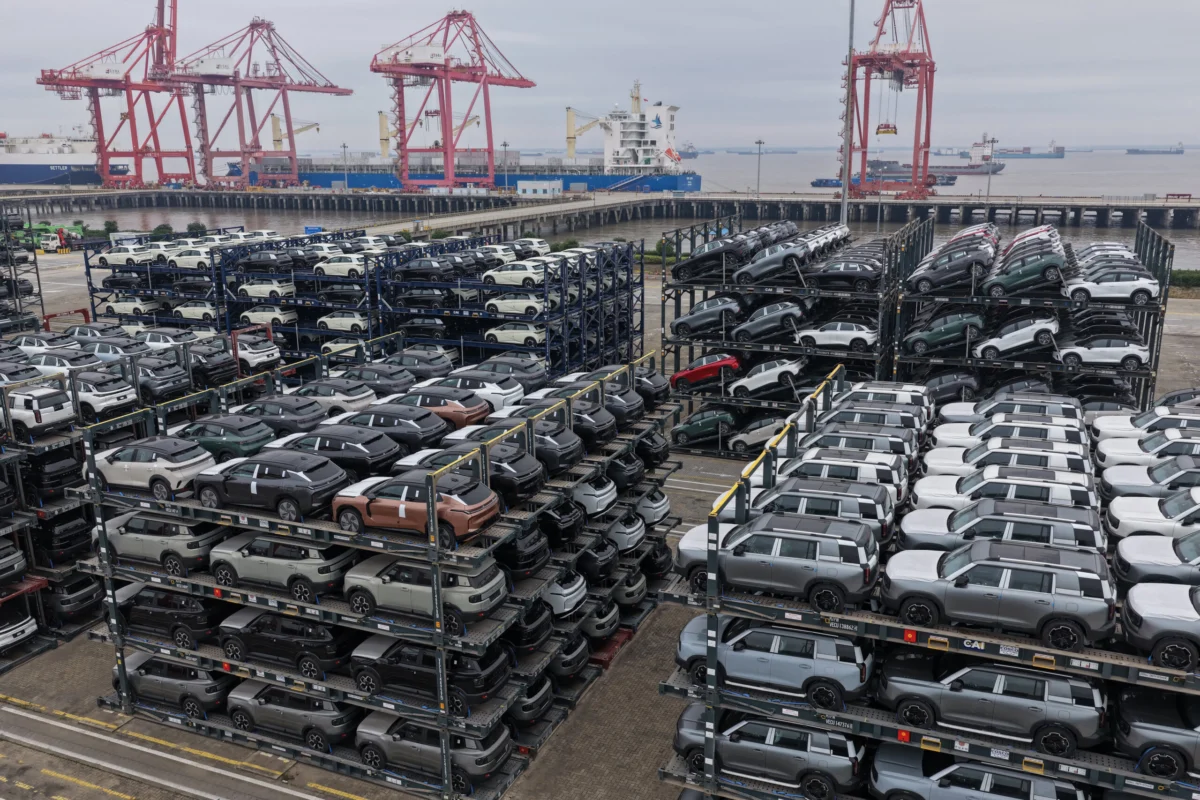
Despite such targeted diplomatic agreements and localized volume restrictions, China’s broader automotive export sector experienced explosive growth in September. Overall car exports surged by 56.3% during the month, reaching a staggering 1.18 million vehicles shipped abroad. The financial value of those automotive exports climbed even faster, rising by 62%, according to the customs data.
A geographic breakdown of the year-to-date trade data reveals both widespread expansion and localized contractions. For the first three quarters of the year, China successfully grew its exports to every major country tracked by the national customs agency. However, the import ledger displayed notable areas of contraction; imports originating from Malaysia, Germany, and the United Kingdom all declined over the first nine months of the year.
For the broader global economy, the latest trade data serves as a complex barometer. While a surge in demand for AI-related technology infrastructure and a stabilization of geopolitical tensions with Washington have injected powerful momentum into global supply chains, ongoing anxieties persist. The extraordinary data underscores a world economy still deeply reliant on Chinese manufacturing, even as governments from Washington to Brussels grapple with how to balance trade deficits, protect domestic industries, and navigate the monumental shifts driven by the artificial intelligence revolution.
| Source | : | Finance Poetry |
| Author | : | rifanmuazin |
| Editor | : | Finance Poetry Editorial Team |