
Dutch Authorities Rescue 38 People From Drifting Dinghy in Rare Maritime Incident
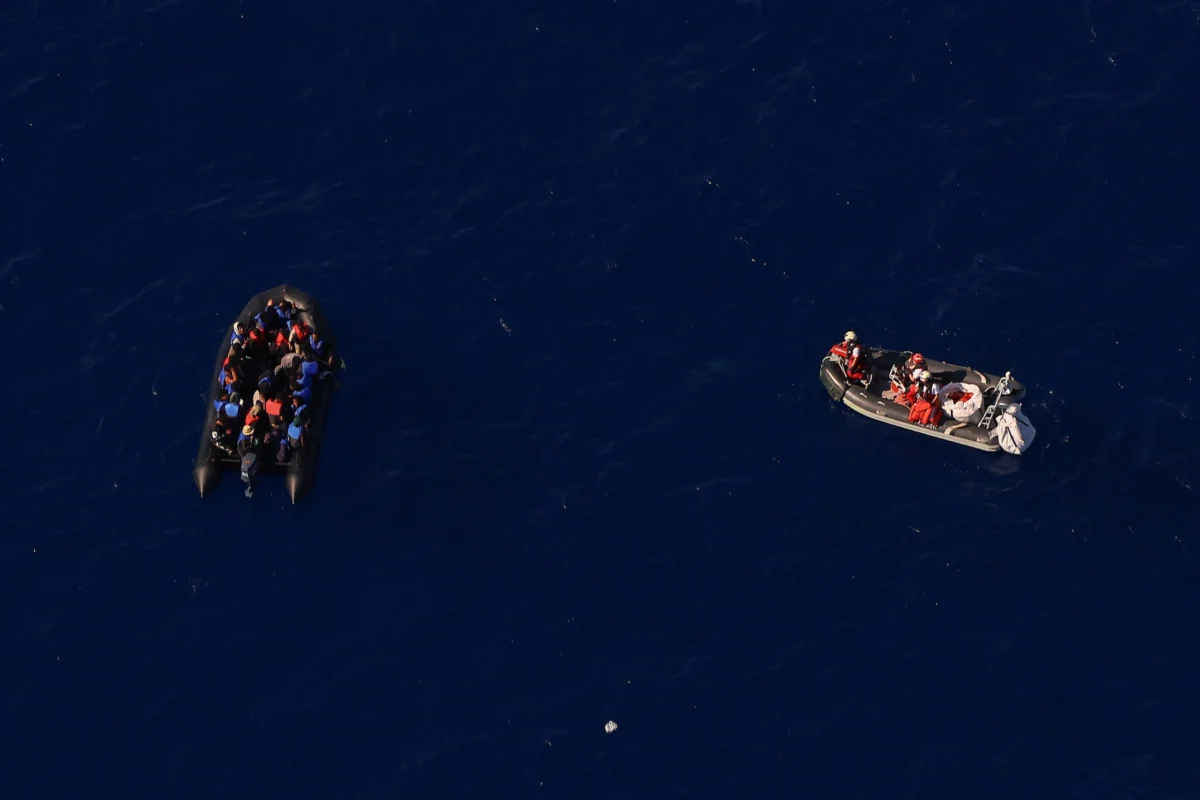
THE HAGUE — In a rare and alarming maritime interception, authorities in the Netherlands have successfully rescued 38 people who were found adrift in a flimsy rubber boat off the Dutch coast. The rescue marks one of the very first incidents of its kind in Dutch territorial waters, prompting an urgent investigation by law enforcement and military police as officials attempt to piece together the journey of the overcrowded vessel.
According to statements provided by military police spokesperson Doron Wallin to the Associated Press news agency on Saturday, two of the individuals aboard the inflatable dinghy are strongly suspected of being human smugglers, while the remaining occupants are classified as migrants seeking sanctuary or entry into Europe.
The precarious vessel was discovered drifting completely without a motor off the coast of the Netherlands’ Zeeland province, located far to the southwest of Amsterdam. The situation could easily have turned catastrophic, as officials confirmed that not a single person on board was wearing a life vest. The absence of a functioning motor and proper safety equipment left the 38 men entirely at the mercy of the North Sea’s unpredictable currents and weather conditions.
Detailed breakdowns of the demographic makeup of those on board have since emerged through international news agencies. According to reports from the AFP news agency, all 38 occupants of the boat were adult men. Among them, 36 individuals originated from Afghanistan, a country that has seen massive displacement and ongoing refugee crises in recent years. The remaining two men, identified as the suspected human smugglers, were from Sudan. Following the rescue operation, the two Sudanese nationals were formally arrested on suspicion of human smuggling and are currently facing questioning by Dutch authorities.
The precise origin and intended destination of the rubber boat remain major mysteries for investigators. Wallin admitted that authorities are currently in the dark regarding the vessel’s trajectory. "We don’t know where they came from — France, the Netherlands or Belgium — and we don’t know where the boat was heading," Wallin said, highlighting the complex nature of the ongoing inquiry.
While it remains entirely unknown where the dinghy was ultimately headed, maritime migration patterns in Western Europe have established certain well-known routes over the past several years. In particular, refugee and migrant crossings in small, unseaworthy boats from northern France across the English Channel toward the United Kingdom have become an everyday occurrence, heavily monitored by British and French authorities. However, the discovery of such a vessel operating in Dutch waters is virtually unprecedented, shattering the assumption that northern European nations outside the immediate Channel corridor are immune to these perilous maritime operations.
"These are things you usually see in France and Belgium. We rarely see it here in the Netherlands before today," Wallin noted, emphasizing the extraordinary nature of the weekend’s rescue operation. While the Netherlands shares busy maritime borders and close proximity to major European shipping lanes and transit hubs, the direct use of small inflatable boats for migrant smuggling off its own coastline is an outlier compared to the frequent events recorded further south along the European coastline.
The interception highlights the shifting and unpredictable routes that human smuggling networks may be attempting to utilize as traditional paths face increased law enforcement scrutiny and border security measures. Smuggling organizations frequently adapt their tactics, exploiting vast coastlines and complex waterways to evade detection by national authorities. The lack of a motor on the rescued dinghy suggests that the vessel may have been set adrift intentionally or suffered a mechanical failure, raising serious concerns about the safety and well-being of the passengers who were left stranded in open waters without propulsion or means of steering.
Following the successful rescue and initial processing of the 38 men, Dutch law enforcement agencies are preparing to deepen their investigation. Military police, in cooperation with relevant regional and national authorities, are scheduled to officially open a comprehensive criminal investigation into the case on Sunday. Investigators will attempt to interview the rescued migrants, analyze the movements of the suspected smugglers, and track any digital or physical evidence that could shed light on where the rubber boat was procured, how it was launched, and what specific criminal network was behind the operation.
As the investigation unfolds, the rescue serves as a stark reminder of the ongoing human risks associated with unauthorized maritime migration and the lucrative, dangerous trade operated by human smuggling rings across Europe.
| Source | : | Finance Poetry |
| Author | : | rifanmuazin |
| Editor | : | Finance Poetry Editorial Team |