
ExxonMobil and Chevron Post Surging Third-Quarter Profits as Refineries Run at Full Capacity Amid Global Diesel Supply Crunch
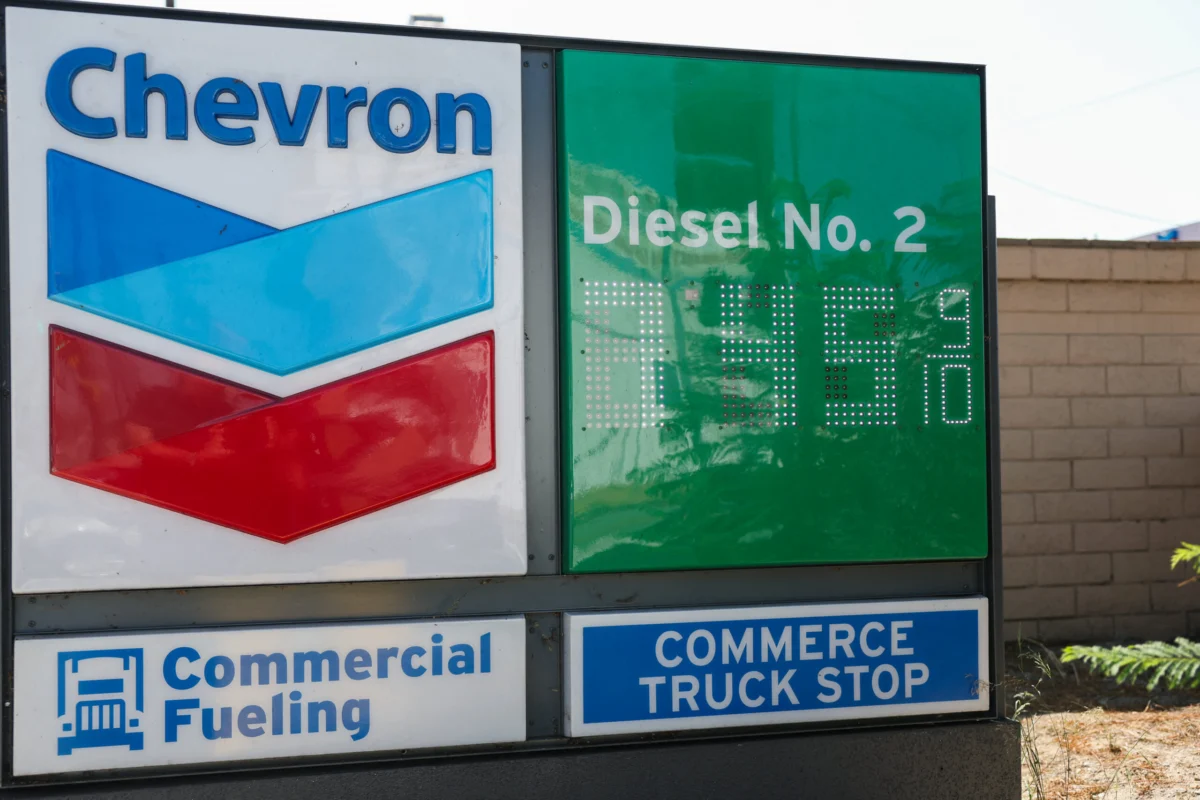
Energy giants Chevron and ExxonMobil reported staggering third-quarter profits on Friday, capitalizing on a global diesel fuel shortage by running their domestic refineries at near-maximum capacity. The financial results highlight a period of intense profitability for the downstream refining sector, driven by high fuel prices and international supply disruptions that have altered traditional energy trade flows and manufacturing output across the globe.
Chevron announced that its net income surged nearly 200% to $9.9 billion, or $5.06 a share, compared with $3.5 billion, or $1.82 a share, reported during the same period last year. When adjusted for one-time items, the company posted earnings of $5.28 per share, easily surpassing Wall Street expectations, which had polled expectations at $4.89 per share. Similarly, ExxonMobil’s profits doubled to $15.4 billion, or $3.72 a share, compared with $7.5 billion, or $1.76 a share, in the corresponding period in 2025. On an adjusted basis for one-time items, ExxonMobil posted earnings of $4.23 a share, also beating the Street’s consensus forecasts.
The robust financial performance immediately registered in premarket trading following the announcements. Chevron shares climbed about 2% in premarket activity, while ExxonMobil shares traded about 1.5% higher as investors digested the better-than-expected quarterly figures and the underlying strength of the refiners’ operations.
The extraordinary surge in profitability comes against a backdrop of tight international fuel markets. Diesel prices have climbed globally following a series of military strikes targeting critical energy infrastructure. Specifically, ongoing conflicts involving Ukraine and Iran have resulted in targeted bombings of refineries in Russia and the Middle East. These geopolitical disruptions have significantly curtailed regional fuel output abroad, creating a severe supply deficit in global middle distillates. In response to these international shortages, U.S. refiners have aggressively ramped up production to fill the supply gap, capturing lucrative margins and steering unprecedented volumes of product into domestic and international channels.
The operational data released by both companies illustrates the intense tempo at which their facilities have been operating. Chevron reported that its U.S. refineries processed record amounts of crude oil, operating at 98% capacity and throughput levels just above 1 million barrels per day. Boosted by this relentless operational pace, Chevron’s diesel and jet fuel yields rose by more than 10% during the quarter.
ExxonMobil reported similarly heavy utilization rates across its domestic asset base. The company’s Gulf Coast refineries operated at a full 100% utilization rate, delivering the second-highest diesel production on record for those specific facilities.
The financial impact of these high utilization rates and elevated fuel margins was starkly evident in the divisional breakdowns provided by both corporations. Profits from Chevron’s refining division skyrocketed more than 300% to $4.9 billion, compared with $1.1 billion during the same period in 2025. Meanwhile, Chevron’s upstream oil and gas production segment generated earnings of $5.7 billion, representing a 70% increase from the $3.3 billion recorded in the year-ago period.
ExxonMobil experienced a similar dynamic where its downstream refining business rivaled its traditional oil and gas extraction operations in profitability. Exxon’s refining division generated profits of about $7.2 billion in the quarter, slightly outpacing its production business, which brought in earnings of about $7.1 billion. For the broader year-to-date period, Exxon’s refining profits have surged nearly 200% to $11.4 billion, compared with $4 billion during the first nine months of 2025, underscoring how central the refining sector has been to the company’s recent financial success.
Despite the record-breaking financial returns from processing operations, overall hydrocarbon production volumes for both companies saw slight contractions when compared year-over-year. Chevron’s total output declined marginally to 3.9 million barrels per day, down from about 4 million barrels per day in the same period last year. The company noted that this slight dip occurred primarily within its international segment, influenced in part by the ongoing geopolitical conflict and security challenges in the Middle East, whereas its domestic U.S. production remained largely flat year over year.
ExxonMobil reported a comparable trend in its production portfolio, having produced about 4.5 million barrels per day over the course of the year. This figure represents a decline of more than 2% from the nearly 4.7 million barrels per day produced during the first nine months of 2025, reflecting natural field declines and portfolio adjustments even as the company’s downstream processing assets worked overtime to meet soaring global demand for refined petroleum products.
| Source | : | Finance Poetry |
| Author | : | rifanmuazin |
| Editor | : | Finance Poetry Editorial Team |