
New Home Prices Remain Stagnant as Builders Lean on Aggressive Incentives and Rate Buydowns
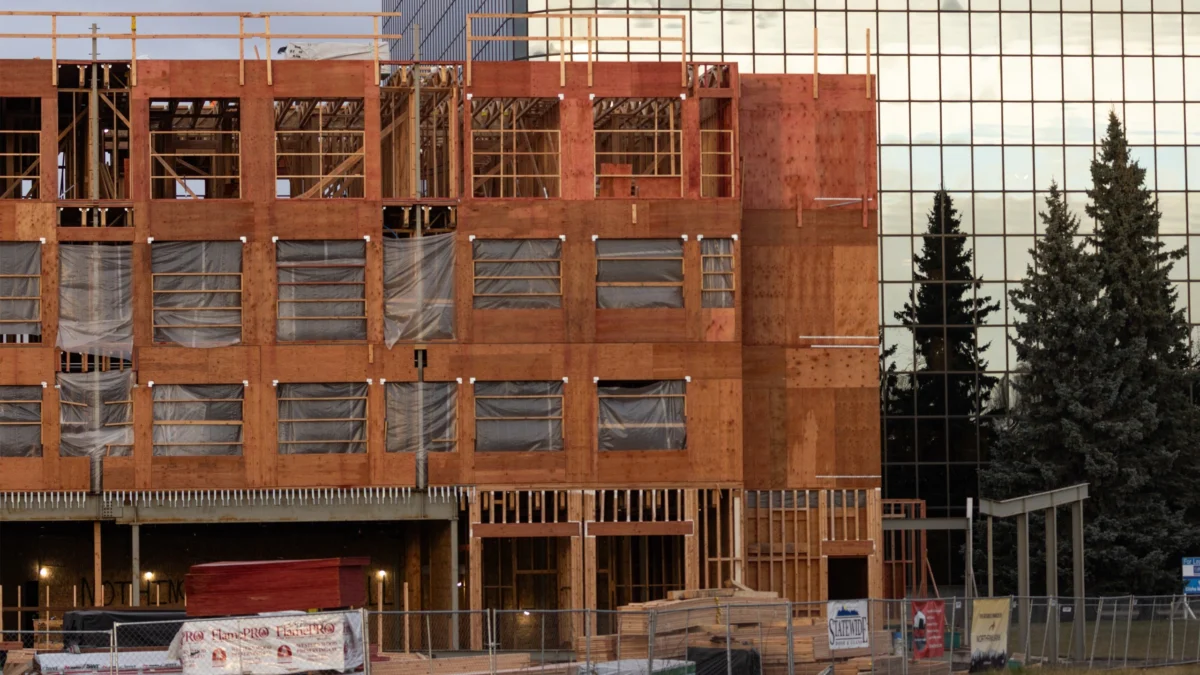
Prices for newly constructed homes have remained largely stagnant for years, creating a unique window of opportunity for potential homebuyers who are actively hunting for favorable market conditions and developer incentives.
According to the latest quarterly construction insights report from Realtor.com, prices on newly built single-family homes are holding steady. However, because the benchmark 30-year fixed mortgage rate remains stubbornly above the 7% threshold, homebuilders are being forced to get increasingly creative to attract hesitant buyers, heavily relying on mortgage rate buydowns and other financial concessions.
The median listing price for new builds reached $451,071 in the third quarter, a figure that has hovered in a remarkably tight band since late 2023. Operating within an inflation-plagued economy, homebuilders have scaled back their production, starting fewer new residential projects as financial pressures mount.
Higher labor and material costs, combined with a noticeable softening in buyer demand, have taken a heavy toll on the broader construction sector. Data shows that the completion rate for new single-family homes fell by 11.0% year over year in September, reflecting the caution gripping the development community.
At the same time, the market for previously owned homes has experienced its own adjustments. Existing-home prices came in 1.5% below 2025 levels, landing at a median of $402,883. Because newly constructed homes must directly compete with existing properties for buyers, the recent rise in existing-home sales activity indicates that some cost-conscious purchasers who might have otherwise opted for a brand-new build are choosing existing properties instead. Consequently, existing-home sales recently touched a 16-year low, underscoring a broader freeze in market mobility.
"Builders were quicker to adjust to the realities of muted buyer demand in this high-rate environment, while existing-home sellers had pricing expectations based on the market from 2021 and 2022 that were slower to dissolve," writes Realtor.com senior economist Joel Berner in the report. "The overall price softness we’ve seen through 2026 is driven primarily by the existing-home segment."
This divergence in market adaptation has led to more widespread expectation management among both builders and private sellers. Resellers trimmed prices on 21.6% of homes during the quarter, while homebuilders implemented similar price cuts on 20.9% of their available stock.
"The growing incidence of price reductions for new and existing homes is an indication of softness in the housing market in general and gives reason to expect that the diminished pace of inventory growth will continue," Berner adds.
Builders Lean on Incentives
Throughout the year, homebuilders have reported that the persistently difficult housing market environment is eating directly into their profit margins. In response, some companies have strategically retooled their operations to focus on the higher end of the residential market, which tends to be far less vulnerable to immediate affordability constraints. Others have dangled a wider array of attractive financial incentives designed to bring prospective buyers back to the negotiating table.
This dynamic has created notable anomalies in the current real estate landscape, rendering the new-home market distinctly buyer-friendly in several respects.
For instance, existing homes are actually more expensive than new construction when evaluated on a price-per-square-foot basis, averaging $218 for new homes compared to $219 for existing properties. This counterintuitive metric exists because, while there is a roughly $50,000 gap between the median new-home price and the median existing-home price, newly constructed homes are generally larger, offering a median of 2,056 square feet compared to 1,790 square feet for older properties. Once adjusted for sheer size, the headline price gap largely disappears.
Geographic concentration also plays a significant role in these nationwide calculations. New builds are heavily concentrated across the South, where available land remains considerably cheaper. Conversely, existing-home sales in the significantly more expensive Northeast drive up overall historical averages. On a national level, the median sales price for new homes stood at $400,400, while the median sales price for existing homes climbed to $417,500.
For homebuilders trying to close deals, reduced mortgage rates have emerged as the most common and effective type of buyer incentive, directly helping purchasers lower their overall cost of ownership. During the third quarter, the average starting mortgage rate for buyers purchasing a new home was 5.01%, a stark contrast to the 6.15% average faced by buyers in the existing-home market.
"In today’s environment of higher-for-longer mortgage rates, this is an enticing marketing strategy," analysts note. Builders frequently maintain strong, long-standing relationships with specific mortgage lenders, channeling high volumes of loan originations their way. In exchange for this consistent business volume, those lenders are equipped to offer below-market interest rates to the builder’s clients.
However, these vital savings are not always permanent. Even when utilizing temporary benefits, such as the popular 3/2/1 step-down mortgage structure which lowers interest rates for the first few years of the loan, buyers still reap substantial financial rewards in upfront cost reductions.
Price Growth Expected to Remain Soft
With inflation remaining high and mortgage rates staying elevated, market participants are left wondering what economic catalyst will ultimately break the current cycle.
According to Goldman Sachs’ latest housing market outlook, the residential real estate sector will remain challenged over the coming year. The financial institution predicts that national home prices will continue growing at an anemic pace of just 1% throughout 2027.
"In 2027, we expect the headwind from affordability to increasingly dominate, weighing further on activity," wrote Goldman Sachs economists Ronnie Walker and David Mericle. "The combination of mortgage borrowers refinancing at low rates en masse in 2020 and 2021 and the high current level of mortgage rates has created a significant financial cost to moving."
If mortgage rates do eventually begin to trend downward next year, financial analysts suggest it could finally pull sidelined buyers back into the market and cause housing activity to pick up pace. Goldman Sachs projects that such a shift might materialize by late 2027.
Certain regions and market segments, however, remain somewhat more insulated from these macroeconomic headwinds. Maor Greenberg, co-founder and CEO of the structural engineering firm Spacial, points out that builders are currently feeling squeezed by persistent rate hikes because carrying costs steadily accumulate on houses already under construction, while buyers simultaneously struggle with higher borrowing costs. Yet, the luxury end of the market and booming economic centers, such as the tech-saturated San Francisco Bay Area, continue to serve as rare exceptions to the broader slowdown.
"Even in a soft market, there’s a point where starting to house construction makes more sense than waiting for more favorable conditions, because you’re paying money to hold on to land," Greenberg explains. "That moves the problem down to selling: To do that, builders offer incentives and cut prices. Margins get tighter, but you’re not losing as much money."
Offering his own perspective on the current real estate climate, high-end broker Ryan Serhant recently shared advice for prospective buyers hesitant to enter the market: Do not simply wait around for lower rates to materialize.
While it can easily feel as though the housing market will remain indefinitely frozen, there are still numerous cities and municipalities where buyers can secure a solid deal. At the same time, a vast number of other market watchers are arriving at the exact same conclusion.
"Everyone wants low rates, they never want what comes with it," Serhant notes. "You know what’ll happen if rates come down? There will be no houses for sale."
| Source | : | Finance Poetry |
| Author | : | rifanmuazin |
| Editor | : | Finance Poetry Editorial Team |