
Nissan Motor Plans to Export China-Developed Vehicles Globally to Counter Rising Rivals, CEO Says
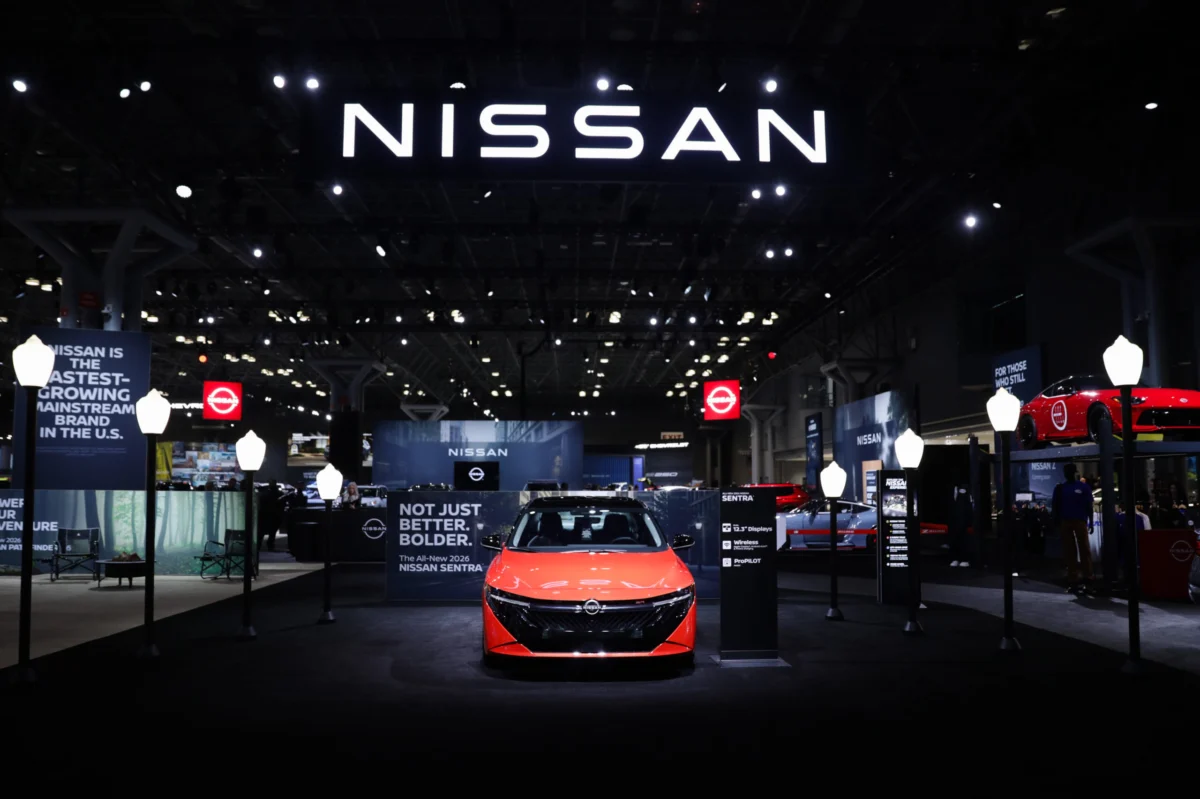
Nissan Motor is preparing to aggressively expand its vehicle exports from China to global markets, leveraging local technology and cost efficiencies to fend off intense competition from rising Chinese automotive rivals, CEO Ivan Espinosa said on Wednesday.
The strategic shift comes as the Japanese automaker grapples with mounting headwinds in the world’s largest automotive market, a pressure that has forced the company to slash its annual sales forecast for the second time in a matter of months. During an appearance on CNBC’s "Squawk Box Europe," Espinosa outlined Nissan’s roadmap to rapidly scale up its export operations for vehicles engineered and built within China.
Under the newly detailed strategy, Nissan plans to transition from exporting just two China-developed models to a lineup of five. These vehicles will be targeted at 12 regional market clusters in what Espinosa described as the "very near term."
The Japanese automaker is actively adapting to the realities of a rapidly evolving global auto industry by shifting its approach in China. Rather than trying to push vehicles designed elsewhere into the Chinese market, Nissan is developing cars specifically tailored to Chinese consumers. This localized strategy leans heavily on domestic technology, significantly lower production costs, and accelerated vehicle development timelines.
"We can defend ourselves from these very aggressive players by using exactly the same elements that they have: speed, cost, and good technology," Espinosa told CNBC, highlighting how established legacy automakers are being forced to adapt to the playbook of newer, highly agile market entrants.
The aggressive pivot toward Chinese exports highlights a broader structural transformation sweeping through the global automotive sector, where legacy manufacturers are struggling to maintain their footing against nimble domestic players who have mastered the art of rapid innovation and cost-effective production, particularly in the electric vehicle segment.

China Headwinds and Lowered Sales Projections
Nissan is currently navigating a complex domestic landscape in China defined by weakening consumer demand and an accelerated, widespread shift toward new energy vehicles, shorthand for electric and plug-in hybrid cars. These localized pressures persist even as the company’s broader restructuring and turnaround efforts show measurable progress in other key regions, including the United States and Japan.
Reflecting the depth of these challenges, Nissan cut its global sales outlook for the fiscal year ending March 2027. The company now expects to sell between 2.97 million and 3 million vehicles globally, a downward revision from its previous forecast of 3.15 million units. Despite the volume downgrade, the automaker maintained its guidance for full-year operating profit and net cash.
In an official corporate statement, Nissan elaborated on the market dynamics driving the change, noting that "weaker demand, a faster-than-anticipated shift to new energy vehicles and intensifying competition are putting greater pressure on sales than initially anticipated."
This latest reduction follows a previous downward revision in August, when Nissan adjusted its full-year sales volume outlook from 3.3 million units down to 3.15 million units. The struggles in China are not unique to Nissan. The broader turbulence across the region has ensnared several international legacy automakers operating in the market.
In October, shares of European peer Volvo Cars suffered a sharp crash after the company reported a disappointing swing to an operating loss, explicitly pointing to tough, unforgiving market conditions in both China and the United States. At the time, Volvo Cars CEO Håkan Samuelsson spoke candidly with CNBC about the necessity of a fundamental strategic overhaul in China, emphasizing the need for regionally adapted vehicles.
Samuelsson noted that the market transformation in China had materialized much faster than anticipated across the industry. He added that attempting to sell global cars developed primarily in Europe and Western markets no longer works in China, creating a severe ripple effect for all Western automotive players trying to maintain a foothold in the territory.

Profit Pressures and Ongoing Turnaround Efforts
The strategic updates and lowered forecasts arrived alongside Nissan’s financial results for the second quarter, which showed a stark 96% drop in operating profit to 2.1 billion yen, roughly equivalent to $13 million. That figure fell significantly short of analyst consensus expectations, which had called for 54.9 billion yen according to FactSet data.
Nissan explained that the steep year-over-year profit decline was largely driven by the absence of favorable factors that had padded the previous year’s figures—specifically, the benefit of lower U.S. emissions-related expenses that had temporarily boosted profits during that period.
On the top line, however, the company demonstrated resilience. Net revenue grew 8.2% to 3.1 trillion yen for the quarter, coming in largely in line with what analysts had anticipated. The quarterly figures were released to the public after the Tokyo stock market closed for trading, with Nissan’s shares down approximately 29% for the year-to-date period.
Espinosa, who stepped into the role of chief executive officer in April 2025, also took the opportunity to emphasize the ongoing progress of the company’s comprehensive turnaround plan. The multi-faceted restructuring program is designed to permanently reduce Nissan’s global manufacturing footprint and streamline operations by cutting its worldwide workforce by 15%.
Approximately 18 months into executing the turnaround strategy, Espinosa reported that the company has successfully achieved 365 billion yen in total cost savings, underscoring management’s focus on operational discipline as the automaker attempts to navigate turbulent global waters and reposition itself for long-term competitiveness.
| Source | : | Finance Poetry |
| Author | : | rifanmuazin |
| Editor | : | Finance Poetry Editorial Team |