
RIA Tech Stack Evolution: TaxStatus and Nitrogen Integrate Deep AI Capabilities into Advisor Workflows
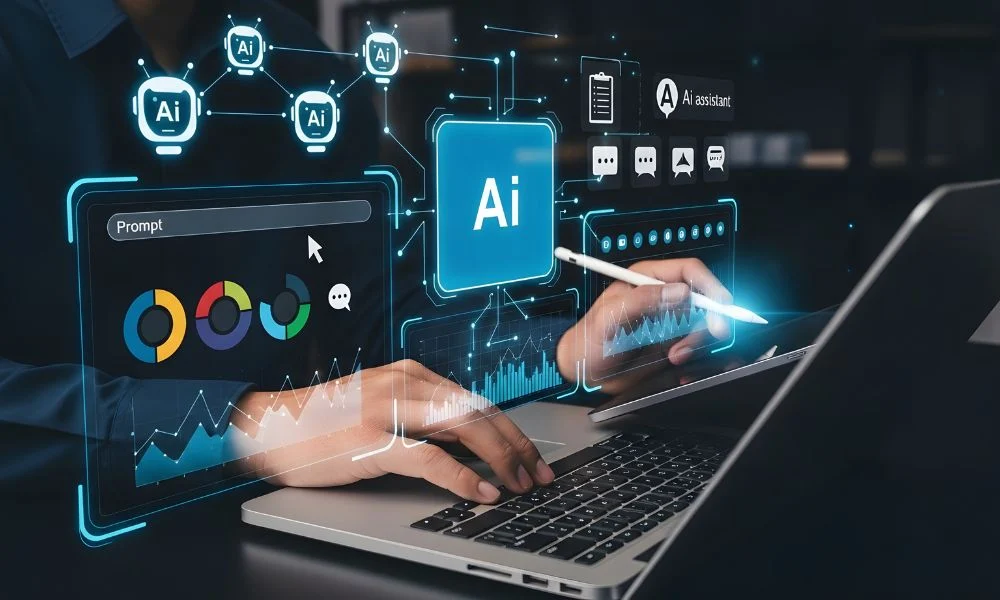
The financial advisory landscape is undergoing a profound transformation as Registered Investment Advisors (RIAs) pivot toward artificial intelligence as their primary vehicle for growth. In a significant shift for the wealth management industry, two prominent software providers—TaxStatus and Nitrogen—are expanding the reach of their tools, embedding sophisticated data analytics and planning capabilities directly into the AI assistants that financial advisors are increasingly incorporating into their daily routines.
These developments, which allow advisors to interact with complex tax data and financial planning software through natural language interfaces like Claude, ChatGPT, and Microsoft Copilot, represent a strategic response to the evolving operational needs of modern wealth firms. As firms look to streamline their tech stacks, the integration of these specialized tools into broader AI ecosystems is no longer an experimental luxury but a core component of their long-term business strategy.
The Strategic Shift Toward AI Integration
The impetus for these integrations is clearly defined by industry trends. According to the Schwab Advisor Services 2026 Independent Advisor Outlook Study, integrating AI tools into firm workflows stands as the most common investment RIAs plan to prioritize to support growth over the next three years. The study underscores a clear mandate from the advisory community: advisors are looking to offload administrative burdens to focus on high-value client interactions.
The data suggests that the appetite for AI is both broad and specific. Within the next three years, 81% of advisors surveyed expect to leverage AI for research and analysis, while 79% plan to use the technology for document drafting. Perhaps most tellingly, two-thirds of respondents identified the potential for time savings on administrative tasks as the single biggest payoff of AI adoption.
Despite this enthusiasm, the adoption of advanced, autonomous "agentic" AI—systems capable of making decisions and executing actions independently within a workflow—remains in its infancy, with only 7% of firms reporting current use. Instead, the current focus is on "integration-first" strategies. When asked how they intended to modernize their technology, 40% of advisors pointed to the further integration of AI tools, while 34% emphasized the need for tighter connections between their existing legacy systems. The moves by TaxStatus and Nitrogen directly address this demand for a more cohesive, intelligent digital environment.
TaxStatus Bridges IRS Data with Generative AI
Dallas-based TaxStatus is making a significant play to modernize how advisors consume tax data. The firm has released a new "Client Connector," built on the open Model Context Protocol. This integration allows compatible AI assistants—including Claude, ChatGPT, and Microsoft Copilot—to query and synthesize data regarding specific clients or an entire book of business.
From a compliance and security perspective, TaxStatus has emphasized that every request processed through the connector is logged with its specific purpose. Firms retain full control over which tools receive access to their data, and the system requires explicit client authorization, maintaining the fiduciary standard that remains a cornerstone of the RIA profession.
Beyond the connector, TaxStatus has unveiled a new product dubbed "Discovery." This tool is designed to move beyond the traditional, often cumbersome process of collecting client questionnaires, chasing aggregator logins, and processing scanned PDFs. Discovery performs more than 160 automated checks across 11 distinct categories, including growth, retention, tax, retirement, estate planning, and insurance.
By combining information reported on client tax returns with third-party data filed by employers, banks, brokerages, and custodians with the IRS, the platform provides a more holistic view of a household’s financial life. Crucially, these filings often identify accounts by the holding institution, allowing firms to estimate their own share of a client’s total wallet and identify where the remainder of those assets are situated.
According to TaxStatus, the results for firms using the platform have been significant, with most identifying more than 2.5 times the assets and accounts they previously oversaw. Furthermore, the tool provides a safety net for tax planning by flagging digital asset sales—reported on Form 1099-DA—that may have been inadvertently omitted from a client’s tax return.
"Clients should not have to know what to tell their advisor to get better advice," said TaxStatus CEO Kevin Knull. By automating the data discovery process, TaxStatus aims to reduce the "information asymmetry" that often exists between advisors and their clients.
Nitrogen Enhances Planning Tools and AI Connectivity
Nitrogen, based in Auburn, California, is taking a similarly proactive approach to embedding its planning software into the AI-enabled workflow. The company has announced a series of updates that enable advisors to access its core tools directly through platforms such as Claude, ChatGPT, and Microsoft Copilot.
Furthermore, Nitrogen is expanding the capabilities of its "Nucleus" agent, which now functions within the communication platforms Slack and Microsoft Teams. This allows advisors to interact with Nitrogen’s planning engine without leaving their primary communication hubs. The firm has noted that these features include robust permission controls and are provided at no extra charge to current Nucleus users, reflecting a trend toward bundling AI functionality into existing software subscriptions.
Building on its earlier forays into AI-powered tax planning, Nitrogen’s latest update introduces a "Tax Multiview" capability. This feature allows advisors to present and compare multiple tax scenarios side-by-side, providing a clearer visual framework for complex planning discussions. Additionally, the firm has added a bracket-filling feature to its Roth conversion calculator, allowing for more precise tax optimization strategies.
Nitrogen is also leaning into the "connected ecosystem" model through new partnerships with Contio and Zocks. The integration with Contio connects AI-enabled meeting intelligence with Nitrogen’s proprietary client data and workflows, effectively bridging the gap between a conversation and a financial plan. Similarly, the integration with Zocks provides the Nucleus agent with the capability to process meeting summaries, extract actionable insights, and identify client signals via a bi-directional data link.
"AI should make it easier for advisors to get work done, wherever they choose to work," said Justin Boatman, Nitrogen’s chief marketing officer and head of product strategy. By integrating these tools into the environments where advisors spend the most time, Nitrogen is attempting to reduce friction and eliminate the context-switching that has historically hampered advisor productivity.
The Path Forward for RIAs
The dual moves by TaxStatus and Nitrogen highlight a broader evolution in the fintech sector: the transition from "siloed" software applications to "connected" intelligent assistants. For the average RIA, these developments offer a glimpse into the future of practice management, where the advisor’s tech stack acts as a unified, proactive partner rather than a collection of disparate tools.
As advisors continue to grapple with the complexities of tax law, market volatility, and the increasing demand for personalized financial advice, the ability to query their firm’s data using natural language—and to have that data analyzed by intelligent, authorized AI models—is set to become a baseline expectation.
The focus now shifts to how firms will adopt and manage these tools. With the industry’s emphasis on maintaining the fiduciary line, the success of these integrations will depend on the ability of software providers to ensure that as AI becomes more capable, it remains transparent, secure, and—most importantly—under the firm’s control. For the time being, the rapid pace of innovation suggests that for advisors, the future of work is not just about having the right software, but about having the right software that works together.
| Source | : | Finance Poetry |
| Author | : | rifanmuazin |
| Editor | : | Finance Poetry Editorial Team |