
Stellantis Posts €4 Billion Q3 Cash Shortfall as Turnaround Strategy Progresses Amid Industry Pressures
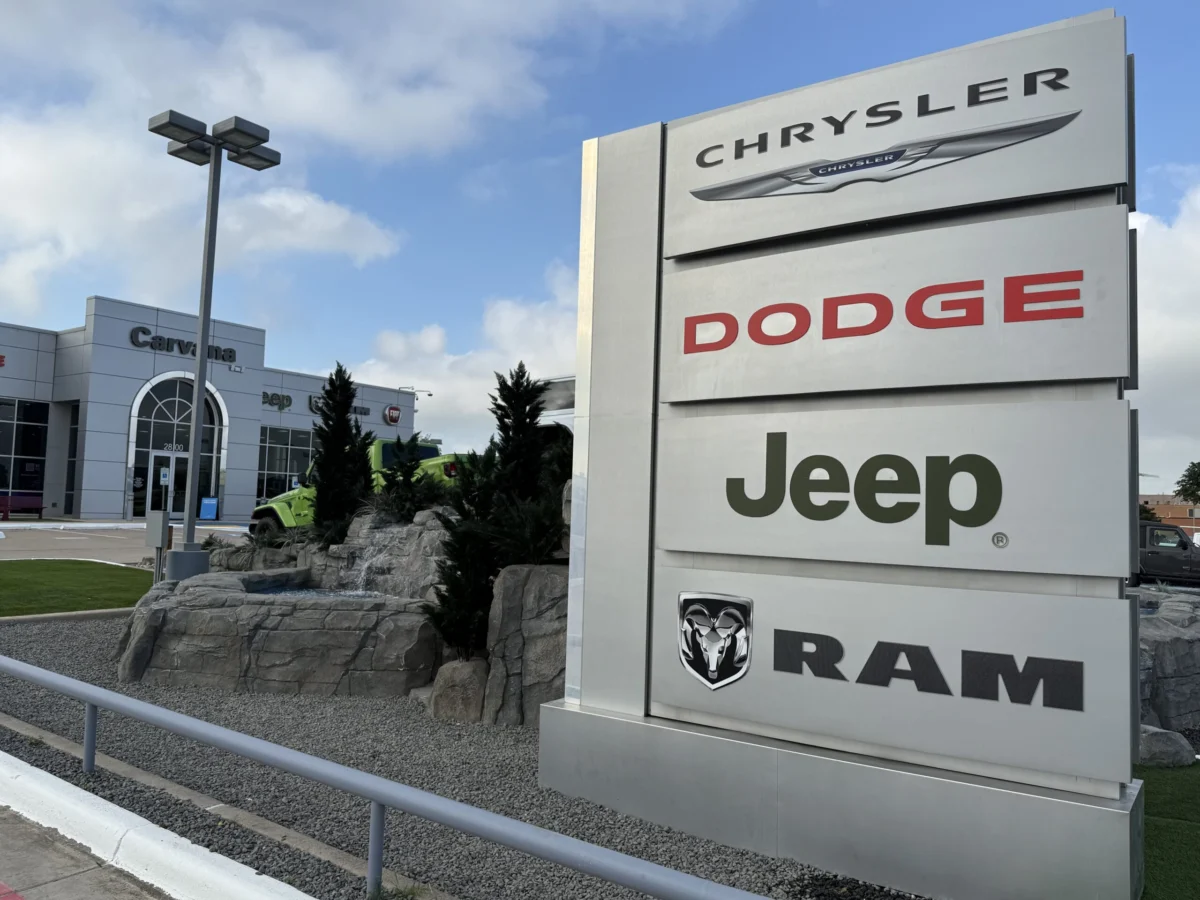
European automotive titan Stellantis has reported a €4 billion ($4.5 billion) cash shortfall for the third quarter of 2026, even as the company presses ahead with an aggressive multibillion-dollar turnaround strategy designed to restore profitability and modernize its sprawling brand portfolio.
The parent company of iconic American and European nameplates, including Chrysler, Jeep, Dodge, and Ram, announced on Wednesday that its third-quarter revenues ticked up by 1% to reach €37.6 billion compared to the same period a year ago. More notably, the automaker’s adjusted operating income surged by 184%, climbing to €256 million from a modest €90 million a year earlier.
Despite the ongoing challenges facing the broader automotive industry, Stellantis demonstrated incremental operational progress as it implements its comprehensive restructuring roadmap. The company’s industrial free cash flow registered at negative €4 billion, marking an improvement from the negative €4.3 billion recorded during the corresponding period last year.
"During the quarter, we continued to make progress in the early execution of our FaSTLAne 2030 plan, launching new products, accelerating partnerships as planned, and delivering meaningful improvements in manufacturing and quality," Stellantis CEO Antonio Filosa said in a press release detailing the financial figures.
Wall Street responded favorably to the third-quarter numbers, buoyed particularly by the automaker’s ability to maintain its full-year 2026 guidance at a time when numerous other European automakers and suppliers are struggling with rising operational expenses, shifting consumer demand, and margin compression. Stellantis shares climbed roughly 6% in Milan trading, alongside a similarly strong performance in premarket trading in New York. Despite the positive intraday reaction, the company’s stock remains sharply down since the beginning of the year as investors weigh the long-term execution risks of its turnaround plan.
Furthermore, Stellantis reconfirmed its closely watched target to achieve positive free cash flow next year, a milestone that remains a primary focus for institutional investors and market analysts monitoring the company’s financial recovery.
Industry analysts pointed out that while the headline financial metrics reflect a difficult operating environment, the results outperformed lowered expectations across the financial sector.
"Q3 was soft, but consensus expectations were far lower. Key here is that ’26 Guidance was maintained while other auto OEMs and suppliers are cutting on elevated costs," RBC Capital Markets analyst Tom Narayan said Wednesday in an investor note to clients.

Stellantis’ reaffirmed 2026 guidance explicitly includes a mid-single-digit percentage increase in net revenue alongside a low-single-digit adjusted operating margin. These projections anchor the transatlantic company’s ongoing efforts to overcome years of persistent sales declines, production hurdles, and profitability pressures, particularly within its critical North American division.
The release of the third-quarter financial results coincides with the ongoing rollout of a massive turnaround strategy valued at roughly €60 billion to €70 billion. This comprehensive restructuring framework is designed to reverse years of declining market share and operational sluggishness that have weighed heavily on the automaker’s valuation.
As part of this expansive strategy, Stellantis is funneling €36 billion directly into its extensive portfolio of automotive brands, with a staggering 60% of that capital allocation earmarked specifically for its struggling North American operations. The multi-year investment blueprint involves launching entirely new vehicles, refreshing existing high-volume models, and integrating advanced automotive technologies, including next-generation software and electrified powertrains, to better compete in a rapidly evolving global marketplace.
China Competition
Compounding the domestic and regional challenges faced by legacy automakers, European automotive giants like Stellantis have encountered mounting headwinds in China, the world’s largest auto market. Domestic Chinese manufacturers—including aggressive EV players such as Xiaomi, BYD, and Geely—have rapidly gained ground, intensifying competitive pressure and eroding the market share of foreign legacy brands.
The competitive squeeze in China has sent ripples throughout the European automotive sector. Earlier in the week, German luxury carmaker Porsche announced plans to significantly reduce its operational and financial exposure to China in response to steadily declining sales volumes and shifting consumer preferences in the region. Simultaneously, Mercedes-Benz reported that its third-quarter car sales slumped markedly, directly attributing the downturn to an increasingly challenging and fiercely contested market environment inside China.
The geopolitical and competitive pressures have prompted top automotive executives to urge policymakers to take a more proactive stance. Earlier this month, Stellantis CEO Antonio Filosa told CNBC that European regulators must implement stronger regulatory frameworks and targeted incentives to encourage automotive manufacturers to build vehicles within the region, thereby safeguarding domestic industrial capabilities against heavily subsidized or rapidly scaling Chinese rivals.
Filosa explicitly called for regulatory policies that actively "incentivizes, rewards, and protects the ones that are able to demonstrate that they design cars, engineer cars" locally. As Stellantis navigates the remainder of its turnaround timeline through 2026 and beyond, the company’s ability to balance its aggressive capital investments, defend its core regional markets, and successfully manage intensifying international competition will remain critical focal points for the global automotive industry.
| Source | : | Finance Poetry |
| Author | : | rifanmuazin |
| Editor | : | Finance Poetry Editorial Team |