
Tech Stocks Plunge as Nvidia and Qualcomm Lead Nasdaq’s Worst Day in 19 Months Amid AI Infrastructure Concerns
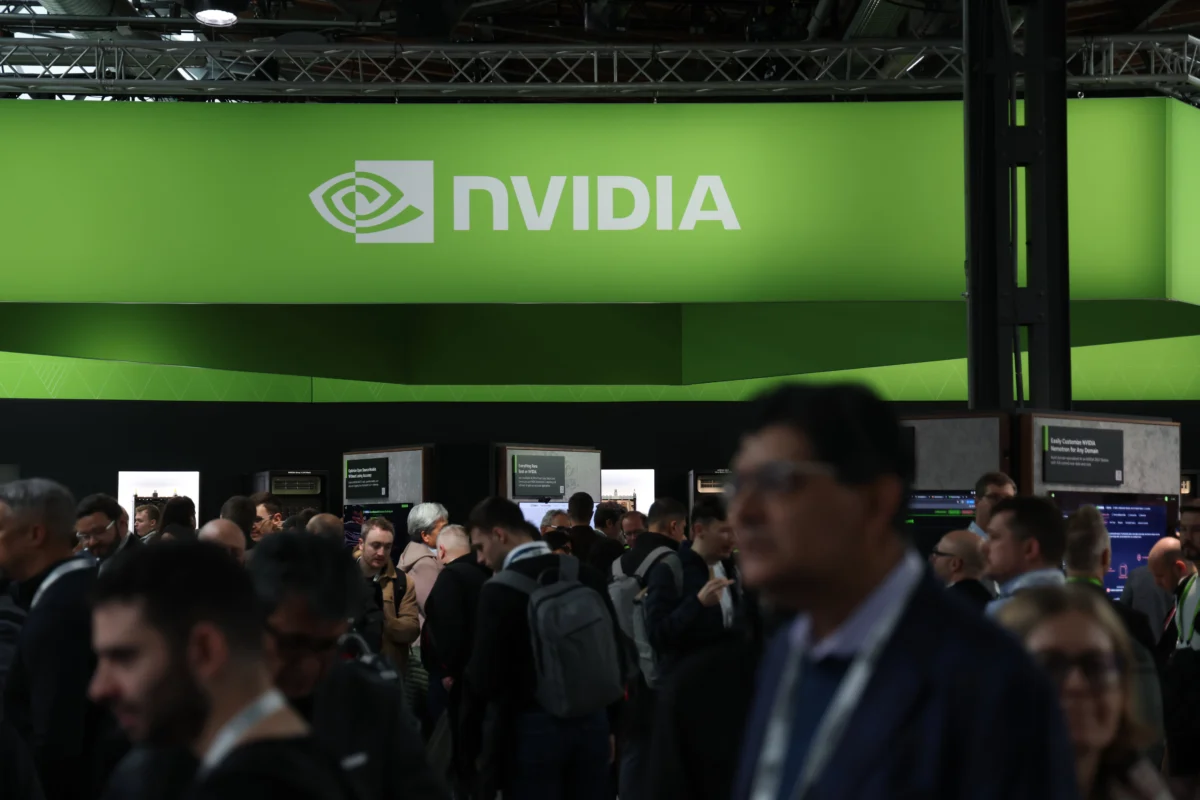
Chipmakers and artificial intelligence-related equities suffered a brutal sell-off on Thursday, driving the Nasdaq to its worst single-day performance in 19 months. The market rout was triggered by a combination of disappointing corporate earnings forecasts and the fallout from this week’s midterm election results, which have injected fresh uncertainty into Wall Street regarding the pace and viability of the ongoing artificial intelligence infrastructure buildout.
Nvidia shares plummeted by more than 9%, shedding nearly $450 billion in market capitalization and dragging down the broader technology sector. The Nasdaq Composite slid 5.5%, marking its steepest percentage decline since April 2025. The severe market downturn extended across the semiconductor industry and into neocloud providers, with companies such as CoreWeave tumbling for the second consecutive trading session.
The negative sentiment was further compounded by Qualcomm, which contributed to the broader sell-off after issuing a disappointing financial forecast for the current quarter. Qualcomm and Nvidia shared the brunt of the heavy losses, dropping over 9% each.
Financial analysts note that the macroeconomic and regulatory environment has shifted from challenging to increasingly difficult for companies intimately tied to the AI supply chain. A confluence of rising interest rates, ballooning capital expenditure needs, and a Democratic sweep in Congress has stoked investor fears that major sectors of the market are becoming overextended, burdened by excessive debt while failing to generate proportional revenue returns.
"The technology is still going to continue on in terms of its development, but if there is a slowdown in the actual development and the buildings and the infrastructure and so forth, that’s what stocks are going to trade off," said Peter Boockvar, chief investment officer at OnePoint BFG Wealth Partners, during an interview on CNBC’s "Squawk on the Street."
The market carnage was widespread across the semiconductor landscape. Advanced Micro Devices, Micron, and Applied Materials all suffered double-digit percentage losses on Thursday. High-profile entrepreneurs also felt the sting of the market correction. Elon Musk, who reportedly contributed hundreds of millions of dollars to support Republican candidates in Texas and other key battleground states, saw shares of his public companies, SpaceX and Tesla, drop by more than 9% apiece.
The root of the political anxiety on Wall Street stems from the outcome of Tuesday’s midterm elections. Several states with the most ambitious and expansive AI data center development plans shifted decisively toward the Democratic Party. Democrats secured critical gubernatorial and Senate contests in key states like Texas and Ohio, while also achieving victory in the gubernatorial race in Georgia, where Democratic Senator Jon Ossoff coasted to reelection.
Beyond high-profile political races, local policy battles added to the regulatory headwinds facing the tech industry. According to data tracked by Ballotpedia, there were 41 local ballot measures across 10 states up for a vote on Tuesday that sought to place various restrictions on the construction and operation of new data centers. Voters ultimately sided against data center projects in virtually every single measure, with the sole exception of a minor measure in Harwood, North Dakota, according to an analysis by Ballotpedia and results gathered by CNBC.

Industry leaders are already acknowledging the shifting political landscape. Speaking at the Wall Street Journal Tech conference on Wednesday night, Meta President Dina Powell McCormick told the audience that building new data centers is "going to be harder" in the wake of the midterm election results. However, she also noted the complex economic realities local communities face, recounting that one of the victorious governors recently told her, "As soon as we get past the inauguration, let’s meet because we don’t want to lose this investment in our town. We don’t want these jobs to go elsewhere."
Meta, alongside its major hyperscaler peers—Alphabet, Amazon, and Microsoft—has laid out an aggressive path for infrastructure development, with combined capital spending plans that extend well past $100 billion annually. The massive financial outlay is beginning to weigh on corporate balance sheets. Meta recently reported that it went free cash flow negative in its latest quarter, joining Alphabet and Amazon, both of which turned negative in the prior reporting period. Reflecting these mounting pressures, the major hyperscaler stocks each fell between 2% and 4% during Thursday’s trading session.
Despite the broader market panic surrounding infrastructure spending, several chipmakers have continued to report robust top-line growth driven by surging demand for AI hardware. On Wednesday, Qualcomm became the latest semiconductor firm to report booming expansion in its data center division, although the unit remains a relatively small part of the company’s overall revenue mix. Qualcomm recorded $650 million in data center revenue during the quarter, derived primarily from customized silicon and connectivity work, according to CEO Cristiano Amon.
"We don’t have a demand issue; it’s a supply issue," Amon told CNBC in a televised interview. "If I had more supply, I would probably be doing better."
However, Qualcomm, alongside industry peers such as Intel and Advanced Micro Devices, faces a persistent operational hurdle: a global memory shortage that is driving up input prices, constraining key supplies, and inflating costs for consumer electronic devices.
Intel reported a 78% year-over-year jump in data center revenue, yet its stock suffered a sharp correction due to a weaker-than-expected forward-looking forecast constrained by the ongoing memory supply crunch. Similarly, AMD announced this week that sales in its data center business more than doubled during the latest financial period.
Despite these impressive financial figures, investors are increasingly looking past the headline revenue numbers to question the long-term sustainability of such rapid growth. Wall Street is growing wary of whether the massive amounts of computing power being purchased can be effectively monetized by end-users in a reasonable timeframe.
"There’s going to be a knee-jerk reaction, and that could lead to some delays, and that’s going to be some concerns," Richard Clode, a portfolio manager at Janus Henderson, told "Squawk on the Street." "We’re not going to solve for that in terms of knowing the answers to that anytime soon, unfortunately."
| Source | : | Finance Poetry |
| Author | : | rifanmuazin |
| Editor | : | Finance Poetry Editorial Team |