
Veteran Lawmaker Ahmad Tibi Elected Deputy Speaker of the Israeli Knesset Amid Fierce Right-Wing Opposition
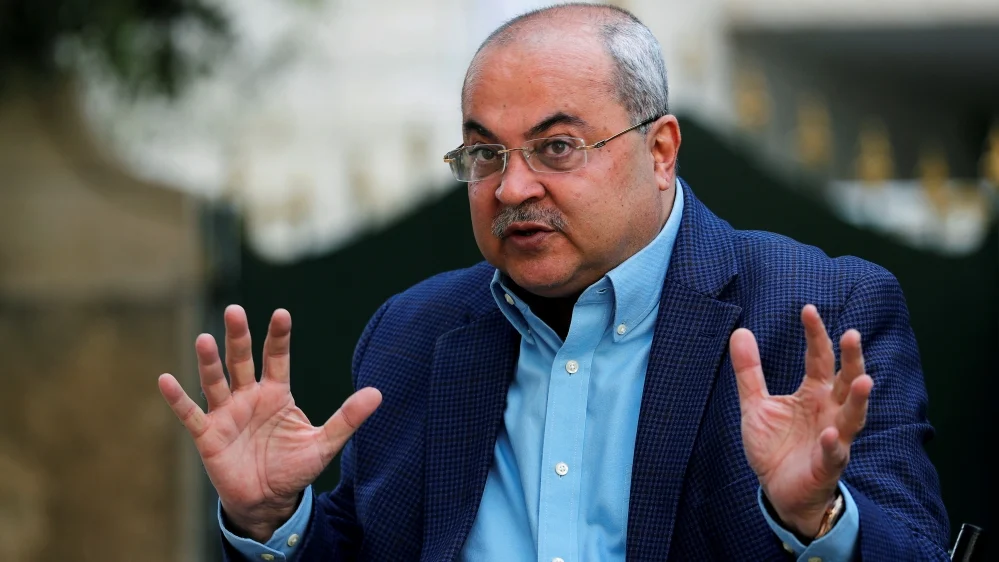
Ahmad Tibi, a veteran Palestinian-Israeli politician and medical doctor who has built a decades-long career fiercely advocating for Arab rights while continuously defying Israel’s right-wing establishment, has once again left his mark on the nation’s political landscape. As the chairman of the Arab Movement for Renewal (Ta’al) party, Tibi has secured his election as deputy speaker of the Israeli Knesset, marking a significant and hard-fought milestone for the seasoned lawmaker who has long represented the interests and rights of Palestinian citizens of Israel.
Speaking to Al Jazeera following his election, Tibi framed the moment as a decisive victory against the far-right political factions that have either led or been dominant partners in Israel’s government coalitions in recent years. His appointment to the parliamentary leadership role is viewed by his supporters as a testament to persistent political mobilization in the face of mounting legislative and societal hurdles.
"This is a rightful achievement for the Joint List, which secured 11 seats," Tibi said during the interview, referring to the influential electoral alliance of Arab-majority parties that has sought to unify Palestinian representation within the Israeli parliament.
The path to the deputy speakership was fraught with legislative and political maneuvering. Tibi pointed directly to the opposition he and his allies faced from the highest levels of the current political establishment. "Likud and Ben-Gvir attempted to prevent my election, but they failed despite their reckless incitement," Tibi added, explicitly naming Prime Minister Benjamin Netanyahu’s ruling party alongside far-right National Security Minister Itamar Ben-Gvir. Despite concerted efforts from these right-wing factions to block his ascent to the parliamentary leadership post, Tibi’s parliamentary alliances and political resilience ensured his successful appointment.
Adviser to Arafat
Tibi’s journey to the upper echelons of the Israeli parliament is rooted in a lifetime of political engagement, displacement, and a dual identity that has consistently placed him at the center of the Israeli-Palestinian conflict. Born in the central Israeli city of Taibe on December 19, 1958, Tibi comes from a family that was displaced from Jaffa during the 1948 Nakba—the Arabic term for the mass displacement and dispossession of Palestinians surrounding the creation of the State of Israel.
Before diving full-time into the turbulent waters of Middle Eastern politics, Tibi initially pursued a career in medicine. He studied diligently, graduating with top honors from the Hebrew University of Jerusalem in 1983 as a qualified doctor. However, his deep-seated political convictions and activism soon overshadowed his medical career, drawing him inexorably into public service and nationalist advocacy.
A pivotal moment in his early political trajectory occurred in 1984, when Tibi traveled to Tunis, Tunisia, to meet with Palestine Liberation Organization (PLO) leader Yasser Arafat. The meeting was a direct defiance of Israeli laws at the time, which strictly prohibited citizens from contacting members of the PLO, an organization classified by the Israeli government as a "terrorist organisation."
Upon his return to Israel, Tibi was interrogated by Israeli police regarding his foreign contacts and activities. Although he was subjected to intense scrutiny, he was never formally charged with a crime. This formative act of defiance set the tone for his future career, bridging the gap between the internal politics of the Israeli state and the broader Palestinian national movement. Years later, Tibi formalized this diplomatic bridge when he served as a political adviser to Yasser Arafat between 1993 and 1999, operating during the tumultuous era of the Oslo Accords and the shifting dynamics of peace negotiations.
During his tenure advising the Palestinian leadership, Tibi played a prominent public role as the spokesperson for the Palestinian delegation at the Wye River summit held in Maryland, United States, in October 1998. At the time, Benjamin Netanyahu—who holds the distinction of being the longest-serving Israeli prime minister—was serving his first stint in power.
The high-stakes negotiations at the Wye River summit resulted in an agreement wherein Israel committed to withdrawing its military forces from additional parts of the occupied West Bank. In exchange, the Palestinian Authority (PA) agreed to undertake a further crackdown on armed factions within the Palestinian resistance movement. However, much like numerous other diplomatic accords forged during the protracted Israel-Palestine peace process, the Wye River Memorandum was short-lived and soon abandoned by Israel amid escalating political friction and changes in government.
Parliamentary battles
Having founded the Ta’al party in 1996, Tibi transitioned from behind-the-scenes diplomacy to the front lines of electoral politics, winning his first election to the Israeli Knesset in 1999. Throughout his decades-long tenure in the parliament, Tibi has consistently described himself as an "Arab Palestinian with Israeli citizenship," a dual identity that informs his comprehensive legislative platform. He has steadfastly advocated for a two-state solution based on pre-1967 borders, the right of return for Palestinian refugees displaced by the conflict, and equal civil and national rights for the Arab minority living inside Israel.
A core component of Tibi’s political philosophy involves challenging the foundational character of the state. He has consistently opposed Israel’s legal and political self-definition as exclusively a "Jewish state," arguing instead that such a designation marginalizes its non-Jewish citizens. Rather than an ethnic democracy, Tibi has frequently described Israel as an "apartheid state" due to systemic inequalities, advocating instead for the realization of a "state for all its citizens" where Palestinians and Israelis enjoy absolute parity before the law.
His uncompromising rhetoric, outspoken policy positions, and active participation in on-the-ground demonstrations have repeatedly made him a prime target for punitive measures by the Israeli government, as well as physical assaults and vitriol from violent far-right activists.
Tibi’s physical confrontation with the Israeli political and military apparatus is well-documented. During the outbreak of the Second Intifada in September 2000, tensions reached a boiling point when Tibi suffered a broken right hand while confronting Ariel Sharon—who would ascend to the office of prime minister the following year—during Sharon’s highly provocative and politically explosive storming of the Al-Aqsa Mosque compound in occupied East Jerusalem, an event that catalyzed widespread uprisings.
Government friction with the veteran lawmaker has also manifested in attempts to strip him of his political protections. In 2002, the Israeli political
establishment took the drastic step of stripping Tibi of his parliamentary immunity. The move came in direct retaliation after Tibi crossed police lines to enter the Jenin refugee camp during a heavy Israeli military offensive, where he stood face-to-face with soldiers to protest the military’s actions against trapped civilians.
Beyond physical confrontations and legislative debates, Tibi has earned a reputation for staging dramatic parliamentary protests designed to draw international and domestic attention to legislation he views as discriminatory or harmful to the Palestinian population. In 2016, he executed one of his most memorable protests inside the Knesset chamber itself. As lawmakers debated a controversial Israeli bill aiming to ban the use of outdoor loudspeakers for the Islamic call to prayer (adhan) in Jerusalem and across the occupied Palestinian territories, Tibi stood up and recited the call to prayer directly into the parliamentary record, registering a potent symbol of defiance against a measure he and other Arab lawmakers condemned as an assault on religious freedom.
With his recent election as deputy speaker, Tibi secures a prominent platform from which to continue these parliamentary battles. Despite facing unrelenting pushback from the far-right coalition partners currently shaping Israeli governance, his longevity in the Knesset underscores his enduring role as a central figure in the political resistance of Palestinian citizens of Israel.
| Source | : | Finance Poetry |
| Author | : | rifanmuazin |
| Editor | : | Finance Poetry Editorial Team |