
New York Fed President John Williams Sees Only One More Rate Hike Ahead, Bucking Market Expectations for 2027
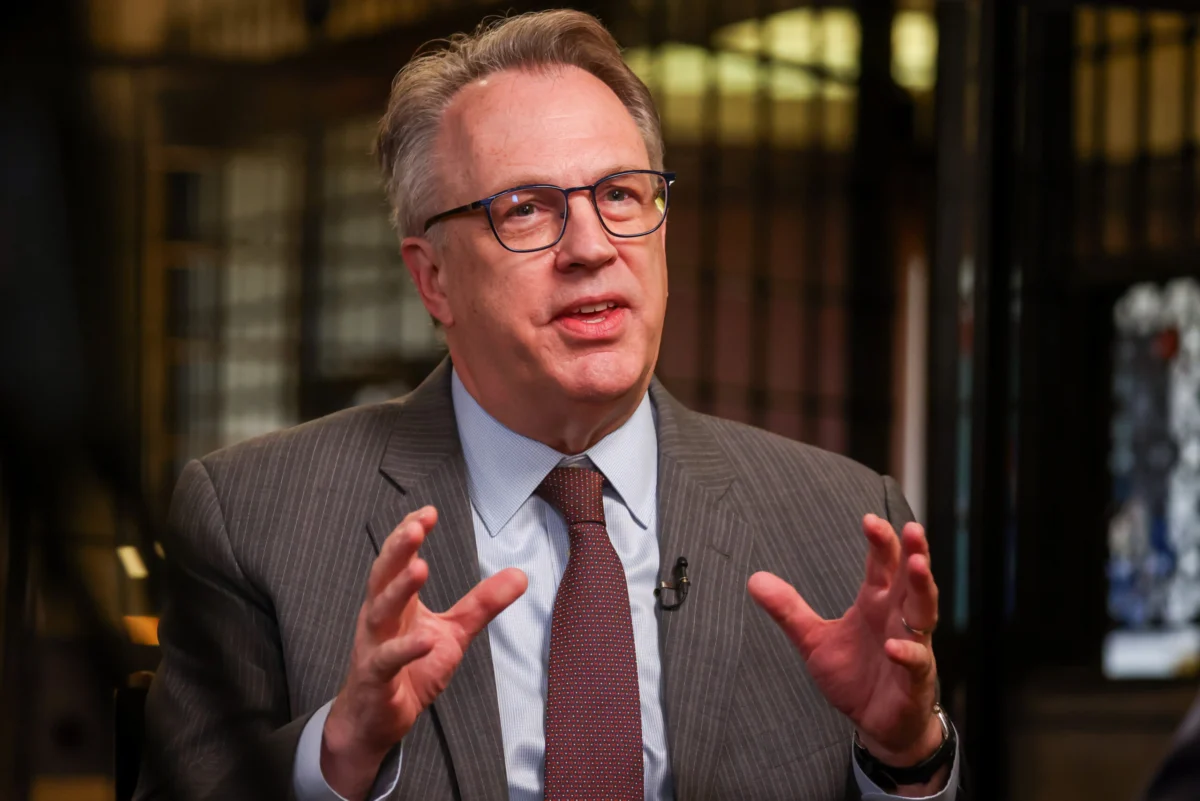
New York Federal Reserve President John Williams signaled on Tuesday that he foresees a definitive end to the central bank’s current tightening cycle following just one more anticipated interest rate increase this year, setting the stage for a potential divergence between central bank policy and aggressive market pricing looking ahead into 2027.
Speaking during an interview with Bloomberg News in New York, Williams outlined his current outlook for monetary policy, emphasizing that incoming economic data will ultimately dictate the precise trajectory of borrowing costs. However, he maintained that his baseline projection does not currently account for a prolonged cycle of consecutive hikes deep into the following year.
"I haven’t changed my view that it may be appropriate to have one more rate hike," Williams said during the interview. "I don’t think at this time I have any reason to believe that we would need to do more."
Williams’ comments immediately placed him at a notable variance with prevailing financial market expectations, as well as the projections of several of his colleagues within the Federal Open Market Committee (FOMC). As a permanent voting member of the FOMC—the critical policy-making body responsible for determining the benchmark federal funds rate at each scheduled gathering—Williams carries significant influence over monetary deliberations.
According to the latest CME FedWatch data as of Tuesday, fed funds futures traders are overwhelmingly betting that the central bank will extend its tightening campaign well into 2027. Recent trading activity assigned roughly 90% odds that the Federal Reserve’s overnight rate will finish the year 2027 sitting at least a half percentage point higher than its current level, pointing to market pricing that anticipates multiple rate increases rather than the single hike envisioned by the New York Fed chief.
Within the central bank itself, Williams occupies a position that is simultaneously aligned with the broad plurality yet technically at odds with a significant cohort of policymakers. Among the 18 officials who submitted individual economic and rate forecasts for 2027, eight members envision a single rate increase following an additional hike scheduled for later this year. This places Williams squarely in line with the majority view of the committee, even as other members diverge in more hawkish or dovish directions.
The Federal Reserve previously shifted its policy stance in September by implementing its first interest rate increase since 2023, marking a major turning point in the central bank’s management of the post-pandemic economic landscape. Following that decision, meeting minutes released by the central bank indicated that officials were actively contemplating plans for an additional rate hike, though they intentionally withheld explicit guidance regarding the exact timing of the move. The Federal Open Market Committee is scheduled to convene for its next policy gathering at the end of this month, followed by one final meeting in December to conclude the year’s calendar.
Despite offering a clear view on his baseline expectations, Williams acknowledged the inherent uncertainties clouding the economic horizon as the calendar turns toward the new year. He emphasized to Bloomberg that policymakers will retain a flexible, data-dependent posture, noting that "we’ll have to see" how economic conditions evolve in the months ahead.
"This economy is being affected by lots of different influences, and we just have to keep watching the data," Williams said, reiterating the central bank’s steadfast commitment to navigating shifting macroeconomic crosscurrents with continuous vigilance.
‘Disinflationary’ trends
Turning to the broader price environment, Williams stressed that the Federal Reserve must maintain a sharp focus on underlying structural trends in inflation, particularly as the economy absorbs various price shocks stemming from energy market volatility and the rapid expansion of artificial intelligence technologies.
The former San Francisco Fed chief acknowledged that energy prices continue to exert noticeable upward pressure on headline inflation metrics, complicating the central bank’s path toward price stability. At the same time, he suggested that these energy-related pressures could eventually flip and provide positive relief on an annual comparison basis in the future. Furthermore, Williams noted that the economic impacts of various tariffs on domestic price growth have largely materialized and been absorbed by the broader economy.
Looking ahead to 2027, Williams projected that overall inflation will settle close to the Federal Reserve’s official annual target of 2%. This perspective comes on the heels of the latest reading from the personal consumption expenditures (PCE) price index—the central bank’s preferred and most closely watched inflation gauge—which showed that headline inflation rose at a 12-month rate of 3.4% in August. When stripping out volatile food and energy components to measure core price pressures, the annualized figure registered at a much lighter-than-expected 3.0%.
"I still believe there’s disinflationary forces at play. Those I don’t think have fundamentally changed," Williams said. "In fact, my forecast for inflation for next year is inflation to come down quite a bit."
| Source | : | Finance Poetry |
| Author | : | rifanmuazin |
| Editor | : | Finance Poetry Editorial Team |