
Mastering the Numbers: Why Small Businesses Need to Understand Cash Flow Forecasting
Just as plants require a steady supply of water to remain healthy and vibrant, commercial enterprises need a consistent stream of liquidity to survive and grow. In the day-to-day operations of a small business, this underlying current of money is known as cash flow—the literal movement of funds entering and leaving company accounts. While many entrepreneurs focus heavily on profitability, industry experts continually emphasize that cash flow is the true lifeblood of any commercial venture, dictating whether a business can pay its bills on time or weather unexpected economic storms.
Understanding this movement is only the first step. Cash flow forecasting goes hand in hand with sound financial management, helping business owners predict their future liquidity positions so they can plan ahead and make critical strategic decisions. Whether an enterprise is looking to expand operations, secure a commercial loan, or simply gain a clearer understanding of its ongoing financial health, cash flow forecasts serve as remarkably powerful financial tools. Examining the foundational elements of these forecasts reveals everything a small business owner needs to begin looking ahead with confidence.
To fully grasp the mechanics of forecasting, one must first understand cash flow itself. At its core, cash flow encompasses both the money moving into a business and the money moving out. Cash primarily enters a company through sales revenue, though funds can also arrive via commercial loans, lines of credit, or recent tax rebates. Conversely, cash going out covers all operational expenditures, including rent, taxes, employee salaries, marketing outlays, insurance premiums, and other day-to-day running costs.
Consider a typical dry cleaning business where the vast majority of revenue is generated through cleaning services and garment alterations. If the owner has recently secured a loan to purchase specialized pressing equipment, that borrowed capital represents incoming cash as well. On the expenditure side, most of the outgoing cash will be directed toward paying suppliers for cleaning agents, covering staff wages, drawing the owner’s salary, and settling ongoing expenses such as utility bills, municipal taxes, and regular loan repayments.
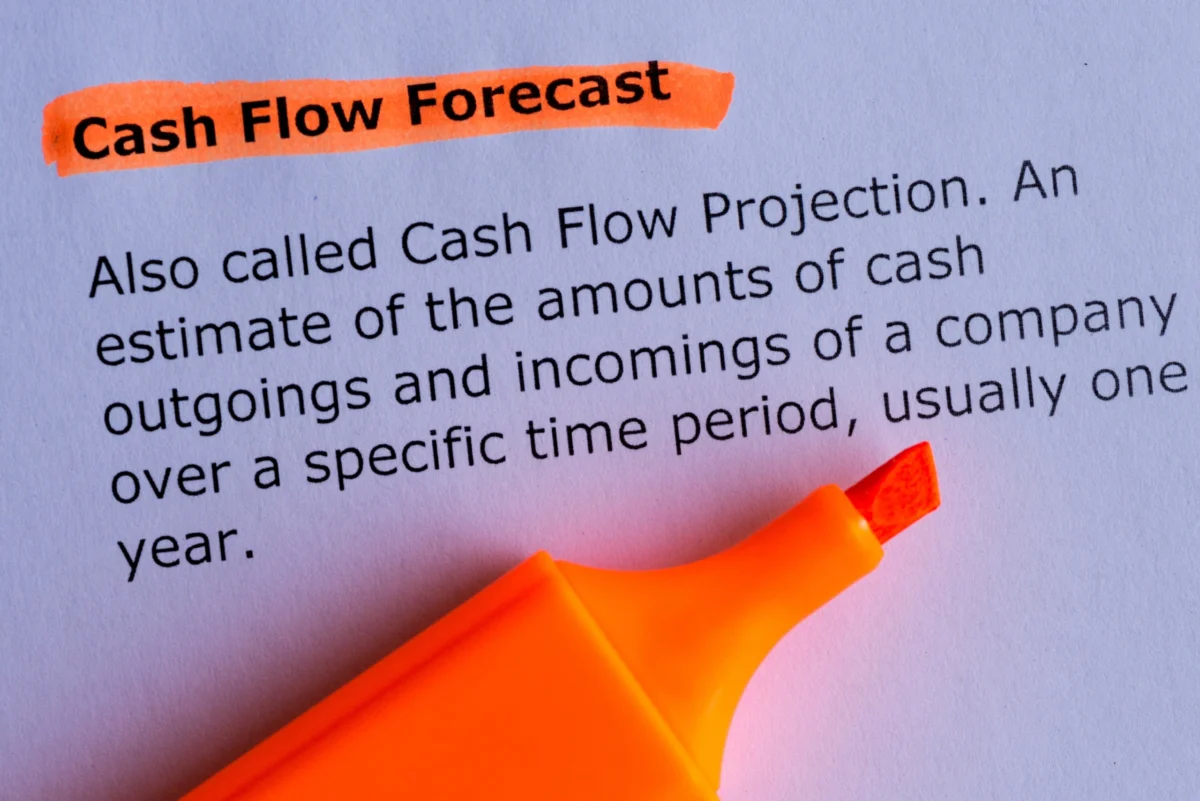
Building upon these daily transactions, a cash flow forecast calculates how this incoming and outgoing money is likely to behave over a designated future period. However, constructing an accurate forecast requires a firm understanding of historical financial patterns. Because historical data serves as the building blocks for future projections, a cash flow forecast for a newly established business will naturally look different than one for an enterprise with years of established operational history. Businesses that have been trading longer and maintain meticulous financial records are inherently better positioned to project their financial standing further into the future.
In practical terms, cash flow forecasts are structured as detailed financial spreadsheets. Along the horizontal axis, accountants typically list the months of the year, while the vertical rows are dedicated to detailing anticipated income and expenditures for each monthly period. Business owners can input their projected monthly revenue alongside broken-down categories of outgoing expenses, such as general operating costs and specific debt service payments.
The single most important metric revealed by this process is net cash flow—the mathematical difference between total outgoing funds and total incoming receipts. Net cash flow clearly indicates whether a business is generating more cash than it burns or if it is currently consuming capital faster than it takes in revenue. With modern forecasting software that integrates directly with digital accounting platforms, business owners can also access more visual representations, utilizing line graphs to easily track the peaks and troughs of their financial cycles over time.
The practical value of these forecasts extends far beyond simple bookkeeping. Primarily, they act as vital financial barometers, allowing management to gauge the degree of financial pressure the company might face in the coming weeks or months. Numerous commercial pitfalls can trigger severe cash flow problems, ranging from delayed client payments to uncontrolled business expansion. Proper forecasting helps leadership catch and address these warning signs early, long before they threaten the viability of the enterprise.
Armed with accurate projections, business owners can make far more informed decisions. A reliable cash flow forecast makes it much easier to determine whether the company can comfortably afford to hire a new staff member, invest in updated machinery, or take on additional operational overhead. Furthermore, external lenders place significant weight on these documents. Much like payslips are required for a personal mortgage application, a well-prepared cash flow forecast helps business owners prove their operational performance and revenue reliability when approaching financial institutions for credit.
Despite careful planning, many enterprises eventually encounter what is known as a cash flow gap—the critical time lag between paying for business outgoings and actually receiving payment from clients for completed work. These lingering gaps can unnecessarily force a company into short-term borrowing and create secondary administrative burdens. Conducting a weekly review of the cash flow forecast is widely recognized as an effective preventive measure against these liquidity shortfalls, helping management identify recurring payment bottlenecks before they escalate.
Alongside examining concrete financial figures, prudent business planning involves running contingency scenarios for potential disruptions, such as clients paying late, which remains an unwelcome reality for many independent enterprises. Establishing a rigorous process for chasing overdue invoices, combined with prompt initial billing, helps mitigate this risk. Furthermore, while businesses naturally experience busy seasonal peaks, planning financial cushions to survive quieter months must be factored into any realistic forecast. This approach ties closely into effective inventory management, ensuring that a company does not tie up crucial operating cash in excess stock sitting idly on shelves.
When structuring these financial projections, businesses generally rely on one of two primary methodologies. Direct cash flow forecasting relies on expected receipts and payments, making it exceptionally well-suited for short-term measurements spanning days or weeks, though it remains less effective for long-term strategic planning. Indirect cash flow forecasting, on the other hand, measures broader projections by adjusting for non-cash items, examining how depreciation and changes in working capital will ultimately impact liquidity over an extended horizon, such as a full calendar year.
Newer and smaller enterprises typically benefit most from direct forecasting methods, as they often lack the extensive historical profitability records required for complex indirect models and are naturally more focused on managing immediate, short-term liquidity. Some growing businesses ultimately choose to combine both direct and indirect forecasting techniques to secure a comprehensive, panoramic view of their financial standing.
Creating a functional forecast is typically streamlined through the use of standardized templates, which provide pre-formatted spreadsheets outlining necessary income and expense categories. With basic records of bank balances, incoming revenues, and outgoing liabilities close at hand, business owners can populate these documents to gain immediate clarity. For enterprises still relying on manual record-keeping, transitioning to digital accounting software can significantly simplify the process of tracking income and expenses, ensuring that the foundational data feeding into the forecast remains accurate and up to date.
| Source | : | Finance Poetry |
| Author | : | rifanmuazin |
| Editor | : | Finance Poetry Editorial Team |