
Stranded at Sea: How an Epic 15-Year Cruise Dream Collapsed in Cambodia
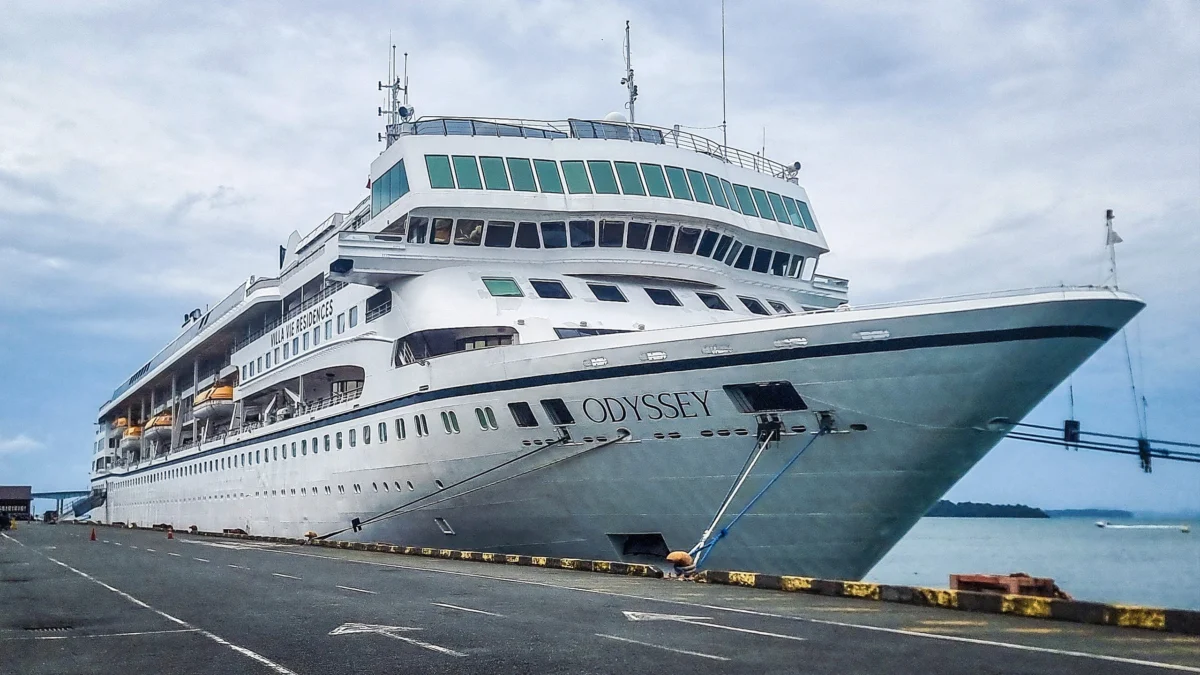
Kit Cassingham credits her daily yoga practice and her extensive background as a life coach with keeping her grounded these days. And she certainly has plenty of reasons to feel otherwise. Earlier this week, she and her husband, Randy, were instructed to permanently disembark from the Villa Vie Residences Odyssey, the cruise ship they had called home for the last two years.
The Cassinghams, alongside roughly 200 fellow passengers who had paid to live out their golden years traveling the globe, were abruptly informed that the company running the residential cruise had run out of money. Unable to afford the fuel required to keep moving, the ship dropped anchor in Cambodia, leaving passengers scrambling to collect their belongings and figure out where to live next.
Their extraordinary journey with the Odyssey began more than two years ago, when the couple made the radical decision to sell the dream home they had custom-built in Colorado. The motivation wasn’t a desire for casual wanderlust, but a medical necessity.
"Randy realized he was allergic to Colorado," Cassingham explained. "He was allergic to four-legged animals, mold, dust, grasses, weeds, pinyon, and juniper trees. And we lived in a pinyon-juniper forest. His allergies got worse and worse, and even his allergists couldn’t stay on top of it."
Faced with a debilitating environment, the couple concluded that a never-ending cruise ship was the one place where Randy might finally find relief from the relentless scourge of grass and tree allergens.
Their path to maritime living, however, was fraught with missteps from the beginning. The Cassinghams initially put down a substantial deposit with Victoria Cruises, only to later discover that the company did not actually own a ship—and still doesn’t, despite continuing to market and sell cabins to prospective buyers. By the time they realized the reality of the situation, they had already sold their Colorado home and embarked on a pre-road trip to bid farewell to friends across the country, leaving them with no choice but to explore alternative options.
That is when they discovered Villa Vie Residences and its flagship vessel, the Odyssey, which promised passengers an opportunity to comfortably cruise the world for the rest of their lives. Enticed by the prospect of a permanent floating home, the Cassinghams purchased a balcony cabin on the ship’s seventh floor for $369,000. Their monthly maintenance charges, which were designed to cover housekeeping, laundry, fuel, and three meals a day, initially stood at $8,000. However, the couple opted to purchase stock in the company, which granted them "founder" status and successfully reduced their monthly financial obligations to $6,000.
From the very beginning, operations were notably rocky. The Odyssey was originally scheduled to set sail in May 2024, but a cascade of mechanical problems kept the vessel indefinitely docked in Belfast, Northern Ireland, until October 2024.
Looking back, Cassingham says that extended delay in Belfast was when she first began noticing that the company’s owners were significantly in over their heads.
"We were going to go up to the Amazon, and it turns out our boat was too big," she recalled. "And they just weren’t paying attention to some details."
Cassingham firmly believes that the prolonged setbacks in Belfast placed the company on an unstable financial backfoot before the journey even truly commenced. Because the ship remained docked for months, management poured vast amounts of money into resolving mechanical failures. Every time engineers managed to fix one issue, two more seemed to take its place, plunging the enterprise deep into debt while still tied to the dock.
The financial pressure intensified exponentially when geopolitical conflict erupted. Following the outbreak of the war involving Iran in February and the subsequent closure of the strategic Strait of Hormuz, global fuel prices spiked dramatically.
According to Cassingham, their fuel bills abruptly doubled and then tripled. When an organization is already spending more capital than it is bringing in, such a massive surge in operating expenses proved catastrophic. She noted that management subsequently asked passengers on multiple occasions to pitch in directly to cover mounting fuel charges.
Despite these looming storm clouds, Cassingham noted that the mood among the passengers remained remarkably resilient. The community spirit aboard the ship stayed strong because everyone on board was actively pursuing a lifestyle they loved and deeply desired.
That communal goodwill was demonstrated vividly when the ship arrived in the Philippines just days after a deadly typhoon devastated parts of the country. Passengers immediately rallied together, organizing a successful fundraiser and assembling care packages for the storm victims.
"We’re doing this kind of community stuff, and have no problem raising money for that," Cassingham reflected. "We just got tired of raising money for stuff we thought we were already paying for."
The atmosphere shifted decisively, however, when the vessel reached Thailand. According to passengers, company founder Mikael Petterson informed them that the ship would remain in the country until he could secure a desperately needed financial investor. Instead, the situation took another unexpected turn when the ship abruptly lifted anchor and sailed for Cambodia—a destination where passengers found that Starlink internet access was limited, local cell service was poor, and fuel remained exceptionally expensive.
According to financial figures provided by Villa Vie, per-cabin fuel expenses skyrocketed from a manageable $1,800 to between $6,000 and $8,000 per month. This sudden escalation placed the company’s entire operating model under insurmountable financial pressure.
In an official statement, the company elaborated on the crisis, noting that since the conflict in the Middle East began in late February, management had implemented significant measures to curb fuel consumption. These conservation efforts included slowing down the designated itinerary and spending extended periods anchored safely in port. However, the company acknowledged that those emergency measures ultimately proved insufficient to offset the extraordinary, unprecedented spike in fuel costs, rendering them unable to continue absorbing the resulting operating losses.
In an interview with business media, Villa Vie Residences founder Mikael Petterson candidly referred to himself as "the villain in the story" as the venture unraveled.
"Nobody that’s tried residential cruising has succeeded, and we have gone further than anyone else," Petterson stated. "I think we would have been absolutely fine and we would have seen this through, if there was no Iran war."
Red flags before the shutdown
In retrospect, Cassingham admits that there were numerous warning signs pointing toward an eventual collapse that were easy to overlook while caught up in the excitement of the lifestyle.
"I personally had red flags because when we would talk to Mikael, he could never look into the camera," she recalled. "His eyes were always shifting back and forth and mysterious—off into space."
Another major concern for Cassingham was a revolving door of administrative and operational employees quitting or being replaced. She also noted alarming discrepancies in the company’s financial paperwork. Their monthly invoices were frequently incorrect, requiring passengers to triple-check every line item whenever they could obtain the records. It eventually became apparent that management was running the multi-million-dollar enterprise using basic spreadsheets.
"Now I’m no bookkeeper, but I know a spreadsheet’s not what you use to manage a large business," she said.
Following the sudden shutdown in Cambodia, the Cassinghams have no immediate plans to return to the United States. This decision is reinforced by the fact that Randy is currently in the middle of ongoing medical treatments for prostate cancer. The couple wants to closely monitor how the situation with the ship and the stranded community resolves itself, and Randy has follow-up cancer screenings scheduled to take place in Thailand this coming December.
In response to the crisis, a dedicated group of displaced passengers has formed a limited liability company (LLC) to explore potential pathways toward getting the ship back into operational order. Yet, for the time being, Cassingham estimates that a resolution is unlikely to materialize for at least another 60 to 90 days.
Despite the abrupt disruption to their lives and the loss of their floating home, Cassingham maintains a surprisingly calm and sanguine perspective on her current predicament. Her grounding yoga and meditation practices continue to serve her well, as does her professional background as a transformation life coach.
Comparing their maritime adventure to the historic expansion of the American frontier, she finds comfort in the uncertainty of the journey.
"When the pioneers headed West from the East Coast, they didn’t know what was ahead of them," she said. "You make it or you don’t."
| Source | : | Finance Poetry |
| Author | : | rifanmuazin |
| Editor | : | Finance Poetry Editorial Team |