
Spot Natural Gas Prices Slide to Start the Week Amid Exceptionally Benign November Weather and Active Selling
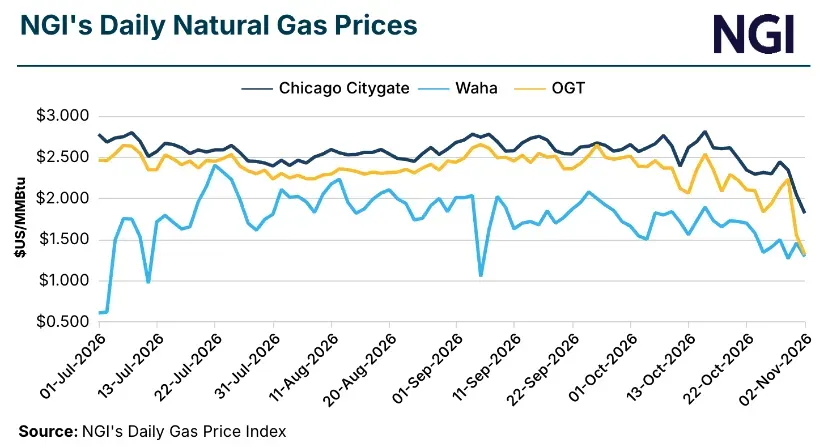
Spot natural gas prices varied by region but fell overall to start the week, as bargain buyers selectively picked their spots while sellers grew increasingly active against a backdrop of exceptionally benign weather conditions by November standards. The early-week market action underscored the dominant role that mild autumn temperatures continue to play in suppressing near-term energy demand across major U.S. trading hubs.
The overarching narrative across the domestic natural gas landscape centers on the lack of traditional early-winter heating load. Typically, November brings a noticeable uptick in residential and commercial heating demand, driving regional price spikes and forcing utilities to draw more aggressively from storage inventories. However, unseasonably mild weather patterns stretching across large portions of the country have stymied those seasonal expectations. Without widespread heating demand, domestic consumption remains subdued, leaving the market amply supplied and putting downward pressure on spot transactions.
Market participants noted that despite the prevailing downward trend, trading dynamics varied significantly from region to region. While overarching supply-demand fundamentals weighed heavily on the broader market, specific regional constraints, pipeline maintenance schedules, and localized balancing needs created pockets of variance. Regional price spreads, such as those historically observed between key pricing points like the Chicago Citygate, the Waha Hub in West Texas, and the Midcontinent Express Pipeline (OGT) delivery point, reflected these localized supply imbalances and transport dynamics.
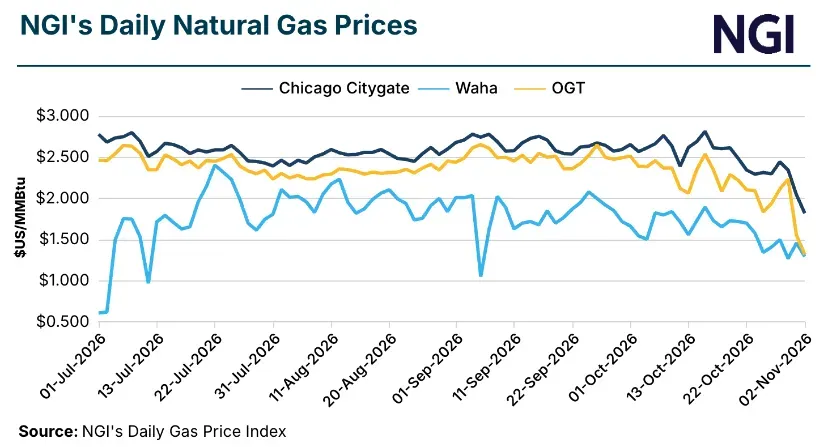
Even with the regional differences, the prevailing sentiment heading into the new trading week favored the selling side. Sellers, eager to clear volumes in a sluggish physical market, stepped up their activity. On the other side of the ledger, buyers remained disciplined, adopting a selective, opportunistic approach. Rather than aggressively securing supplies or hedging against potential weather shocks, bargain buyers carefully handpicked their entry points, capitalizing on softer pricing where regional oversupply was most acute.
This cautious behavior from buyers reflects broader market psychology. With weather forecasts offering little immediate indication of a sustained, widespread cold snap, market participants see minimal risk of an immediate supply crunch. Storage inventories, bolstered by robust production throughout much of the year and the recent extended period of mild autumn weather, remain in a comfortable position relative to historical averages. This supply cushion has effectively insulated the market from panic buying, allowing utilities and industrial consumers to take a measured approach to their short-term procurement strategies.
As the week progresses, traders and analysts will continue to monitor updated meteorological forecasts for any signs of a shifting weather pattern. In the absence of a meaningful shift toward colder temperatures, the natural gas spot market is expected to remain under pressure, with sellers continuing to test the limits of buyer interest across regional delivery points. For now, the combination of robust availability and comfortable November weather dictates the rhythm of the physical market, keeping prices grounded as the heating season struggles to find its footing.
| Source | : | Finance Poetry |
| Author | : | rifanmuazin |
| Editor | : | Finance Poetry Editorial Team |