
Weekly Natural Gas Cash Prices Fall Across Lower 48 Amid Mild Weather and Slowing Heating Demand
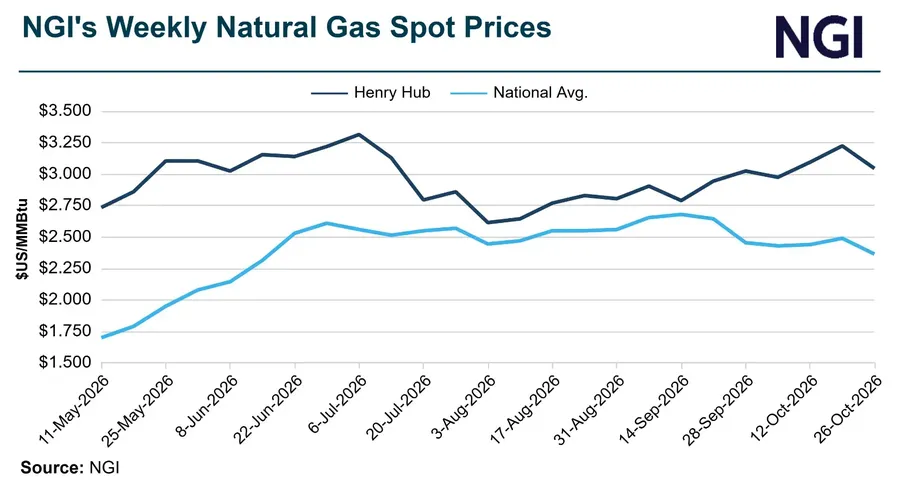
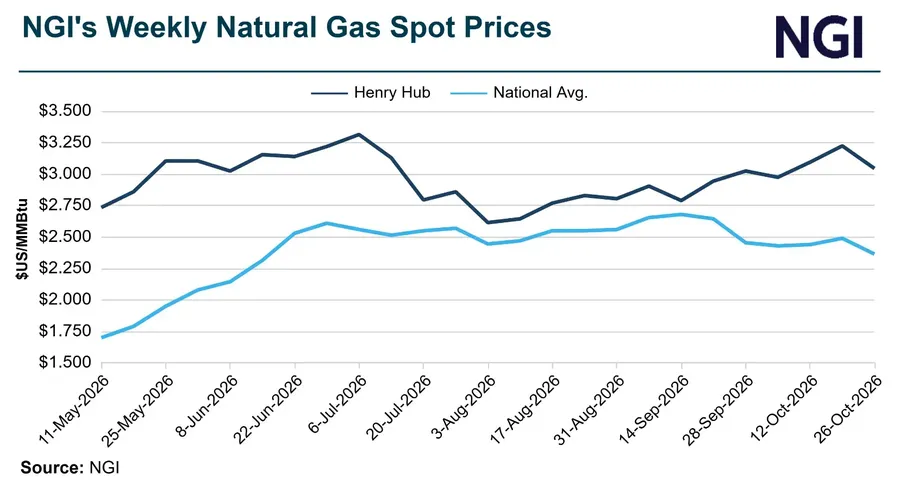
Weekly natural gas cash prices fell across the Lower 48 as mild weather staved off heating demand and sent buyers to the sidelines. The broad retreat in regional spot markets underscores the pervasive impact that unseasonably benign temperature patterns continue to exert on immediate physical commodity trading dynamics throughout the domestic energy landscape.
As autumn progresses, meteorological forecasts across major population centers and key energy consumption regions have consistently pointed toward moderate conditions. Rather than the sharp, early-season cold snaps that typically prompt utilities, local distribution companies, and industrial end-users to aggressively secure prompt-delivery supplies, market participants have been greeted by persistent warmth. This absence of early heating load has fundamentally altered short-term purchasing behavior, leaving physical buyers with little incentive to aggressively bid up prices in the spot market. Instead, procurement teams have adopted a patient, sidelines stance, opting to rely on existing storage inventories or wait for more compelling price signals before committing fresh capital to spot purchases.
The deceleration in physical spot market activity reflects a classic seasonal transition dynamic, amplified this year by the widespread lack of weather-driven urgency. When temperatures linger above seasonal norms across the eastern half of the country and parts of the Midwest, the daily burn rate for natural gas in residential and commercial heating applications drops significantly. Power generators, too, face tempered electrical demand profiles that reduce their immediate fuel-burning requirements compared to peak cooling or heating cycles. Consequently, the surplus of available prompt-delivery gas relative to immediate consumption needs has exerted downward pressure on cash prices at trading hubs spanning from the production basins of the Gulf Coast and Texas to the major market centers of the Northeast and Midwest.
Market analysts note that physical buyers are currently in a comfortable position to exercise restraint. Storage injections over the preceding months have left domestic inventories in a healthy position heading into the colder months of the year, mitigating fears of immediate supply crunches or severe logistical bottlenecks. With ample volumes tucked away in underground salt and aquifer facilities, downstream participants feel little pressure to chase the spot market during periods of lackluster weather-driven demand. This psychological buffer among buyers has reinforced the downward trajectory of weekly cash prices, keeping trading ranges subdued and limiting intraday price volatility.
The broader implications of these declining weekly cash prices extend across the entire domestic natural gas value chain. Upstream producers, facing softer real-time realizations for their prompt output, continue to monitor regional takeaway capacity and storage dynamics closely to gauge whether curtailments or adjustments to drilling and completion activity may be warranted. Meanwhile, midstream operators experience steady, baseline pipeline flows that reflect current supply and demand balances, though localized basis differentials can shift rapidly depending on regional weather disruptions or pipeline maintenance events.
As the market looks ahead to subsequent weeks, the trajectory of cash prices will remain inextricably linked to forthcoming weather forecasts. Should sustained cold fronts finally materialize and sweep across key heating demand corridors, the current sidelines posture among buyers is expected to dissolve quickly, paving the way for renewed purchasing activity and potential upward momentum in spot market values. Conversely, if unseasonably mild conditions persist, physical prices are likely to remain range-bound or drift lower as the market continues to comfortably absorb available production without immediate demand catalysts.
| Source | : | Finance Poetry |
| Author | : | rifanmuazin |
| Editor | : | Finance Poetry Editorial Team |