
Texas Governor’s Race Tightens as AI Data Center Backlash Fuels Democratic Upset Hopes
Political observers across the United States are closely watching the high-stakes Texas gubernatorial election for clear signs of an emerging political backlash against artificial intelligence data centers ahead of the 2026 midterm elections. As voters prepare to head to the polls on Tuesday, prediction market traders are reporting a rapidly shrinking lead for the incumbent, signaling growing odds that the Democratic challenger could pull off a historic political upset in the Lone Star State.
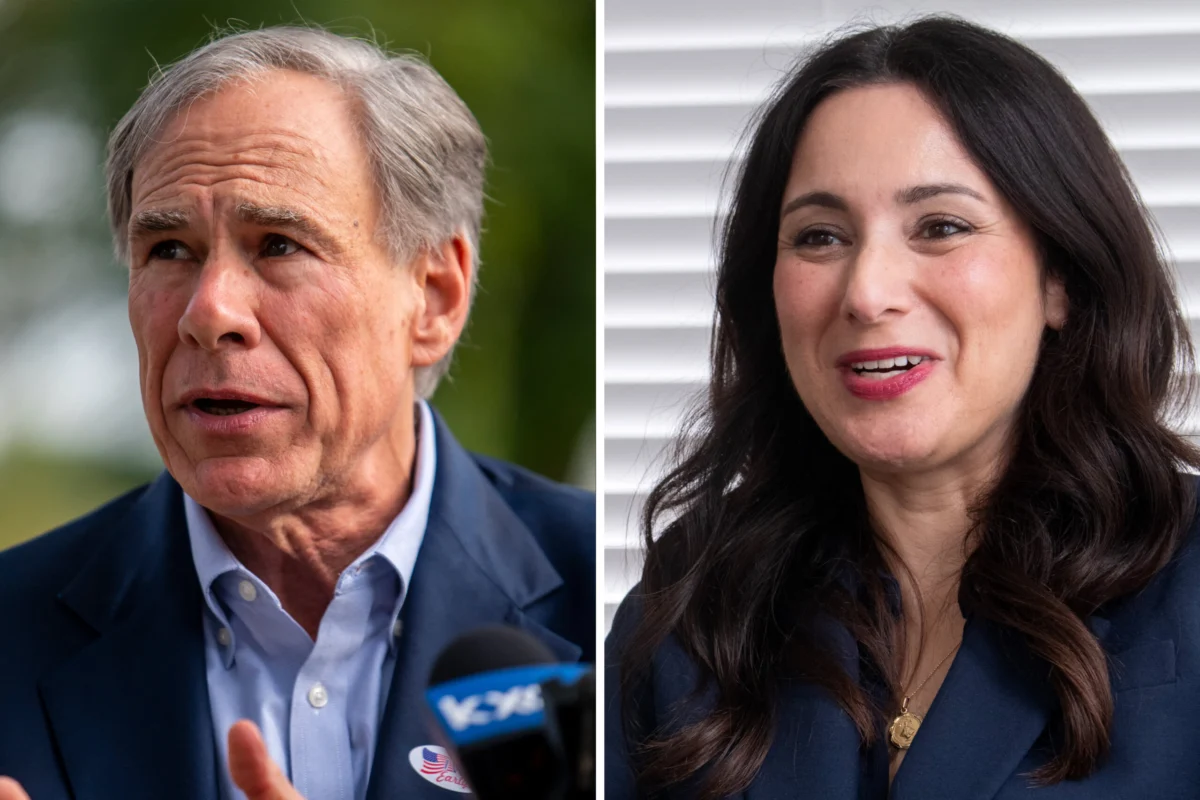
Governor Greg Abbott, a prominent Republican who is currently seeking a fourth term in office, maintains a 60% chance of defeating his Democratic opponent, state Representative Gina Hinojosa, according to speculators operating on the trading platform Kalshi. While the incumbent still holds the statistical advantage in these private prediction markets, the trajectory of the race has shifted dramatically over the summer and autumn months, reflecting a volatile political climate charged with concerns over infrastructure, energy demands, and technological expansion.
Hinojosa’s odds of winning the governorship have experienced a remarkable surge, jumping from a mere 8% in mid-July up to 40% by Monday. A significant portion of these gains has materialized in recent weeks as a continuous series of mainstream political polls have shown the race tightening significantly across the state. A similar trend has played out on Polymarket, another prominent prediction market, where Hinojosa watched her implied probability of victory climb from a low of 5% in late July to 39% by Monday. Financial contracts on these platforms are designed to resolve using official certified data provided by the Texas Secretary of State’s office once the election results are finalized.
Financial analysts and political scientists frequently emphasize that prediction odds and gambling platforms utilize very different methodologies compared to traditional, scientific political polling, meaning they should not be treated as direct substitutes for standard polls. Nevertheless, the rapid movement in these markets mirrors the broader narrative captured by public opinion surveys, highlighting a palpable shift in momentum that has energized Democratic volunteers and forced the Republican campaign onto the defensive in a state that has not elected a Democratic governor in more than three decades.
At the center of this political earthquake is the booming, yet increasingly controversial, technology sector. Hinojosa has aggressively seized upon Governor Abbott’s past and enthusiastic support for massive data center developments throughout Texas, turning what was once framed as a major economic victory into a central attack line against the incumbent administration.

The political friction traces back to November 2025, when Governor Abbott triumphantly touted a massive $40 billion investment by tech giant Google. That landmark financial commitment included plans to bring three new, sprawling data center campuses to the state, prompting Abbott to declare proudly that Texas was destined to become the undisputed "epicenter of AI development." At the time, the announcement was celebrated by state business leaders as proof that Texas’s pro-business regulatory environment and booming economy made it the premier destination for the future of global technology.
However, the political landscape surrounding massive digital infrastructure has shifted dramatically over the past year. Public opinion regarding data centers has soured considerably across Texas, driven by growing anxieties among everyday residents over escalating electricity costs, strain on the state’s independent power grid, and the intensive water usage required to cool thousands of high-powered servers.
Sensing the political vulnerability created by this public discontent, Governor Abbott has noticeably altered his tone and policy approach. In August, the governor ordered a comprehensive state audit of all data center projects seeking to connect to the state’s electrical grid. The regulatory crackdown escalated further in September, when Abbott took the decisive step of halting the approval of all new data center-related permits entirely, announcing that the freeze would remain in place until the state could complete a thorough audit of the existing waitlist for grid connections.
Despite these late-stage corrective measures by the incumbent, Hinojosa has continued to hammer the governor on the issue, campaigning on a platform that calls for an immediate, mandatory data center moratorium until the state legislature can establish stringent regulatory guardrails on the burgeoning industry. Her campaign website outlines a vision of prioritizing residential ratepayers and grid stability over the rapid, unchecked expansion of artificial intelligence facilities, a populist message that appears to be resonating with voters weary of soaring utility bills and infrastructure strain.
The high-stakes electoral showdown arrives on the heels of robust voter participation across the state. In-person early voting in Texas officially concluded on Friday, capping off a fierce mobilization effort by both political parties. Election officials report that more than 7.7 million Texans have already cast their ballots before Tuesday’s election day, setting the stage for what is expected to be a high-turnout referendum on the future of governance, energy policy, and technological growth in the state.
| Source | : | Finance Poetry |
| Author | : | rifanmuazin |
| Editor | : | Finance Poetry Editorial Team |