
US Authorities Issue Urgent Cybersecurity Alert for Industrial Refrigeration Systems Following Global Attacks
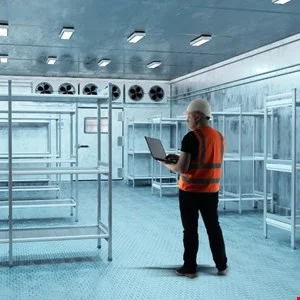
The United States government has issued a stern advisory urging organizations across critical infrastructure sectors to immediately fortify their industrial refrigeration and cold chain monitoring systems. This call to action, spearheaded by the Cybersecurity and Infrastructure Security Agency (CISA) in collaboration with the FBI and other federal partners, comes in response to a growing trend of malicious cyber activity that threatens the integrity of temperature-sensitive supply chains globally. Authorities have warned that hackers are actively exploiting vulnerabilities to remotely manipulate settings, potentially causing catastrophic damage to food supplies, medical inventories, and essential pharmaceutical products.
The advisory, published on November 5, highlights a disturbing pattern of incidents that have moved from theoretical risk to real-world disruption. US authorities confirmed that they are closely monitoring reports of bad actors targeting internet-connected refrigeration systems. These systems, often essential for maintaining the stability of temperature-sensitive goods, are increasingly being integrated into broader corporate networks, inadvertently creating a wider attack surface for adversaries to exploit. By gaining unauthorized remote access, attackers have demonstrated the ability to override safety protocols and force cooling units into dangerous heating cycles.
A Pattern of Malicious Tampering
The urgency of the federal warning is rooted in a series of high-profile cyber-attacks that have targeted major European entities over the past few months. On October 11, 2026, the vulnerability of the modern cold chain was laid bare when hackers successfully compromised systems managed by Danfoss, a major provider of refrigeration technology. The breach resulted in significant operational disruption for several supermarket chains across France and other European nations. In a move that appeared designed to cause maximum spoilage, the attackers bypassed security controls to program refrigeration units to reach temperatures as high as 50°C (122°F). This forced operators to destroy vast quantities of food stock, highlighting the devastating financial and societal impact such digital intrusions can have on the physical supply chain.
This was not an isolated event. By November 1, reports emerged of a similar, coordinated campaign impacting supermarkets across at least nine European countries. The frequency and reach of these attacks suggest a sophisticated understanding of the industrial control systems (ICS) that govern large-scale refrigeration. Most recently, the security landscape faced an even more alarming escalation when a cyber-attack targeted Coolworld, another major refrigeration equipment provider. In this incident, the attackers managed to manipulate systems at France’s National Blood Service (EFS), raising the temperature in cold storage rooms to a boiling 110°C (230°F). The targeting of life-saving medical supplies underscores the life-safety risks inherent in these digital breaches.
Vulnerabilities in the Modern Supply Chain
The US advisory explicitly calls upon owners and operators of refrigeration systems—particularly in the healthcare, chemical, food and agriculture, and transportation sectors—to heighten their vigilance. These industries rely heavily on automated and remote monitoring, continuous temperature logging, and complex defrost cycle management to ensure compliance and product safety. However, the convenience provided by these connected features has become a significant liability.
Federal agencies note that malicious actors are successfully leveraging a variety of techniques to compromise these systems. These include exploiting unpatched software vulnerabilities, utilizing authentication bypass mechanisms, and deploying arbitrary code injection techniques. Furthermore, the prevalence of weak configurations—such as default passwords or exposed interfaces on the public internet—has made it relatively easy for threat actors to gain initial access. Once inside, they are able to force units into continuous heating and defrost cycles, which not only causes the immediate loss of inventory but also risks causing long-term mechanical failure and equipment hazards that could necessitate costly replacements and prolonged downtime.
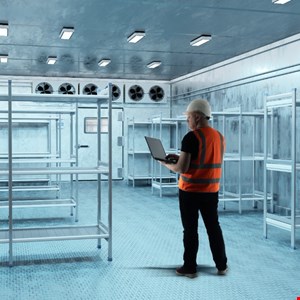
Chris Butera, CISA’s acting executive assistant director for cybersecurity, emphasized the systemic nature of the threat. "Every organization that depends on refrigeration and monitoring systems should assume it could be a target," Butera stated. He urged stakeholders to treat the threat with the utmost seriousness, calling on security teams to review the joint fact sheet provided by the government and take immediate action to close known security gaps. The advisory serves as a reminder that as operational technology (OT) continues to converge with information technology (IT), the security of physical assets must be prioritized with the same intensity as data protection.
Industry Response and Reducing Exposure
The impact of these disclosures has been immediate, with organizations and vendors scrambling to tighten their security posture. Data published by the security firm Censys on November 5 indicates that the public awareness campaign has already yielded tangible results. The firm reported a significant 53% reduction in internet-exposed refrigeration controllers across the specific product lines identified in the October and November attacks, namely the Danfoss StoreView and Copeland/Dixell XWEB systems.
Censys noted that this sharp decline in exposure is largely consistent with proactive measures taken by service providers and equipment owners, who have begun disconnecting vulnerable devices from the public internet or implementing more robust access controls. While these defensive measures are a positive development, authorities warn that the threat environment remains dynamic. As of now, the series of attacks on European refrigeration systems has not been officially attributed to a specific nation-state actor or criminal syndicate, leaving the motive and the identity of the perpetrators a subject of ongoing investigation.
For organizations that continue to rely on remote access for operational efficiency, the federal guidance emphasizes the importance of a "security by design" approach. This includes the implementation of robust multi-factor authentication, the segregation of refrigeration networks from corporate and public-facing networks, and the regular application of security patches provided by original equipment manufacturers (OEMs).
As the digital transformation of industrial processes continues to accelerate, the intersection of cybersecurity and physical infrastructure has become a critical focal point for national security. The incidents in Europe serve as a cautionary tale for the global community. For the operators of cold chain and refrigeration infrastructure, the lesson is clear: the convenience of remote connectivity must be balanced against the reality of a persistent and capable threat landscape. The ongoing efforts by federal agencies and the private sector to reduce the visibility of these systems on the open internet represent a necessary first step in mitigating what has become a high-stakes vulnerability in the global supply chain. Moving forward, continued vigilance and a commitment to hardening these essential systems will be paramount to preventing further spoilage of critical resources and protecting the essential services that rely on precise temperature control to function.
| Source | : | Finance Poetry |
| Author | : | rifanmuazin |
| Editor | : | Finance Poetry Editorial Team |