
Democrats’ Sweep of Midterms Raises Risks for U.S.-China Tensions Over Taiwan and Technology
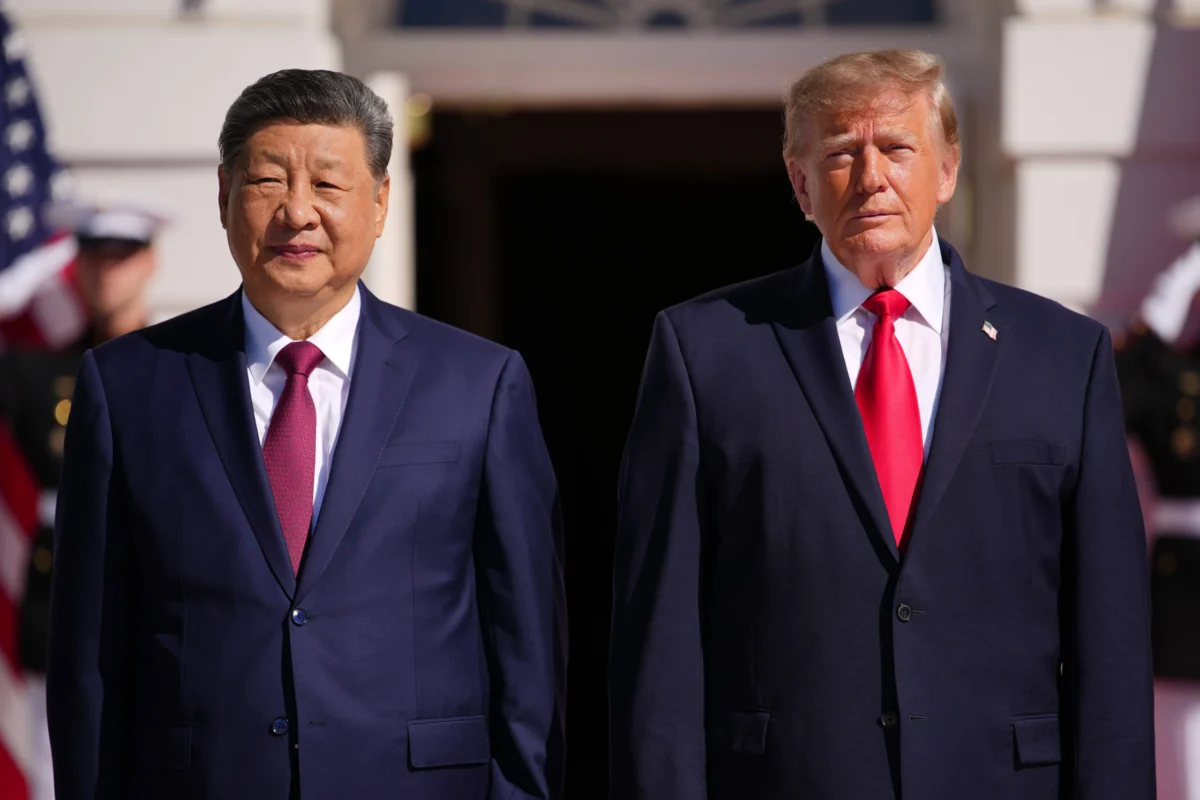
BEIJING — The sweeping victory by Democrats in this week’s midterm elections introduces a fresh layer of unpredictability into Washington’s relationship with Beijing, heightening potential risks for U.S.-China tensions surrounding Taiwan while hardening the ongoing technological competition between the two superpowers, according to political and economic analysts.
The Democratic Party captured majorities in both the House and the Senate, alongside high-profile gubernatorial victories in states such as Texas, Nevada, and Iowa. Although the newly elected lawmakers are not scheduled to take office until January, the seismic political shift in Washington is already reshaping the foreign policy landscape. Prior to the transition of power in Congress, U.S. President Donald Trump and Chinese President Xi Jinping are expected to preserve a fragile diplomatic truce through a pair of upcoming high-level meetings: one in Shenzhen this month, followed by a second summit in Miami, Florida, next month.
Despite the impending shift in congressional power, some analysts believe the immediate executive approach may remain relatively steady in the short term. Gabriel Wildau, managing director at Teneo, suggested in an email that as a lame-duck president increasingly focused on his personal legacy rather than the political fortunes of the Republican Party, Trump may resist mounting pressure for direct confrontation with Beijing. Instead, Wildau noted, Trump is likely to continue his pursuit of what has been characterized as "strategic stability."
At the same time, congressional priorities are poised to shift significantly. High on the legislative agenda for Democrats is the potential removal of Trump’s tariffs, a move tied to a broader, domestic-focused initiative aimed at addressing persistent inflation and lowering consumer costs, as CNBC has learned.
However, this domestic focus will likely be paired with increased scrutiny on foreign policy and national security. "On balance as a result of the midterms, the Democrats may nudge the U.S.’s China policy in a more hawkish direction through hearings and legislation, particularly on economic security issues and Taiwan," said Scott Kennedy, senior advisor and trustee chair in Chinese business and economics at the Center for Strategic and International Studies.
At the same time, Kennedy cautioned that any congressional efforts to fundamentally alter course will "be constrained by the executive branch’s wide range of latitude and China’s growing power and leverage, which can’t be easily undone."
Beijing has positioned itself at the center of a busy diplomatic calendar this year, hosting a steady stream of global leaders even as major market economies have struggled to slow a continuous surge of cheap imports from China. Furthermore, China’s dominant position in the global supply chain for critical minerals and rare earths has provided Beijing with substantial leverage in ongoing trade negotiations with both the United States and the European Union.
Taiwan
Among the various friction points between the two nations, the status of Taiwan remains the most delicate and volatile issue. "Taiwan remains the most dangerous issue in U.S.-China relations and, in my view, the area where a Democratic Congress is most likely to challenge Beijing," wrote George Chen, partner and co-chair of digital practice at consultancy The Asia Group.
Chen pointed out that the legislative branch has historically demonstrated a willingness to advance initiatives concerning Taiwan, even during periods when the executive branch preferred a more cautious and measured approach. With Democrats taking control of Congress, Trump’s ongoing balancing act between maintaining trade stability with Beijing and supporting Taipei is expected to become considerably more difficult.
The historical precedent for congressional engagement with Taiwan runs deep. The 2022 visit to Taiwan by then-House Speaker Nancy Pelosi provoked intense anger from Beijing, which views the democratically self-governed island as an inalienable part of its sovereign territory. The United States officially maintains a policy of unofficial relations with Taiwan under its long-standing "One China" policy, while simultaneously providing defensive arms under the Taiwan Relations Act.
The potential leadership dynamics in the new Congress further highlight this focus. Minority Leader Hakeem Jeffries, a Democrat from New York who is poised to become the first Black Speaker of the House in United States history, previously met in New York in 2023 with Tsai Ing-wen, who was then serving as the president of Taiwan.
The stakes of the diplomatic standoff over the island were underscored earlier this year. During Trump’s official trip to Beijing in May, President Xi delivered a direct warning, stating that any mishandling of the Taiwan issue would place U.S.-China relations in "great jeopardy."
Beyond geopolitics, maintaining stability across the Taiwan Strait has grown increasingly vital to the global economy due to the fiercely contested artificial intelligence race. The island is home to the Taiwan Semiconductor Manufacturing Company (TSMC), a dominant foundry that manufactures many of the advanced chips designed by Nvidia. Over the past several years, successive U.S. administrations have tightened export controls and restrictions on the ability of Chinese firms to acquire advanced semiconductors, prompting Beijing to pour massive resources into developing indigenous alternatives.
Tech Competition
Financial markets reacted swiftly to the shifting political landscape. U.S. stocks surged on Wednesday following Trump’s public acceptance of the Democrats’ election victories, while oil prices dipped amid growing signals that Washington would take a more active role in efforts to bring an end to the war in Iran. Technology stocks, led by Apple and the broader group of "Magnificent Seven" equities, experienced notable gains, though Nvidia shares saw some downward movement.
Despite the cordial tone often struck at presidential summits, analysts see an underlying hardening of positions in the U.S. capital regarding advanced technologies. There is an "emergence of a broader consensus in Washington that America’s technological lead should not be used to strengthen China’s military or strategic capabilities," Chen observed, adding that a Democratic-controlled Congress may feel motivated to adopt a more aggressive posture.
"As a result, Beijing may discover that technology becomes a growing source of friction even if Trump and Xi continue to maintain relatively cordial summit diplomacy," Chen said, noting that the ultimate trajectory of the tech outlook remains tied to broader, unanswered questions regarding the commercial viability and scaling of artificial intelligence.
International markets have also shown resilience. Chinese tech stocks climbed on Thursday, extending a steady rebound from a sharp market sell-off that occurred the previous month.
Liqian Ren of WisdomTree noted that Beijing’s most recent round of regulatory interventions has provided crucial support for domestic markets. However, she emphasized that the long-term performance of Chinese technology equities remains fundamentally tethered to global investor sentiment surrounding the artificial intelligence sector as a whole.
"There’s a lot of uncertainty on how much AI can deliver for U.S., or for China," Ren said.
| Source | : | Finance Poetry |
| Author | : | rifanmuazin |
| Editor | : | Finance Poetry Editorial Team |