
Fintech and Financial Services Marketing: Digital Performance Strong, but AI Governance Lags Behind
A comprehensive new study examining the current state of digital marketing across the financial services and fintech sectors has shed light on evolving industry trends, revealing that while foundational digital strategies continue to deliver steady and measurable returns, the rapid integration of artificial intelligence is moving faster than formal internal governance.
Conducted by the Fin.Tech Marketing Community in partnership with digital marketing agency Accuracast, the research surveyed 105 marketing leaders operating within the financial sector. The findings offer a detailed look into how modern financial brands allocate budgets, measure return on investment, and adapt to sweeping technological changes, most notably the transition from traditional search engines to AI-powered discovery platforms.
Digital Marketing Performance Meets Expectations
According to the study, digital marketing performance within financial services and fintech consistently meets baseline expectations across nearly all operational areas. The vast majority of survey respondents reported results that matched or exceeded their initial projections. Early positive outcomes or strong measurable gains across various marketing functions were cited by between 17.5% and 52.5% of participants, depending on the specific application area.
Among the various strategies deployed today, audience personalization and marketing analytics currently yield the strongest measurable results. Approximately one-third of the marketing leaders surveyed reported seeing a significant, tangible impact from these specific functions. These capabilities allow firms to tailor communications more precisely to niche segments within highly regulated markets, where consumer trust and relevance are paramount.

Looking further ahead, sales and marketing alignment emerged as the area with the highest future expectations. While only 25% of respondents currently report a strong impact from the alignment of these two critical departments, an overwhelming 60% expect high returns over a three-to-five-year horizon, signaling a widespread industry push to bridge the traditional gap between lead generation and closed deals.
Strategic planning is increasingly reflecting these anticipated payoffs. Answer Engine Optimization (AEO) and AI-driven search visibility captured the largest share of targeted new investment for 2026, with 32.5% of respondents prioritizing the channel. Interestingly, this heavy investment is occurring despite limited early return on investment data. Only 27.5% of marketing leaders reported positive improvements from AEO initiatives thus far, while 22.5% indicated no measurable results yet, highlighting a forward-looking gamble on where consumer search habits are heading.

For the uninitiated, AEO refers to the specialized practice of structuring, writing, and marking up web content so that AI-powered answer engines, large language models, voice assistants, and featured snippets can easily extract, summarize, and cite the information as a direct, authoritative answer.
Impact Concentrates at the Top of the Funnel
The study’s data further indicates that the positive impacts of digital marketing in the fintech and financial sectors remain heavily concentrated at the top of the funnel—specifically regarding brand awareness and the initial attraction of potential customers.

When asked to identify the single area of digital marketing with the greatest positive effect on outcomes, 25.64% of respondents pointed to audience targeting quality and relevance, while 23.08% credited the speed and volume of output made possible by modern digital tools. Additional gains were cited further down the initial engagement path, with 38.46% of participants noting meaningful positive impacts on engagement rates with priority accounts or key market segments, and 33.33% highlighting improvements in overall brand perception and credibility among their target audiences.
By contrast, metrics traditionally associated with the bottom of the funnel showed considerably less movement. Customer acquisition cost (CAC) and customer retention metrics each saw significant improvement cited by just 17.95% of respondents. Furthermore, internal operational efficiency was virtually absent as a primary benefit, with zero respondents listing it as their top advantage and only 15% citing it as a secondary benefit. This suggests that marketing teams in financial services are primarily utilizing digital tools for external growth, visibility, and brand positioning rather than internal cost-cutting.

Paid Search, Organic, and Email Lead as Top Channels
When examining the current channel mix, paid search, organic search, and email remain the undisputed core pillars of financial marketing. Each of these channels was credited by roughly 20% of respondents for delivering strong and measurable ROI. Furthermore, organic search is leading pilot activity for 2026, with 31.43% of teams actively experimenting with new tactics as they test the waters of AEO and AI-influenced search visibility.
Looking toward the long-term future, expectations and investment plans become notably fragmented across channels, with no single option emerging as a universal consensus growth driver. Content syndication—the process of republishing or distributing existing content on third-party websites or external platforms—recorded the most polarized opinions among marketers. While 20% of respondents plan no investment in syndication whatsoever, 29.41% expect it to evolve into one of their primary customer acquisition channels over the next three to five years.

Conversely, owned media ranked the lowest among primary growth drivers, cited by just 11.76% of respondents as a main source of acquisition. Instead, approximately half of the marketing leaders surveyed prefer to place owned media in a supporting role, positioning it behind paid and third-party media outlets where broader reach can be more rapidly achieved.
Few Firms Have a Formal AI Integration Strategy
While the operational use of artificial intelligence is now widespread across financial marketing departments, the governance and structural integration of these tools reveal a stark organizational divide. The survey found that 75% of respondents utilize AI capabilities across multiple areas of their operations, while an additional 19.44% have deployed AI in isolated pockets, largely driven by individual employee initiative rather than top-down mandates.

Despite this high rate of usage, formal corporate strategies lag significantly behind. Fully 44.44% of respondents reported using AI consistently across various functions but without any formal, overarching integration strategy. Industry experts note that this lack of formal structure points directly to underlying gaps in corporate governance, cross-departmental alignment, scalability, and the ultimate realization of AI’s full value to the enterprise.
Performance measurement displays a similar lack of standardization. Only 34.38% of marketing leaders track defined KPIs for AI usage on a regular schedule, while an equal percentage (34.38%) rely entirely on informal indicators. The remaining respondents either use directional judgment, maintain no standardized metrics at all, or consider themselves too early in their AI adoption lifecycle to accurately assess results.

Despite these operational and governance gaps, finance marketers generally view the broader cultural adoption of AI through a neutral or positive lens. Approximately 32.5% of respondents regard intensive AI use as a clear indicator of corporate innovation, while 27.5% remain indifferent to how audiences perceive automated workflows.
Nevertheless, AI has fundamentally reshaped how everyday consumers discover, research, and evaluate financial services. The soaring consumer adoption of conversational AI platforms—such as ChatGPT—has rapidly transformed these interactive chatbots into key sources of information and, effectively, powerful new channels for marketing outreach.

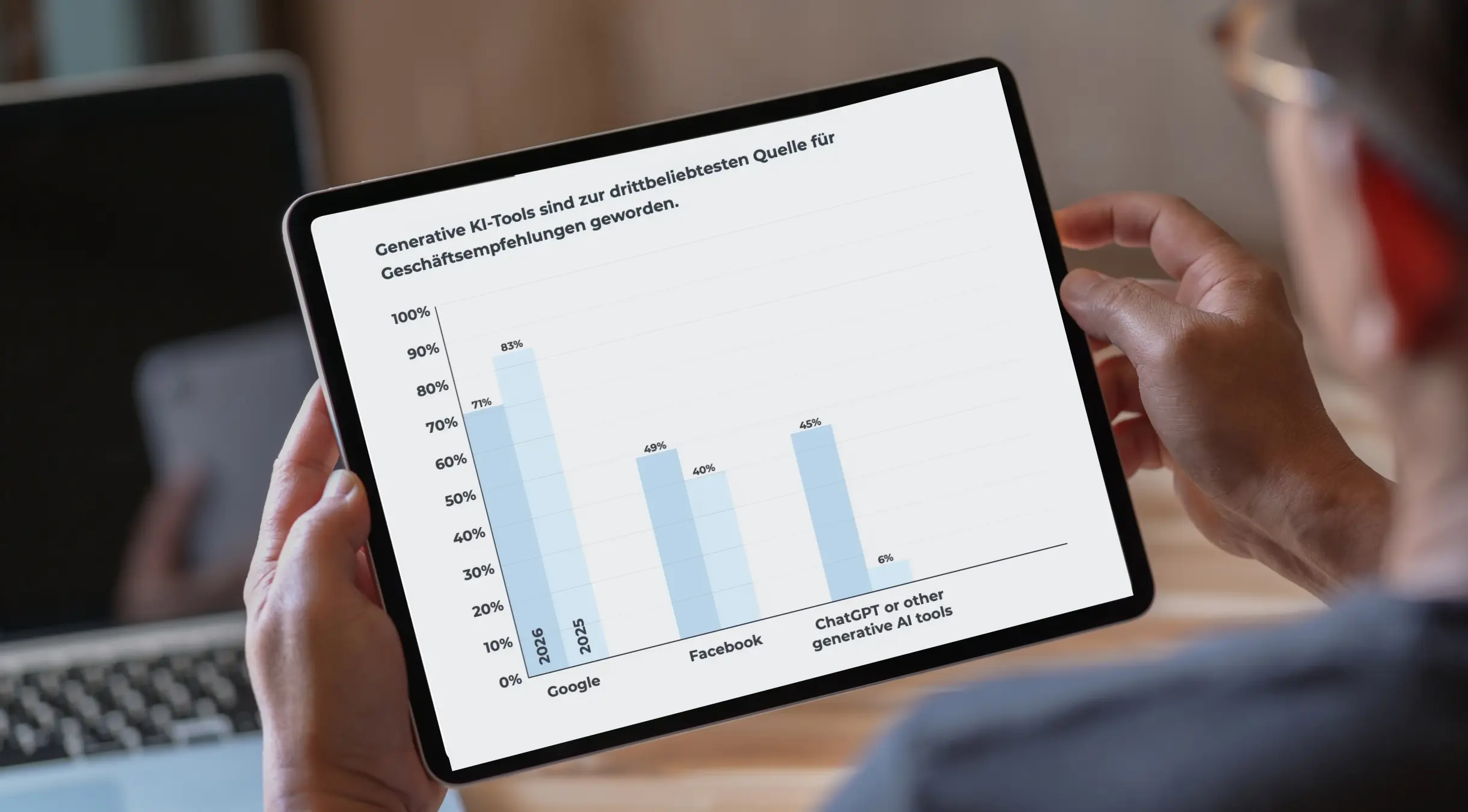
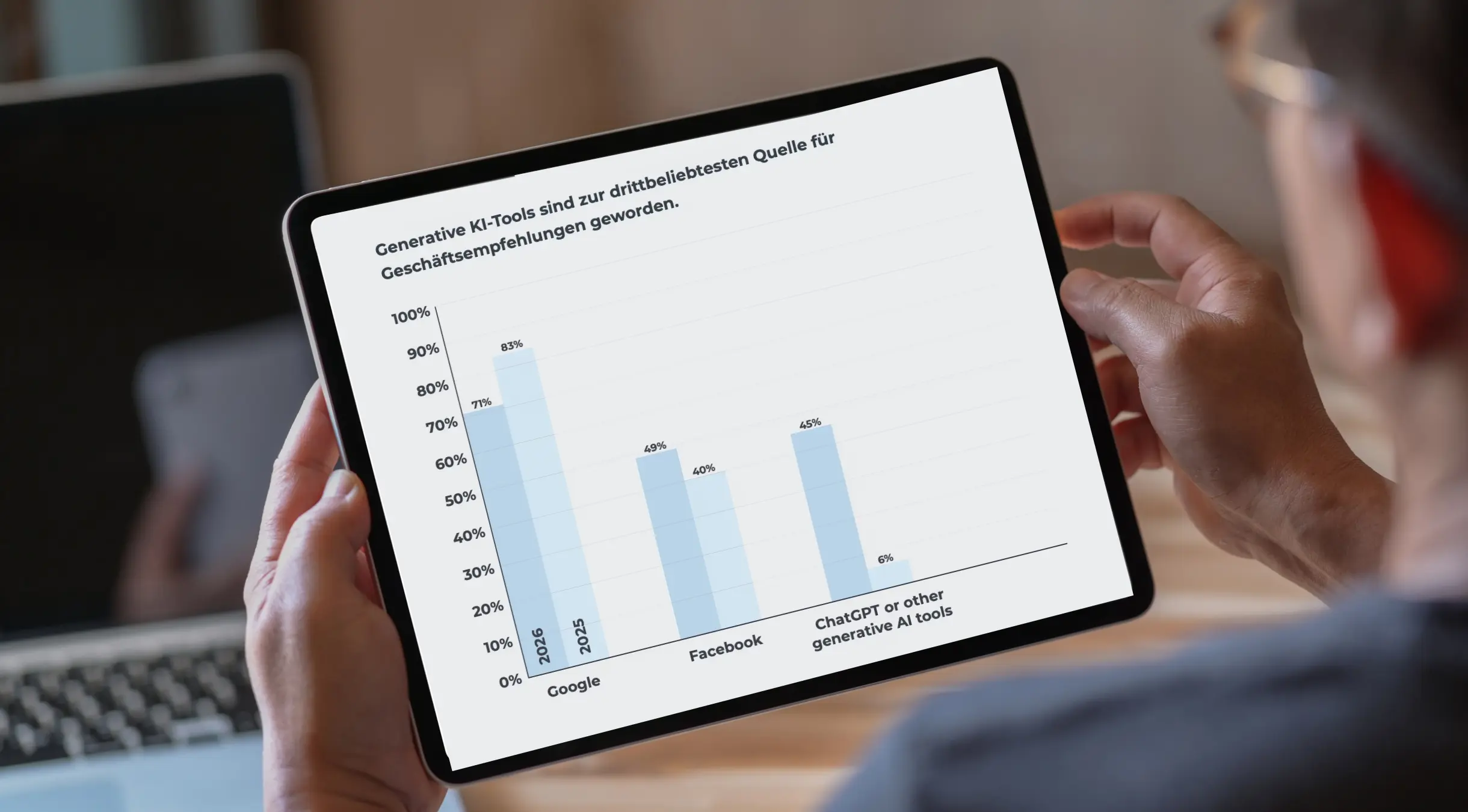
This behavioral shift away from traditional web browsers is backed by external research. According to a 2026 report published by Swiss software company hypt, the usage of large language models for general search and business recommendations surged dramatically from just 6% in 2025 to 45% in 2026. During that exact same twelve-month period, reliance on traditional search engines for local and business recommendations declined from 83% to 71%.
This migration from keyword-based search engines to conversational AI chatbots is widely projected to accelerate. Broader market forecasts, including estimates from research firm Gartner, anticipate a 25% decline in traditional search engine volume as consumers increasingly turn to AI chatbots, virtual assistants, and decentralized answer engines to navigate the digital landscape.
| Source | : | Finance Poetry |
| Author | : | rifanmuazin |
| Editor | : | Finance Poetry Editorial Team |