
Political Strategists Warn Both Parties That Housing Affordability Will Dictate Future Elections
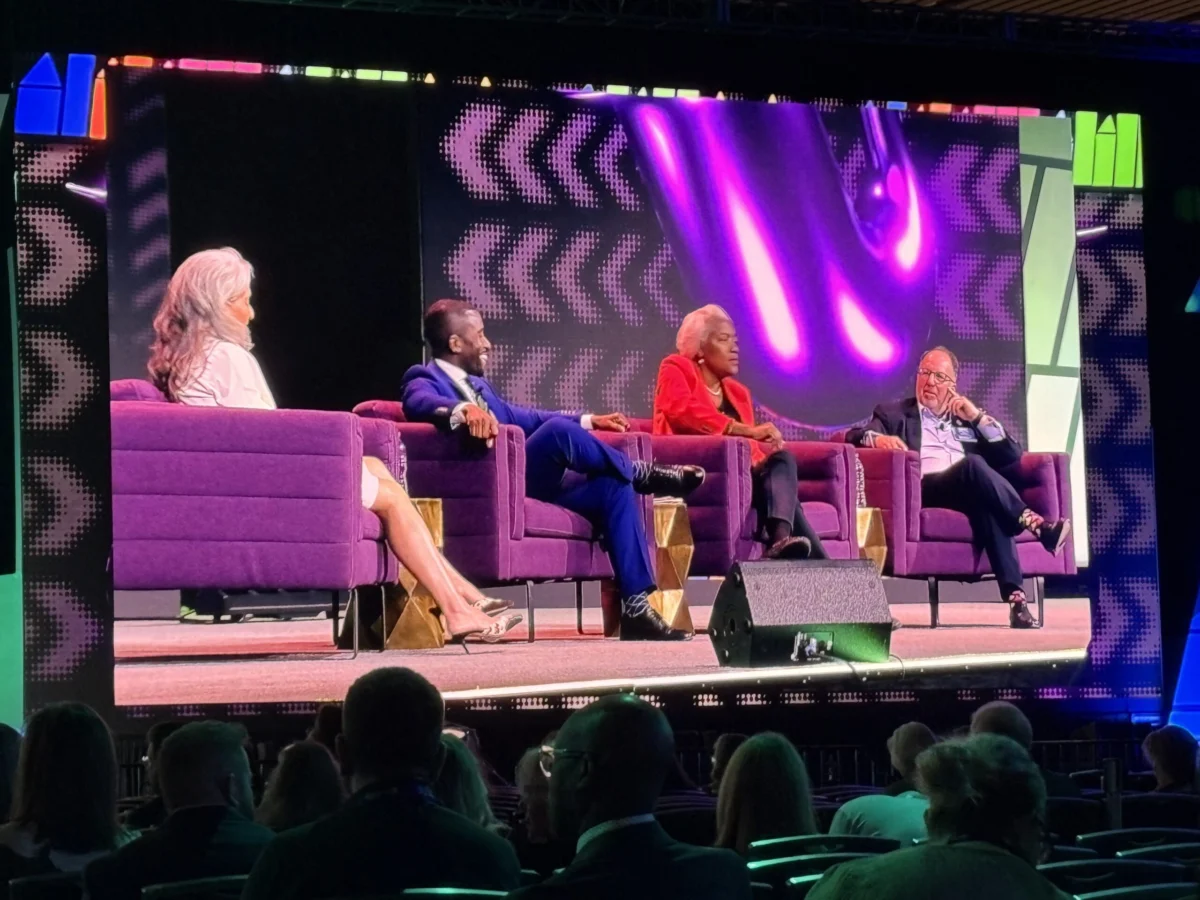
NEW ORLEANS — Following a historic midterm sweep that will hand Democrats control of Congress, political strategists from both sides of the aisle are issuing a stark warning: maintaining power will depend entirely on whether Washington can successfully tackle the nation’s crippling housing affordability crisis.
Addressing a room of real estate professionals at the National Association of Realtors’ NAR NXT conference in New Orleans, veteran Democratic strategist Donna Brazile emphasized that the foundational promise of homeownership remains out of reach for millions of Americans. Speaking alongside conservative political strategist Shermichael Singleton, Brazile cautioned that the recent Democratic electoral victories should not be interpreted as an unconditional endorsement of party policies, but rather as a desperate demand from voters for relief from the crushing cost of living.
"The American dream has an address," Brazile told the packed audience on Saturday, framing housing as the ultimate litmus test for the electorate.
Singleton echoed her sentiments, acknowledging that the Republican Party had already learned that lesson the hard way during previous election cycles. Pointing to persistently high fuel and food costs alongside the growing inability of younger Americans to achieve homeownership, Singleton argued that conservative voters felt the previous administration fundamentally failed to deliver on core economic promises.
Brazile issued a direct warning to her own party, noting that Democrats could face a swift political reckoning in the 2028 elections if they fail to produce tangible solutions. "If you’re not going to help build more houses and take care of the affairs of the American people, they will kick our [expletive] in two years," she stated plainly.
Housing Affordability Becomes an Electoral Reckoning
The broader affordability crisis that propelled Democrats to victory in the midterm elections had served as a heavy political liability for the party just two years prior. Brazile noted that this rapid shift in voter sentiment stands as a warning to politicians across the political spectrum heading toward the 2028 presidential cycle.
"Affordability has been on the minds of American people now for two consecutive years," Brazile said, acknowledging that former leaders had failed to recognize the sheer depth of middle-class frustration ahead of the 2024 elections. Today, the housing market offers perhaps the clearest and most painful illustration of why that economic anxiety has persisted.
Lawrence Yun, chief economist at the National Association of Realtors, provided a detailed look at the macroeconomic pressures shaping the crisis during a separate presentation at the conference. Yun explained that mortgage rates climbed rapidly from roughly 3% in 2021 to nearly 8% by late 2023. This dramatic surge compounded an already unprecedented pandemic-era spike in home values, severely damaging housing accessibility.
Although borrowing costs have moderated somewhat from their multiyear peaks, home prices continue to march upward. According to the NAR’s latest quarterly report, home prices rose in approximately 78% of U.S. metropolitan markets during the third quarter of 2026.
While existing homeowners have reaped substantial financial benefits from this sustained property appreciation—with Yun estimating that the typical owner has gained nearly $200,000 in housing wealth since before the pandemic—prospective buyers face an alarmingly high cost of entry.
The consequences of this market dynamic are particularly stark for younger generations. First-time homebuyers now account for a mere 22% of all home purchases, while their median age has climbed to 40, matching the record high established the previous year, according to the NAR’s newly released Profile of Home Buyers and Sellers.
"Maybe the election result was partly reflecting that fact," Yun said, highlighting the immense difficulties younger demographics face when attempting to enter the property ladder.
For 36-year-old Shermichael Singleton, the economic frustration is deeply personal. "You do everything right. You get the college degree. You get the graduate degree. You start the family. You can’t afford anything," he remarked. Singleton noted that while he managed to purchase his first home at age 28, many of his peers, now approaching or entering their 40s, remain permanently locked out of homeownership.
With millennials and Generation Z now commanding a substantial and influential share of the American electorate, Singleton argued that housing access will likely become an increasingly decisive factor in how younger generations cast their ballots.
A Bipartisan Opening—But Can Washington Deliver?
Amid an era of intense political polarization, the rare agreement between Brazile and Singleton on the immediate urgency of the housing shortage was striking. Furthermore, lawmakers already have a powerful legislative precedent for cross-aisle cooperation on the issue.
The 21st Century ROAD to Housing Act, enacted in July, achieved overwhelming bipartisan support in Congress, passing the Senate by a vote of 85-5 and clearing the House by 358-32. The legislation is designed to boost overall housing supply by reducing federal regulatory barriers, expanding innovative financing opportunities, and supporting modern approaches to residential construction.
However, political analysts point out that legislative passage was merely the initial hurdle. Many provisions contained within the law still require extensive implementation and funding, meaning their tangible effects on local housing markets could take years to fully materialize.
Singleton believes lawmakers must build upon this foundation by tackling regulatory burdens and financial hurdles closer to home. He specifically highlighted local zoning and permitting delays, lingering construction costs, and tariffs on Canadian lumber as major impediments to residential development.
"One of the things that I hear about often from them is that the length of time it takes to get something approved is very costly," Singleton said, referencing his ongoing conversations with homebuilders. He also advocated for targeted investments in workforce development programs to train younger Americans as electricians, plumbers, and other skilled tradespeople, arguing that expanding the labor force is vital to building the millions of new homes the country desperately needs.
That perspective was echoed by Scott Norman, CEO of the Texas Association of Builders, who identified workforce development as a critical bipartisan priority following the recent sweep of state-level elections by Democrats. "The more folks we can get in the business, that’ll drive down those labor costs," Norman noted.
Brazile emphasized that the broader Democratic affordability agenda now deliberately places housing alongside everyday necessities like groceries, energy, and family expenses. The core strategy relies heavily on cutting red tape and aggressively expanding the nation’s housing inventory.
"Affordability, affordability, affordability. It’s not a slogan that Democrats can use again unless they do something about it," Brazile warned.
Yet, translating these political promises into concrete economic reality will require a level of sustained bipartisan compromise that Washington has rarely demonstrated in recent years. "We have the money, but we need the will," Brazile said.
In a poignant moment during the one-hour panel discussion, Brazile recalled working alongside Republican President George W. Bush to secure vital federal assistance after Hurricane Katrina devastated New Orleans in 2005. Despite stark political differences, she noted that leaders from both parties successfully united to fund critical housing recovery efforts, infrastructure repairs, and a new veterans’ medical center.
"That’s bipartisanship. That’s compromise. That’s what it looks like," she told the audience.
Her closing message to the real estate professionals in attendance was a call to action: bring that exact same spirit of persistence and cooperation to the newly elected lawmakers who will soon dictate the trajectory of American housing policy.
| Source | : | Finance Poetry |
| Author | : | rifanmuazin |
| Editor | : | Finance Poetry Editorial Team |