
Trump Nominates Bipartisan Slate for SEC and CFTC in Move to Restore Regulatory Balance
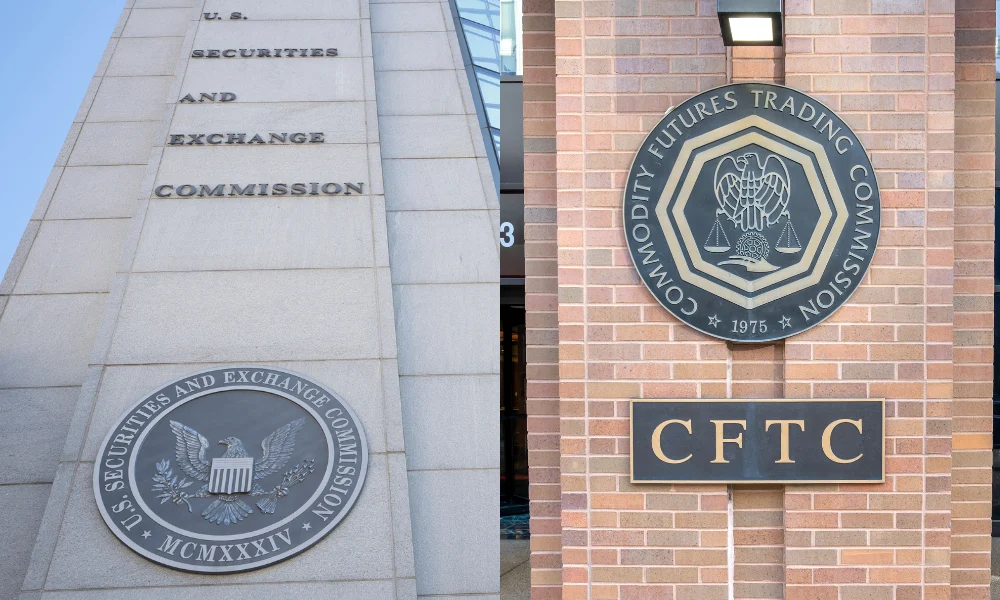
President Donald Trump on Thursday submitted a bipartisan slate of nominees to the U.S. Senate for the Securities and Exchange Commission (SEC) and the Commodity Futures Trading Commission (CFTC). The nominations represent a significant shift in the administration’s approach to financial oversight, marking the first time the White House has tapped Democrats for positions at either Wall Street regulator since the start of Trump’s second term. The move, if successful, could restore a degree of political diversity to the SEC, which has operated under an all-Republican leadership for much of the past year.
For the Securities and Exchange Commission, the White House has put forward Kristin N. Johnson and Steven Levine. Johnson, a Michigan Democrat, is a familiar face in the regulatory landscape, having previously served as a commissioner at the CFTC during the Biden administration. Her background includes extensive academic experience, notably at the George Washington University Law School, as well as private sector expertise gained during her time as a vice president at JPMorgan Chase.
Steven Levine, a Maryland Republican, currently serves as a senior official on the White House Council of Economic Advisers. His path to this nomination includes prior service as deputy chief of staff to SEC Commissioner Mark Uyeda, a role he held during Uyeda’s tenure as acting chairman in early 2025.
According to the official nomination notice published by the White House on Thursday, the appointments are designed to fill specific vacancies that have left the commission understaffed. Johnson is slated to fill the seat formerly held by Caroline Crenshaw, with a term extending through June 5, 2029. Levine would take over the seat previously occupied by Hester Peirce, with his term running until June 5, 2030.
A Commission Running on Two Seats
The current structure of the SEC, designed as a five-member body intended to maintain a balance of no more than three commissioners from any single political party, has faced significant challenges over the past year under the leadership of Chairman Paul Atkins. The agency’s historical composition has been effectively sidelined by a series of departures that left the commission operating with only two active members.
The erosion of the commission’s traditional bipartisan makeup accelerated in January, when Caroline Crenshaw, the agency’s final Democratic commissioner, departed following the expiration of her term. Her exit left the leadership of the commission entirely in Republican hands. The trend continued into the autumn when Hester Peirce—a prominent voice on the commission and a well-known advocate for digital asset innovation who spearheaded the agency’s Crypto Task Force—stepped down on October 2 to pursue an academic career. Her departure left Chairman Atkins and Commissioner Uyeda as the only two remaining officials at the table.
This sustained turnover has not been limited to the commission’s leadership. The agency has also experienced significant instability at the staff level, most notably with the resignation of Enforcement Director Margaret Ryan in March. Ryan’s departure came after she had served only six months in the role, signaling a period of internal transition that has drawn scrutiny from observers of federal financial regulation.
In response to the dwindling number of commissioners, the SEC took the controversial step of amending its 31-year-old quorum rule shortly before Peirce’s departure. The change allows for a single commissioner to act on behalf of the agency if the other sitting member is disqualified from a specific matter. Critics of the decision have argued that this concentration of power could be used to fast-track contentious regulatory proposals, such as the potential rule change that would permit advisors to registered funds to charge performance fees of up to 20% of net gains. The move has sparked an ongoing debate about the proper threshold for agency decision-making when the commission is operating at such a reduced capacity.
CFTC Nominees and the Crypto Overhang
The administration’s regulatory recalibration also extends to the Commodity Futures Trading Commission. Trump has nominated Nathan Anonick, a Republican currently serving as senior counsel on the Senate Agriculture Committee, for a term ending June 19, 2031. To balance the slate, the White House tapped Matthew Rowland, a Democrat who has worked as a CFTC attorney and has direct experience working with Commissioner Johnson’s staff. Rowland is nominated for a term ending April 13, 2028.
Michael Selig, the CFTC Chairman and currently the sole sitting commissioner at the agency, welcomed the news in a post on X, describing the pair as "two strong bipartisan picks" for the regulator.
The backgrounds of both CFTC nominees highlight the current administration’s intense focus on digital asset oversight. Both Anonick and Rowland have extensive experience working on legislation concerning digital assets. Anonick, in particular, was instrumental in shaping the Agriculture Committee’s contributions to the Digital Asset Market Clarity Act, a legislative effort that sought to provide a clear division of oversight duties between the SEC and the CFTC.
The Digital Asset Market Clarity Act faced a significant hurdle on September 15, when a Senate procedural vote failed to pass with a 49-50 margin, falling short of the 60-vote threshold required to move forward. In the absence of a legislative mandate, both the SEC and the CFTC have been forced to craft and implement crypto policy using their existing statutory powers, a situation that has led to a fragmented and often litigious regulatory environment.
The administration’s push for a more defined crypto-regulatory framework has increasingly encountered resistance from Democrats. Much of this opposition is rooted in concerns regarding the transparency of the Trump family’s own interests in digital-asset businesses. During the debates surrounding the Clarity Act, Democratic lawmakers pushed for more robust conflict-of-interest safeguards, arguing that the industry’s rapid growth under the current administration requires heightened scrutiny to protect the integrity of the financial markets.
As the Senate prepares for the new legislative session, the focus on these issues is expected to sharpen. Senator Elizabeth Warren, who is set to assume the chair of the Senate Banking Committee in January, has signaled that her agenda will be heavily influenced by these regulatory tensions. Her priorities include an in-depth examination of the oversight of prediction markets and a rigorous investigation into the Trump family’s ventures within the crypto space.
Beyond the digital asset sphere, Warren’s agenda is expected to address broader economic anxieties, including the affordability of household goods, the influence of industries that drive up consumer costs, and the development of artificial intelligence. An aide to the committee recently emphasized that Senator Warren intends to focus on the issues that were central to the national conversation during the election cycle—namely, the need to rein in corporate practices that undermine the financial security of average Americans and the imperative to address potential systemic risks that could lead to a financial crisis.
With the arrival of these four new nominations, the Senate faces a critical decision-making process. The confirmation of these candidates would fundamentally alter the operating dynamics of both the SEC and the CFTC, potentially ending the period of skeletal leadership that has defined the regulators for much of the past year. Whether these nominees can bridge the deep ideological divides currently paralyzing the regulatory landscape remains a question that will occupy the Senate in the coming months.
| Source | : | Finance Poetry |
| Author | : | rifanmuazin |
| Editor | : | Finance Poetry Editorial Team |