
Tesla’s $350 Cybertruck Toy Sold Out. Now Sellers Want $850
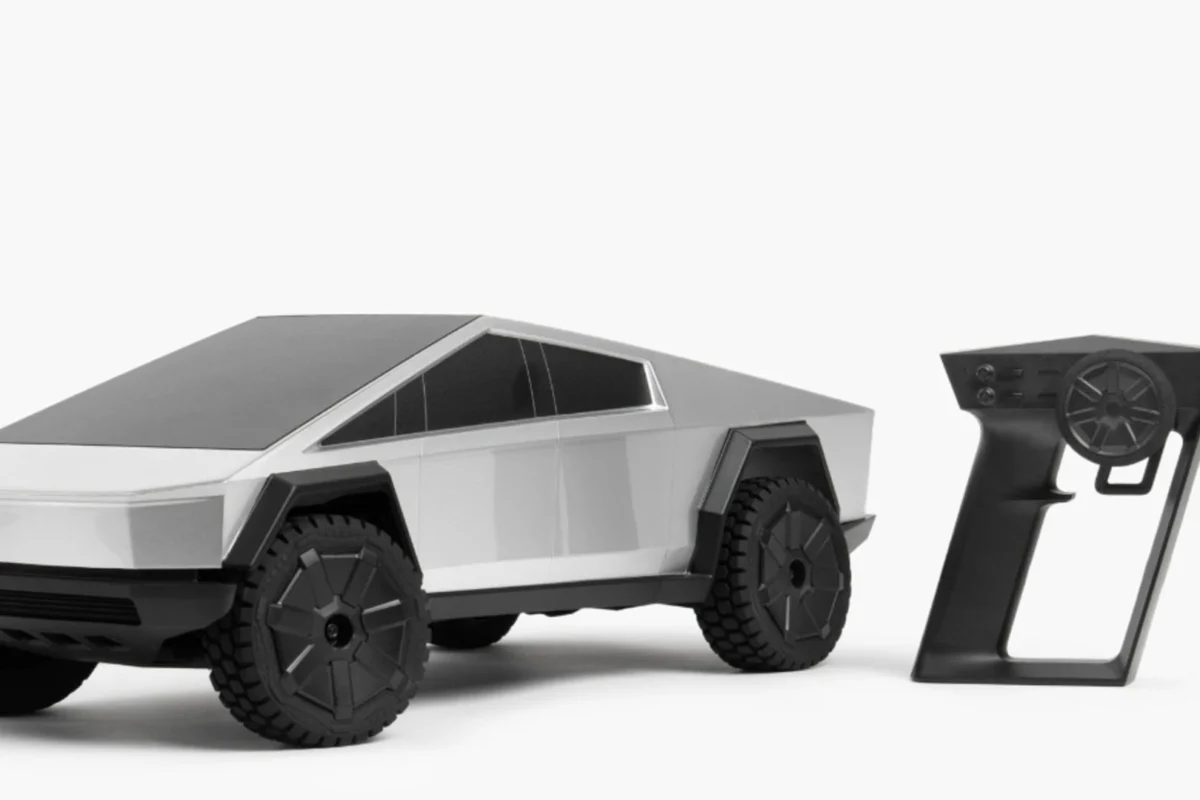
While the novelty of Tesla’s lifestyle and gadget catalog is nothing new for dedicated fans and brand loyalists, the arrival of the Cybertruck RC Racer comes at a particularly fascinating cultural and industrial crossroads. Beyond the typical collector frenzy, the miniature vehicle serves as a curious micro-monument to the real-world counterpart it mimics—a vehicle that is currently navigating a surprisingly turbulent and abbreviated commercial lifecycle. For those hoping to secure one of these miniature racers under the tree, understanding the dynamics of Tesla’s merchandise drops, the steep secondary market, and the shifting fortunes of the actual Cybertruck provides essential context before diving into the holiday shopping rush.
How Much Is the Tesla Cybertruck RC Racer?
When Tesla initially released the Cybertruck RC Racer on its official online store, it carried a retail price tag of $350. For a high-performance remote-controlled toy bearing the Tesla moniker and boasting impressive specifications, the price was already substantial. Yet, within a matter of hours, initial inventory was completely exhausted. Almost immediately, secondary marketplaces like eBay became flooded with listings from opportunistic resellers looking to capitalize on the acute scarcity of the item.
Currently, the Cybertruck RC Racer is commanding jaw-dropping resale figures, with listings hovering around $850—more than double its original manufacturer’s suggested retail price. The sheer velocity at which the inventory disappeared, combined with the staggering markup on resale platforms, underscores the intense demand for limited-edition Tesla memorabilia. According to the company’s product specifications, the miniature racer is engineered to reach speeds of up to 37 miles per hour, adding a layer of high-performance appeal that separates it from standard novelty toys.
Yet, this phenomenon is part of a broader, well-established trend for the electric vehicle manufacturer. Tesla has repeatedly leveraged the scarcity model to turn everyday lifestyle items into high-stakes collector’s pieces. Earlier this year, a specialized children’s bicycle released by the company quickly sold out, only to immediately migrate to secondary resale platforms where it commanded prices reaching into the thousands of dollars. The limited production runs orchestrated by Tesla ensure that whenever a new novelty item drops, it instantly transforms into a speculative asset for third-party sellers.
What makes the Cybertruck RC Racer potentially even rarer and more culturally resonant than previous holiday offerings, however, is the precarious production status of the actual electric vehicle it is modeled after. Just three years after the very first customer deliveries of the futuristic pickup truck made global headlines, Tesla is reportedly already winding down production of its first—and potentially its last—fully electric pickup truck. This abrupt shift in manufacturing focus adds an ironic layer of melancholy to the miniature toy, turning what was designed as a fun holiday stocking stuffer into a potential piece of automotive history.
Tesla Is Killing the Cybertruck After Just Three Years
The decision to scale back production of the angular, stainless-steel-clad pickup comes on the heels of years marked by disappointing sales volumes and persistent engineering challenges, according to reporting by Reuters. When the Cybertruck was first unveiled to the public, it was heralded as a radical reimagining of what a utility vehicle could be, complete with bulletproof-style glass demonstrations and a wedge-shaped silhouette pulled straight from a science fiction film. However, the gap between futuristic concept and practical execution proved to be remarkably wide.
Throughout its brief market presence, the unique electric vehicle has been no stranger to mechanical hurdles and regulatory scrutiny. The vehicle has accumulated a concerning total of 11 separate National Highway Traffic Safety Administration recall campaigns since its initial commercial release. Among the most prominent and heavily publicized issues plaguing the nameplate have been severe towing range losses when under heavy loads, hidden and counter-intuitive rear emergency door releases that baffled first responders, and distressing reports of exterior stainless-steel panels detaching from the vehicle while traveling at highway speeds.
While the Cybertruck undoubtedly boasts a striking, uncompromising design philosophy and impressive peak performance figures on paper, the nameplate has simply failed to capture the hearts and wallets of consumers on a mass scale. Its lukewarm market reception stands in stark contrast to the massive, runaway commercial triumphs of Tesla’s more traditional mass-market offerings, such as the Model 3 sedan and the Model Y compact electric SUV, both of which continue to dominate global electric vehicle sales charts. The specialized appeal of the Cybertruck, paired with its high price point and manufacturing complexities, ultimately created an uphill battle from which the vehicle could not recover.
Is the Cybertruck a Good Electric Vehicle to Buy?
Despite its undeniable unpopularity among mainstream buyers and its lengthy rap sheet of safety recalls, the Cybertruck is not entirely devoid of redeeming qualities. For drivers willing to look past its controversial aesthetics and practical shortcomings, the vehicle delivers genuine engineering marvels. The top-tier Cyberbeast trim, for instance, boasts an EPA-estimated driving range of 320 miles on a single charge, ensuring long-distance capability despite the vehicle’s immense mass.
Furthermore, the vehicle’s raw acceleration defies the laws of physics for a utility vehicle of its size. The Cyberbeast can rocket from zero to 60 miles per hour in a blistering 2.6 seconds, offering supercar-level acceleration wrapped in an exoskeleton of cold-rolled stainless steel. In terms of raw utility, the truck is capable of towing up to 11,000 pounds and can replenish its battery from 10 percent to 80 percent capacity in under 40 minutes when plugged into a high-powered DC fast charger. However, these high-end specifications come at a steep financial cost. The only trim level currently visible and available for order on Tesla’s corporate website is the Cyberbeast, which carries a staggering starting price tag of $109,990.
From the perspective of an expert automotive reviewer, it is impossible not to appreciate the sheer audacity and boundary-pushing ambition that Tesla demonstrated in bringing the Cybertruck’s bold, futuristic vision from a Hollywood-esque stage presentation into the real world. Yet, appreciation for design innovation does not translate to everyday practicality. At its current price point, and weighed down by its well-documented reliability concerns, the Cybertruck is simply too expensive, too cumbersome, and too unreliable to serve as a sensible purchase for the vast majority of motorists.
Shoppers seeking a capable, fully electric truck would be far better served looking at more refined, highly practical alternatives currently available on the market. Competitors like the Rivian R1T, which starts around $79,990, or the Chevrolet Silverado EV, priced from $61,900, offer compelling capabilities, superior day-to-day usability, and fewer mechanical headaches without sacrificing the electric lifestyle. As the chapter on the Cybertruck quietly draws to a close, the market is left to ponder whether the vehicle was a visionary misfire or a bold glimpse into a future that consumers simply weren’t ready to embrace.
| Source | : | Finance Poetry |
| Author | : | rifanmuazin |
| Editor | : | Finance Poetry Editorial Team |