
Market Volatility and the AI Trade: Investors Grapple with CapEx Concerns and Political Uncertainty
The financial markets experienced a turbulent awakening this week, as the dust settled on the 2026 midterm elections. The promise of a "Blue Tsunami" — a decisive sweep by the Democratic party across both chambers of Congress — triggered an immediate and sharp repricing of risk, particularly within the technology sector. By the afternoon of Thursday, November 5, 2026, the Nasdaq Composite had plummeted 5.4%, officially sliding into correction territory as investors aggressively offloaded positions in chipmakers and data-center infrastructure firms.
This sudden market meltdown, while partially mitigated by a modest rebound on Friday, has cast a long shadow over the artificial intelligence trade, which had served as the primary engine for market gains throughout the year. The volatility has forced a long-overdue conversation among industry professionals regarding the sustainability of AI-driven capital expenditure, the looming threat of political regulatory hurdles, and the inherent risks of extreme portfolio concentration.
In the days preceding the election, InvestmentNews gathered insights from industry experts at the Schwab IMPACT 2026 conference in Boston. Even before the polls closed, there was a palpable sense that the relentless momentum behind the AI trade was hitting a critical juncture. The post-election selloff has now amplified those concerns, turning theoretical debates about market health into urgent portfolio management questions.
Is the AI Trade a Bubble?
The primary concern among institutional investors and retail advisors alike is whether the massive valuation multiples seen in AI-exposed stocks reflect genuine value or the familiar hallmarks of a speculative bubble. Comparisons to the dot-com era of the late 1990s have become commonplace, yet many industry leaders argue that such analogies fail to account for the fundamental shift in the economic profile of today’s tech giants.
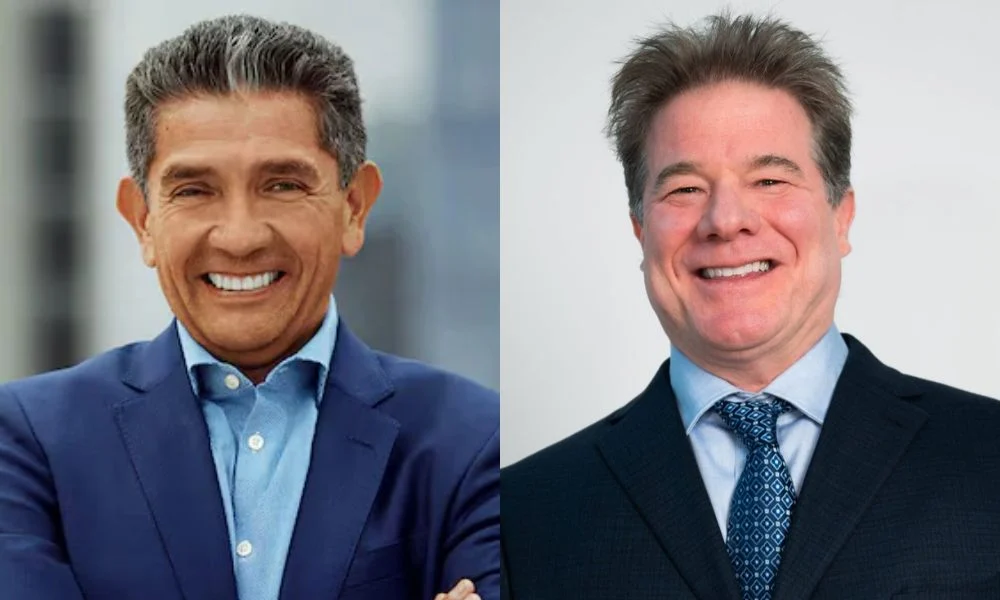
Omar Aguilar, CEO and CIO of Schwab Asset Management, suggests that investors are falling victim to "anchoring"—a cognitive bias where market participants reflexively compare current volatility to past crises, such as the bursting of the tech bubble two decades ago. According to Aguilar, the current market dynamics are fundamentally different.
"The typical thing is called anchoring, where people go back and look at different events in the past and say, all right, this looks like the late ’90s and the dot-com era and how that burst," Aguilar noted during the conference. "The difference is who is writing the checks."
Aguilar emphasizes that the current AI boom is being funded by "mega-cap" companies characterized by robust balance sheets and high levels of free cash flow. Unlike the speculative entities of the late 90s, which often relied on external financing to survive, today’s primary AI spenders are cash-rich incumbents. "They actually are the ones that are really good in terms of generating free cash flow," Aguilar explained. "Unlike past bubbles, there are not companies that don’t generate earnings, companies that are borrowing a lot of money."
However, Aguilar offered a caveat that serves as a warning sign for the future. He noted that as the scope of AI infrastructure requirements expands, an increasing number of companies are beginning to tap the debt markets to sustain their capital expenditure cycles. "I think that transition starts to get a little bit worrisome," he said, signaling that the reliance on external capital could eventually undermine the very stability that distinguishes the current cycle from historical precedents.
The AI CapEx Boom is Slowing
While the debate over the "bubble" narrative continues, the empirical evidence suggests that the blistering pace of capital expenditure in the AI sector is beginning to lose steam. Tim Nyland, co-CIO of Synergy Asset Management, has been closely tracking the data, and his findings provide a more sobering outlook on the growth trajectory of the AI trade.
"My team has isolated the fact that AI CapEx spending growth, in terms of actual growth, actually peaked in Q3 of this year," Nyland said. He clarified that this does not necessarily signal an immediate collapse in spending, but rather a deceleration in the rate of expansion. "It’s not that we’re going to see a decline in CapEx spend. Rather, what we’re going to see is the rate of increase or the growth rate itself start declining."
This cooling of growth rates comes at a time when the costs associated with AI development are becoming increasingly difficult to justify for some players. Nyland pointed to specific instances of negative free cash flow, naming Meta as a primary example of a company facing significant expenditure headwinds. He believes this pressure will inevitably lead to a fragmentation within the group colloquially known as the "Magnificent 7."
"We’re seeing it with some of the other hyperscalers potentially," Nyland observed. "The Magnificent 7 might fragment a little bit. We may no longer have a Magnificent 7. It might be a Mag 3, might be a Mag 5. We don’t know."
The fear, however, is that this cooling of capital investment could have macroeconomic consequences. Nyland argued that the only scenario leading to a catastrophic market "wipeout" would be a total cessation of AI-related infrastructure spending, which he believes would likely push the broader economy into a deep recession. Instead, his base case remains a "gradual slowdown" in AI investment.
This view is echoed by Aguilar, who anticipates a general deceleration in economic growth. Some technology firms are already trimming their sails, and while they remain committed to the AI transition, they are doing so with more caution regarding their bottom lines. The fear is that the combination of this organic slowdown and the looming threat of political restrictions on data center construction—driven by the new congressional majority—could create a "double-whammy" effect on the sector.
A Crowded Trade and the Need for Diversification
The volatility following the midterm results has also served as a catalyst for Registered Investment Advisors (RIAs) to re-evaluate the heavy concentration of AI stocks within their client portfolios. Even before the market slide, there was a growing movement toward diversifying away from the S&P 500, which has become increasingly top-heavy due to the outsized performance of AI-centric companies.
Tom Skrobe, head of RIA business and portfolio solutions at WisdomTree, notes that many firms were already proactively seeking to mitigate the risks associated with this concentration. The recent market decline—the worst single-day performance for the S&P 500 since the tariff-driven rout of April 2025—has only served to validate that cautious approach.
"We’re seeing a lot of RIAs asking us to take a look at their portfolio and possibly diversify a little bit away from the S&P, not totally away from it," Skrobe said. He suggests that investors look toward alternative strategies, such as dividend-weighted products, which can provide a buffer against the volatility of high-growth tech stocks.
For Skrobe, the current market environment underscores the importance of fundamental principles that are often ignored during a bull market. "It makes sense regardless of the timing of where you are in the investment cycle to check portfolios for concentration in one specific stock sector, one specific investment theme," he argued.
Despite the intensity of the recent selloff, there remains a sense of professional calm among experts who view the movement as a necessary correction rather than the start of a systemic collapse. While the market is certainly entering a more difficult phase as the reality of political and economic constraints sets in, the underlying health of the balance sheets at the core of the AI revolution provides a measure of insulation.
As investors look ahead, the focus is shifting from pure, unbridled growth to a more disciplined assessment of capital efficiency. The AI trade, while perhaps no longer the unstoppable force it was earlier in the year, is entering a new chapter defined by moderation, regulatory scrutiny, and a renewed emphasis on the core financial fundamentals that separate the long-term winners from those caught in the fervor of the cycle. Whether the current correction represents a healthy reset or a harbinger of deeper structural issues remains the central question for the remainder of the year.
| Source | : | Finance Poetry |
| Author | : | rifanmuazin |
| Editor | : | Finance Poetry Editorial Team |