
Appeals Court Allows Trump Administration to Advance Removal of Deportation Protections for Venezuelans
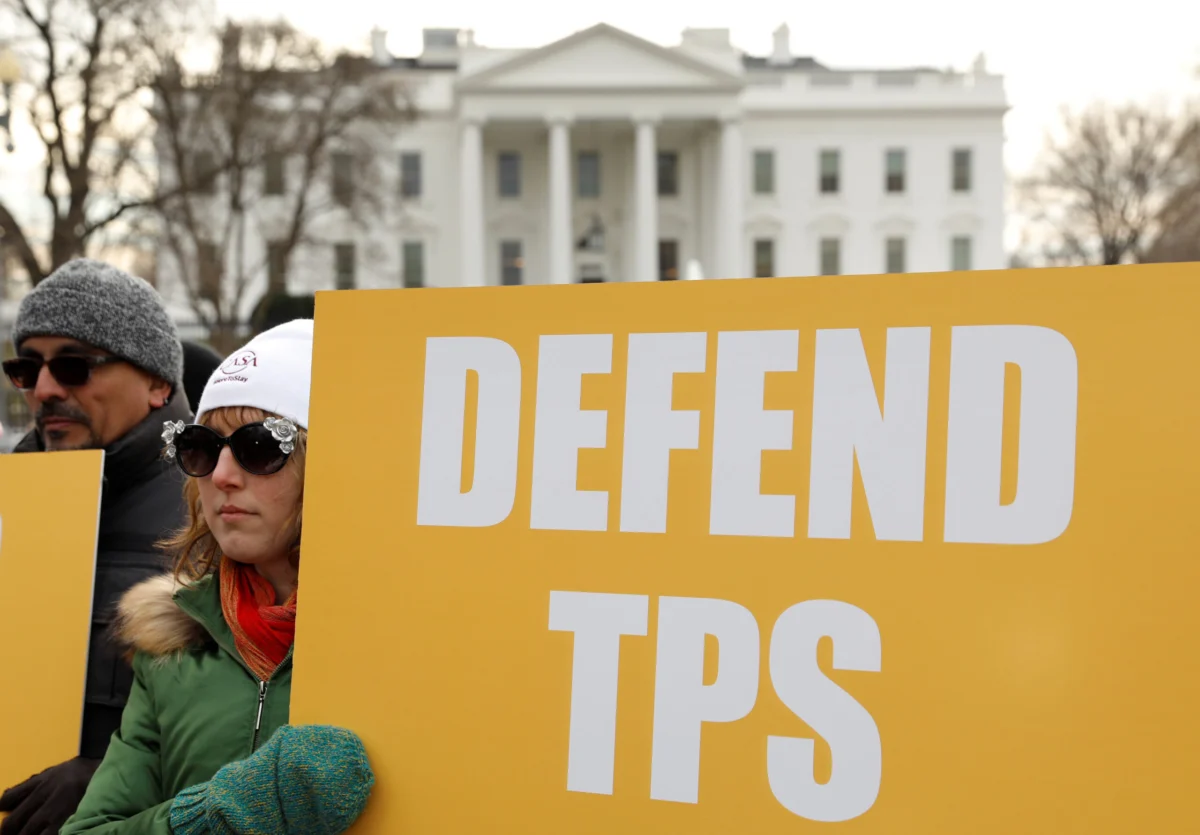
A United States appeals court has cleared the path for the administration of President Donald Trump to move forward, at least temporarily, with the removal of deportation protections for hundreds of thousands of Venezuelans.
The significant judicial ruling handed down on Wednesday effectively cancels out a previous order by a lower-court judge. That lower-court directive had explicitly required the federal government to restore the Temporary Protected Status (TPS) of Venezuelan nationals living inside the United States—a vital designation that shields its recipients from the threat of deportation and allows them to live and work legally in the country.
The ongoing legal maneuverings and the administration’s aggressive push to end these TPS protections have continued to unfold rapidly despite widespread humanitarian concerns voiced by legal experts, immigration advocates, and affected communities alike.
Since taking office for his second term, President Trump has made immigration enforcement a cornerstone of his administration, repeatedly seeking to carry out what he has characterized as the largest deportation effort in United States history. A central pillar of this sweeping policy agenda has been the systematic rollback of various humanitarian programmes and temporary relief initiatives, including TPS, which the administration argues have been stretched far beyond their original legislative intent.
The origins of the current legal battle stretch back to September 2025. At that time, US District Judge Edward Chen intervened by blocking the expiration of TPS protections for Venezuelans. In his ruling, Judge Chen argued that stripping these individuals of their status and forcing them to return to their home country would place them directly in severe harm’s way.
Furthermore, Judge Chen ruled that the Trump administration had overstepped its legal authority when it attempted to prematurely shorten TPS extensions that had previously been granted under the administration of preceding President Joe Biden. The district judge added that such consequential policy decisions required "careful study and analysis" rather than abrupt termination.
At the time of these judicial interventions, approximately 600,000 Venezuelan nationals residing across the United States were protected under various iterations of the TPS programme, allowing them to build lives, secure employment, and contribute to local economies while waiting for conditions in their homeland to stabilize.
The legal tug-of-war intensified significantly when the US Supreme Court stepped in to pause Judge Chen’s protective ruling in October 2025. However, that high court pause eventually expired this month, setting the stage for Judge Chen’s original order to take full legal effect on Friday.
Sensing the impending deadline, the Trump administration scrambled to file an emergency request to the Supreme Court late Wednesday to extend the freeze just hours before the appeals court issued its decisive ruling.
The recent appeals court decision does not completely eliminate the ongoing legal challenges mounted by human rights lawyers and immigrant advocacy groups against the Trump administration’s efforts to revoke TPS extensions. Instead, the ruling grants the executive branch the immediate legal leeway to suspend deportation protections while those complex legal battles slowly make their way through the federal court system.
The Trump administration’s broader immigration strategy has consistently targeted large numbers of foreign nationals, attempting to strip them of legal protections to render them immediately deportable. Beyond TPS, other prominent humanitarian initiatives—such as the humanitarian parole programmes that brought thousands of migrants to the US—have also come under intense administrative scrutiny and subsequent rolling cancellations.
Temporary Protected Status is a specific legal mechanism established by Congress designed to allow foreign nationals already physically present in the United States to remain safely while conditions in their home countries are deemed too dangerous, violent, or politically unstable to permit a safe return. Humanitarian parole operates through a somewhat parallel framework, allowing individuals who are still outside the United States to seek temporary entry to escape similarly perilous, life-threatening conditions abroad.
The Trump administration has consistently defended its posture by arguing that TPS designations were always intended by design to be strictly temporary measures. Officials have maintained that previous presidential administrations repeatedly and improperly extended such protections without adequate justification or proper periodic review.
As part of its justification for ending the protections for Venezuelans, the administration has maintained that general conditions have improved markedly in parts of Venezuela. Officials have pointed specifically to a US military action that took place on January 3, which resulted in the high-profile abduction of Venezuelan President Nicolas Maduro, as a turning point in the country’s political landscape.
However, human rights advocates, international observers, and geopolitical analysts have strongly pushed back against that narrative. They have noted that while the top leadership experienced disruption, the core apparatus of Maduro’s government remains largely intact and operational. That ruling leadership continues to face severe, well-documented accusations of widespread human rights abuses, ranging from arbitrary imprisonment to the systematic torture of political dissidents and opposition figures.
Reinforcing those humanitarian concerns, the US Department of State continues to maintain a strict travel advisory warning against all travel to Venezuela, citing persistent, critical issues including rampant crime, frequent kidnappings, and a severely degraded health infrastructure that cannot safely support returning citizens.
As the legal battles continue to wind their way through the federal judiciary, hundreds of thousands of Venezuelan TPS holders now face an uncertain future, waiting to see how higher courts will ultimately rule on the legality of the administration’s removal efforts.
| Source | : | Finance Poetry |
| Author | : | rifanmuazin |
| Editor | : | Finance Poetry Editorial Team |