
Tragedy Strikes Again off Senegal’s Coast as Migrant Boat Washes Ashore in Yenne, Killing at Least One
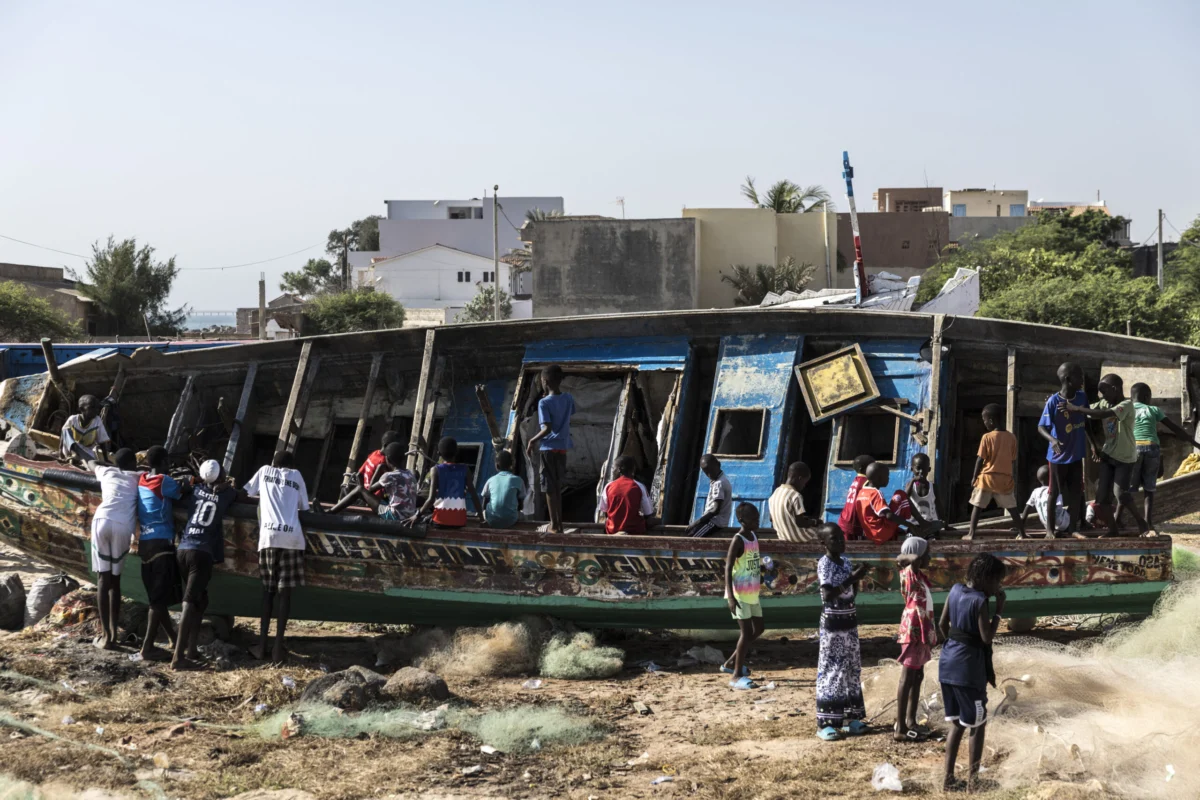
Another devastating maritime accident has struck the West African coastline, underscoring the relentless perils of irregular migration toward Europe. A small boat carrying migrants and refugees has capsized off the coast of Yenne in western Senegal, resulting in at least one confirmed fatality and leaving local communities reeling from yet another tragedy at sea.
The incident, which unfolded overnight from Tuesday to Wednesday, comes precisely ten days after another catastrophic shipwreck in Senegalese waters claimed the lives of 43 migrants, intensifying mounting pressure on regional authorities to address the escalating humanitarian crisis.
According to local officials who spoke with the AFP news agency, the vessel involved was a traditional wooden flat-bottomed boat, commonly referred to as a pirogue. The overloaded craft struck a rocky area just off the shoreline before washing ashore in a heavily dilapidated state during the dark hours of the night.
Oumar Sow, a representative of the village chief in Yenne, recounted the harrowing moments leading up to the discovery of the wreckage. He noted that the disaster unfolded around 2:00 a.m., adding that desperate cries echoing from the distressed pirogue could be heard clearly from the safety of the beach.
Eyewitnesses and local authorities responding to the scene described a heartbreaking tableau of destruction. A gendarmerie commander carefully sorted through the scattered items retrieved from the wreckage, which included essential provisions such as water sachets alongside deeply personal belongings left behind by the passengers. Among the recovered items were eight distinct identity documents, multiple mobile phones, and a school enrollment document belonging to a high school student from Kabrousse, a settlement located in Senegal’s southern region.
The exact death toll from the capsizing remains subject to ongoing verification. While Yenne Mayor Massamba Mbengue and local firefighting units confirmed that a single body had been recovered from the water or the immediate shoreline, two other local sources asserted that the body count had risen to two.

The scale of the disaster, however, is believed to be much higher. A survivor of the shipwreck who was questioned by the local gendarmerie estimated that approximately 100 people had been packed on board the vessel when it set out on its perilous journey. Among the passengers were at least five women, reflecting the diverse demographics of those desperate enough to undertake the dangerous Atlantic crossing.
Local officials pointed out that the coastal village of Yenne has increasingly transformed into a prominent migration embarkation point. Smugglers and human traffickers have reportedly begun frequenting the area to recruit boat pilots and organize clandestine departures, taking advantage of vulnerable populations and the lack of robust economic opportunities in the region.
Smugglers and Escalating Dangers
The grim reality facing communities along the Senegalese coast has ignited fierce public debate and widespread outrage, particularly in the wake of consecutive maritime disasters. The latest shipwreck in Yenne follows hard on the heels of an even deadlier tragedy just ten days prior, when a small boat sank off the coast of the northwestern town of Thieppe. That incident claimed 43 lives, marking it as one of the most lethal migration disasters in Senegal’s modern history.
In response to the recurring loss of life, civil society organizations and human rights advocates have intensified their criticism of the government’s handling of the crisis. The Action for Human Rights and Friendship (ADHA), a prominent Senegalese human rights group, issued a strong public call demanding that the government launch a formal parliamentary inquiry into the Thieppe tragedy and the broader systemic failures enabling the illicit migration trade.
In a public statement released in the wake of the Thieppe sinking, ADHA forcefully denounced what it termed a persistent “lack of lasting results” from state authorities in their stated efforts to reduce and ultimately halt migrant deaths at sea. The organization argued that existing security measures have failed to dismantle the criminal smuggling networks that operate with relative impunity along the coastline, drawing desperate youth into unseaworthy vessels bound for foreign shores.
The desperate voyages originating from West Africa are driven by a complex web of economic hardship, unemployment, and a lack of viable futures at home. Many of those who embark on the perilous maritime route direct their sights toward Europe, hoping to navigate the Atlantic Ocean and reach Spanish territory as a gateway to better opportunities.

Record Numbers Reach Spain
The human tide departing from West African shores continues to place immense pressure on European border authorities, most notably in Spain. On November 10, the Spanish government officially declared a migration emergency in the Canary Islands following an unprecedented surge of arrivals. More than 9,000 people successfully completed the dangerous Atlantic crossing into the Spanish archipelago during the first ten days of November alone.
The strain on rescue infrastructure was highlighted further when Spain’s Maritime Rescue Service reported rescuing 1,488 migrants traveling aboard 14 separate dinghies on November 14 alone. The vast majority of these individuals arrived on the island of El Hierro after departing from West African shores. This single-day rescue statistic shattered the previous record set six years earlier in November 2020, when 1,461 people were rescued under similar circumstances.
The primary artery for these Atlantic crossings begins in nations like Senegal, where young men and women risk everything to navigate hundreds of miles of open ocean. Their ultimate destination is frequently the Canary Islands, from which they hope to transition to mainland Europe.
While the Atlantic route presents deadly maritime challenges, migration pressures are simultaneously affecting Spain’s borders in North Africa. Last month, Spanish authorities deported more than a dozen individuals out of a staggering total of 80,000 people who managed to enter the Spanish North African enclave of Ceuta from neighboring Morocco over a chaotic 48-hour period in late July.
That mass border crossing into Ceuta—an autonomous Spanish city covering a mere 18.5 square kilometers with a population of approximately 80,000—proved catastrophic in its own right. At least 100 people lost their lives during the frantic multi-day surge, illustrating the multifaceted nature of the migration crisis confronting both transit nations in West Africa and destination countries in Europe.
As families in Yenne mourn the latest victims and local authorities continue their investigations into the wrecked pirogue on the beach, the overarching crisis shows no signs of abating. The combination of ruthless smuggling syndicates, desperate economic realities, and treacherous ocean currents continues to exact a devastating toll on communities across Senegal.
| Source | : | Finance Poetry |
| Author | : | rifanmuazin |
| Editor | : | Finance Poetry Editorial Team |