
Fed’s Waller says central bank may need to ‘shock people’ with half-point rate hike
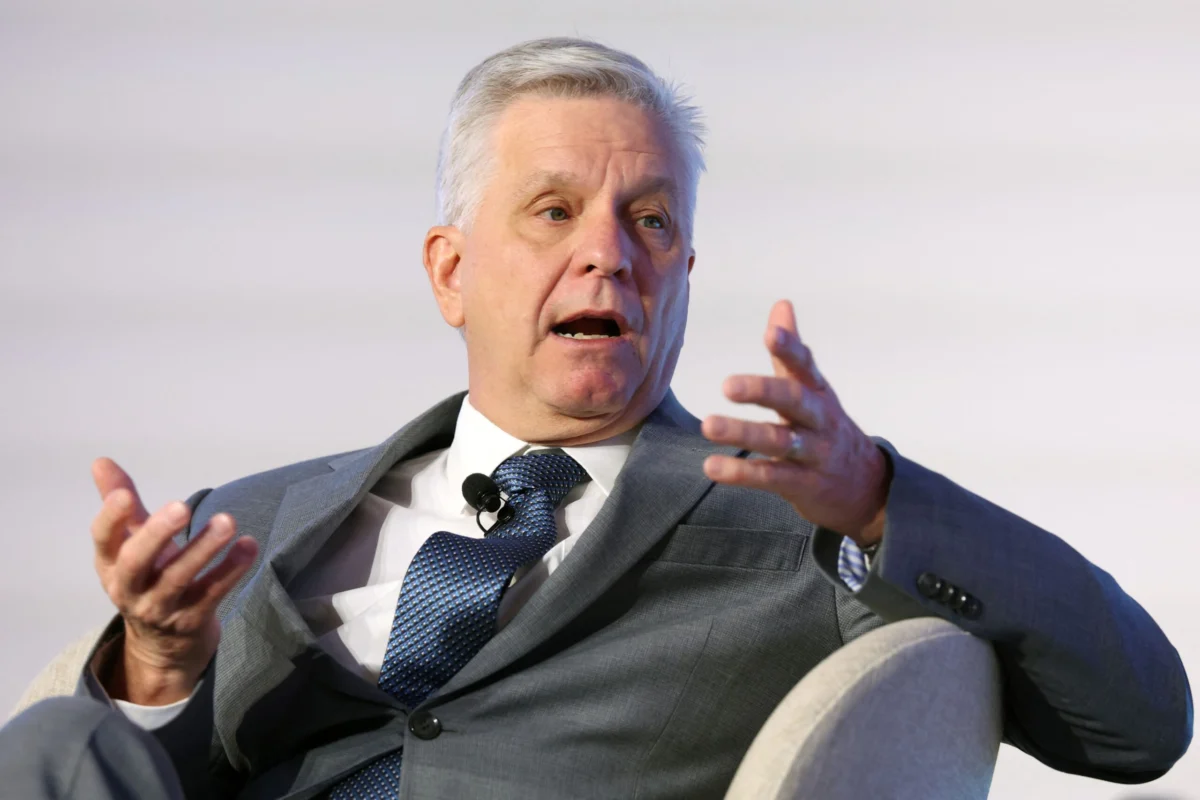
Speaking during a live interview on CNBC’s "Squawk Box" with Steve Liesman, the policymaker laid out a hawkish stance for the upcoming policy gathering. Waller stated that a half percentage point increase in the Federal Reserve’s benchmark interest rate is likely necessary at the December 8-9 meeting of the Federal Open Market Committee (FOMC). Furthermore, he asserted that the central bank must completely reverse the three three-quarter-point reductions implemented last year, and signaled that even tighter monetary policy may ultimately be required to steer the economy back toward stability.
"I’m very, very concerned about inflation. It’s kind of headed in the wrong direction, and it’s spreading out," Waller told CNBC during the morning broadcast. "If you really want to get it down, you’ve got to start taking more aggressive actions. You might need to, like, shock people."
The policymaker’s remarks highlight a growing sense of urgency and debate within the central bank regarding the appropriate trajectory for interest rates. While financial markets and futures pricing—as tracked by the CME Group’s FedWatch tool—have fully anticipated a standard quarter-percentage-point hike at the upcoming FOMC meeting, along with another move in January and at least one additional increase before the end of 2027, Waller argued that a more forceful intervention could be warranted to alter inflationary psychology and expectations.
According to Waller, the Federal Reserve could potentially avoid a larger half-point move in December if policymakers opted for a quarter-point increase paired with explicit forward guidance signaling another rate hike in January. However, he acknowledged a key institutional hurdle: Fed Chairman Kevin Warsh has historically opposed that type of forward guidance, arguing that pre-committing to a specific policy path unduly ties the hands of policymakers as incoming economic data evolves.
"If you’re not going to signal this very clearly to markets, you’re going in January, my view is then you have to go 50 basis points in December to put it in place and get it done," Waller explained.
The stark call for a more restrictive policy stance underscores a broader divergence of opinions among Federal Reserve officials. Although a general consensus exists that monetary policy needs to remain tight to bring inflation down to the central bank’s stated 2% target, policymakers hold varying views on the speed and magnitude of future rate adjustments.
Just a day prior, St. Louis Fed President Alberto Musalem suggested that as many as four rate hikes could be appropriate by the spring of 2027 to cool economic pressures. Conversely, other regional Fed leaders, including Cleveland President Beth Hammack and Dallas President Lorie Logan, have publicly favored a more gradual approach to policy tightening, emphasizing the importance of monitoring how past rate adjustments continue to filter through the broader economy.
The debate over the pace of tightening comes against the backdrop of an evolving macroeconomic landscape. The FOMC approved its first interest rate hike in more than three years this past September before opting to hold rates steady during its October meeting. Yet, because inflation readings have continued to run hot in the months following those decisions, officials are grappling with how aggressively to respond without inadvertently destabilizing other sectors of the economy.
Not all officials share Waller’s appetite for dramatic intervention. New York Fed President John Williams adopted a more measured tone during a conversation with Axios, noting that he does not believe the current economic climate demands sudden or aggressive market shocks.
"I don’t think the situation calls for dramatic action," Williams said. "I think what we’ve been doing over the last past few months is working well. We’re collecting the data, analyzing it, having the debate and making a decision."
The internal policy debate is heavily influenced by how economic conditions have shifted over the past year. Throughout 2025, the Federal Reserve implemented three interest rate cuts amid growing labor market anxieties and a widespread expectation that inflation would steadily moderate toward the central bank’s 2% objective.
However, that downward trajectory was abruptly disrupted earlier this year. Inflation reignited following the military strikes launched by the United States and Israel against Iran in late February. The ensuing geopolitical instability triggered a sharp spike in global energy prices, while lingering tariff impacts continued to exert upward pressure on consumer goods. As a result, the majority of recent inflation readings have remained stubbornly above the 3% threshold, frustrating policymakers who hoped price stability was firmly within reach.
Waller emphasized that these external shocks and subsequent data prints invalidate the rationale behind last year’s monetary easing, arguing that the central bank must decisively undo those previous actions to regain control over price dynamics.
"First of all, you’ve got to take back the three insurance cuts we put in last year," Waller said. "If the policy rate last summer in 2025 wasn’t bringing inflation down, getting back to that isn’t going to bring it down. So we may have to go above three hikes plus maybe some more to get it to start actually coming back down."
As Federal Reserve officials weigh competing economic indicators and divergent strategies, market participants are closely scrutinizing every piece of official communication for clues regarding the central bank’s next moves. The FOMC is scheduled to release the official minutes from its October policy meeting later on Wednesday, offering investors and analysts a deeper look into the debates, data analysis, and consensus-building efforts shaping the future of U.S. monetary policy.
| Source | : | Finance Poetry |
| Author | : | rifanmuazin |
| Editor | : | Finance Poetry Editorial Team |