
Tragedy Off Senegal Coast as Migrant Boat Capsizes, Fueling Fears of Rising Death Toll Along Atlantic Route
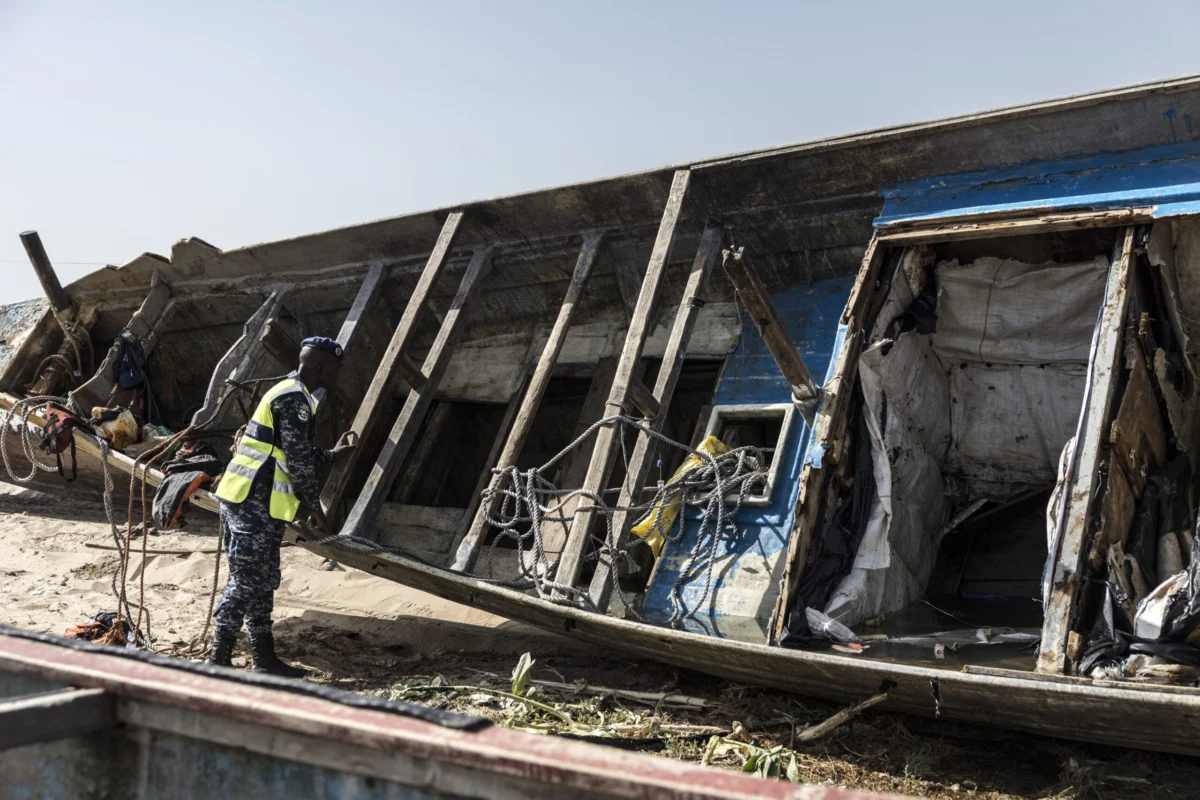
DAKAR — Four bodies have been recovered following the tragic capsizing of a migrant vessel off the coast of Senegal, local authorities and nonprofit organizations confirmed. As specialized rescue units scour the waters near the coastal town of Yenne, south of the capital, Dakar, search-and-rescue teams and officials alike have expressed grave concerns that the final death toll could rise significantly as more individuals remain unaccounted for.
Boubacar Seye, president of the prominent migration advocacy nonprofit Horizons Sans Frontieres, confirmed the latest grim milestone to the Reuters news agency on Thursday. The confirmation arrived just a day after the wooden vessel flipped over near Yenne, a coastal community that has increasingly found itself at the center of irregular maritime migration routes.
According to a local official speaking on the ground, at least 50 people were believed to be aboard the boat at the time of the disaster. The tragedy reportedly unfolded during a dangerous and delicate maneuver: the migrants were being transferred from smaller, localized fishing vessels onto a larger wooden pirogue—a traditional canoe-like craft frequently utilized for long-distance Atlantic voyages—when the vessel struck an underwater rock, destabilizing it before it capsized in the turbulent waters.
While rescue teams have pulled four bodies from the ocean, the exact number of people still missing remains unclear, leaving frantic families and local authorities grappling with a fluid and deeply concerning emergency situation. Firefighters from a specialized diving unit of the Senegalese civil protection services were deployed to the scene, working tirelessly in challenging marine conditions to comb the area where the wreckage was located.
The accident underscores the perilous nature of maritime migration along the West African coast, an area that has experienced a dramatic and deeply concerning surge in departures toward Europe.
The Canary Islands Migration Crisis
The fatal incident off Yenne occurs against the backdrop of an intensifying wave of attempted Atlantic crossings from West Africa toward Spain’s Canary Islands. The maritime route, known for its treacherous currents, unpredictable weather, and immense physical distance, has become one of the most active and dangerous corridors for irregular migration globally. Migrant boats attempting the crossing are now routinely intercepted or rescued by authorities almost daily.
Fresh and alarming statistical data released by Spain’s Interior Ministry illustrate the scale of the ongoing crisis. Between January 1 and November 15, no fewer than 24,364 migrants successfully reached the Canary Islands. This figure represents a staggering increase when compared to the same period in the previous year, during which 14,690 arrivals were recorded—marking an upward spike of nearly two-thirds.
The pressure on the Atlantic route has escalated sharply in recent weeks. Ministry records show that just 13,327 arrivals had been logged by the end of October. This means that an astonishing 11,037 people managed to reach the Spanish archipelago in the first 15 days of November alone, highlighting a sudden and massive acceleration in desperate sea voyages before winter weather fully sets in.

This dramatic surge has persisted despite extensive, around-the-clock maritime surveillance and interception operations conducted by West African and European authorities. The Senegalese navy reported that it had successfully rescued or intercepted an impressive 1,424 people over the course of just two days, November 16 and 17. Those operations included passengers aboard nine separate fishing boats that had ventured out into open waters, according to dispatches from the Senegalese Press Agency (APS).
On the enforcement front, law enforcement agencies have intensified their crackdowns on the criminal enterprises facilitating the journeys. Cheikh Sadibou Senghor, head of Senegal’s National Division for Combating Migrant Smuggling, reported to APS that authorities had intercepted 6,889 individuals in operations directly linked to irregular migration between January and November. During the same timeframe, security forces prevented 107 unauthorized departures and successfully dismantled 88 distinct smuggling networks operating within the country.
Just days before the fatal boat capsized near Yenne, local law enforcement announced a major breakthrough in the region: the dismantling of a suspected migrant-smuggling network operating directly out of the town. In that operation, APS reported that 14 individuals were arrested, while authorities seized two boats, three boat engines, and 12.5 million CFA francs, equivalent to approximately $22,000, signaling the lucrative and organized nature of the trafficking rings.
Escalating Death Toll and Calls for Systemic Change
Despite the intensified clampdowns, arrests, and maritime patrols, the human cost of the Atlantic route continues to mount at an alarming rate. The United Nations refugee agency has reported that nearly 600 people have lost their lives trying to make the perilous journey from West Africa to the Canary Islands since the beginning of the year. These tragic figures underscore the extreme dangers faced by migrants who choose to board overcrowded and unseaworthy vessels in search of economic opportunities abroad.
As regional authorities struggle to contain the relentless wave of departures, political leaders are facing mounting pressure to address the root drivers of the phenomenon. Senegalese President Bassirou Diomaye Faye has publicly called for concerted, strategic efforts to improve employment opportunities and economic prospects for the nation’s youth, who make up the vast majority of those attempting the dangerous crossing.
During a cabinet meeting held on Wednesday, President Faye requested a comprehensive and detailed assessment of the ongoing challenges facing the government’s initiatives to curb irregular migration, according to an official government statement cited by Reuters. The directive signals an acknowledgment that traditional security measures alone are insufficient to stem the tide of desperation driving young people to risk their lives at sea.
This sentiment was echoed by civil society leaders and migration experts who argue that law enforcement strategies must be paired with genuine economic reform. Speaking after the latest tragedy, Boubacar Seye warned that tougher enforcement measures and border policing alone will never be enough to prevent further maritime disasters.
"We need to wake up to the gravity of the situation. The strategy deployed until now is not working," Seye told Reuters, emphasizing the urgent need for a paradigm shift in how regional and international stakeholders approach the crisis. "We need to fix the root causes of this problem."
| Source | : | Finance Poetry |
| Author | : | rifanmuazin |
| Editor | : | Finance Poetry Editorial Team |