
Florida Natural Gas Prices Slide as Stalled Coastal Storm Drastically Erodes Traditional Regional Premiums
By Jacob Dick
Published in: Daily Gas Price Index
Filed Under: Natural Gas Prices
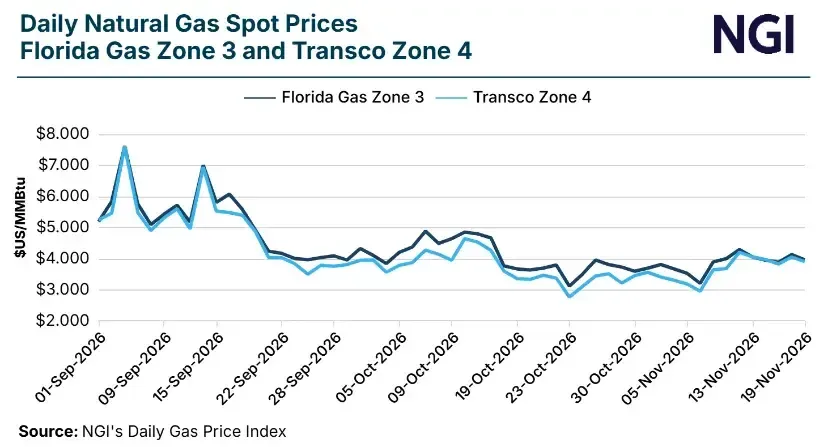
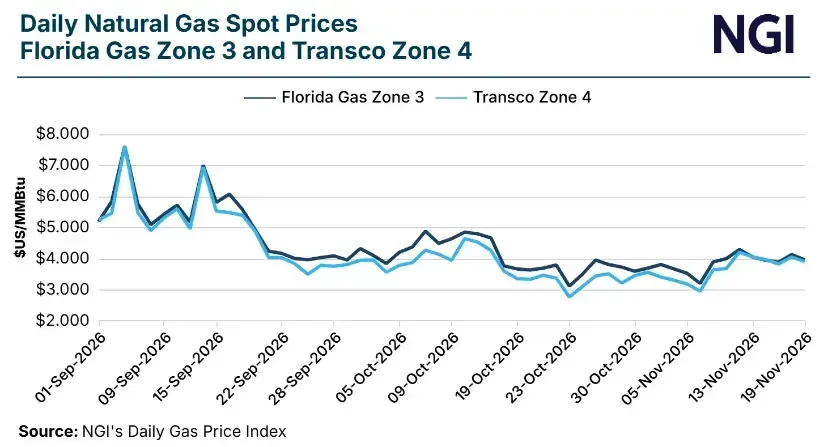
Florida natural gas has all but lost its traditional pricing premium relative to neighboring Southeast hubs, as a stubborn, stalled storm system unleashes severe flooding across the Sunshine State’s Atlantic coast. The convergence of deteriorating regional weather conditions, shifting supply-demand dynamics, and localized infrastructure challenges has rapidly compressed historical basis differentials, leaving market participants to reassess near-term valuations across the broader southeastern United States energy corridor.
For years, the Florida natural gas market has maintained a distinct price advantage—or premium—over adjacent pricing hubs throughout the Southeast. This structural premium has historically reflected the logistical costs, pipeline capacity constraints, and unique demand profile associated with serving peninsular Florida. Because the state relies heavily on interstate natural gas pipelines originating in the Gulf Coast and other producing regions to fuel its robust power generation sector and local distribution companies, buyers in Florida typically pay higher delivered prices compared to their regional neighbors.
However, recent meteorological developments along the Atlantic seaboard have dramatically disrupted these established market relationships. A stalled storm system parked off the coast has brought relentless heavy rainfall, widespread inundation, and severe coastal flooding to major metropolitan areas and infrastructure corridors along Florida’s eastern seaboard. The persistent severe weather has not only disrupted daily commercial activity and travel but has also cast a profound shadow over regional energy consumption patterns, ultimately triggering a sharp contraction in local natural gas valuations.
At a Glance:
The sudden erosion of the Florida natural gas premium highlights the delicate balance between regional weather events and localized energy pricing. As torrential downpours and rising floodwaters grip the Atlantic coast, the immediate impact on power generation demand, pipeline nominations, and regional liquidity has sent ripples through the Daily Gas Price Index. Market observers note that while temporary weather-driven disruptions are common in energy markets, the speed and magnitude of this basis compression underscore how quickly regional fundamentals can shift when severe meteorological anomalies intersect with pipeline logistics.
The unique geography of Florida’s natural gas supply network plays a critical role in how market shocks are transmitted. Natural gas flows into the state primarily through long-distance interstate pipeline systems, such as those operated by Florida Gas Transmission and Gulfstream Natural Gas System. These pipelines operate under strict capacity allocations and scheduled nominations. When regional weather events alter the consumption landscape—such as through localized power outages, industrial slowdowns, or shifts in residential and commercial electricity demand—the immediate balancing act between pipeline receipts and actual burn rates can lead to rapid price adjustments at the point of delivery.
In the wake of the stalled storm, market liquidity has experienced noticeable shifts. Trading desks monitoring the Southeast region observed that spot prices within Florida softened relative to benchmark markers at interconnected regional hubs. Traditionally, sellers commanding the Florida market could rely on steady demand from combined-cycle natural gas turbines used for electricity generation across the peninsula. Air conditioning loads, industrial operations, and municipal utilities form the backbone of this demand. Yet, when severe flooding and heavy cloud cover depress temperatures slightly while simultaneously threatening electrical infrastructure and dampening broader economic activity, the immediate pull on natural gas supplies can experience sudden volatility.
Furthermore, the operational challenges posed by severe coastal flooding extend beyond immediate power burn. Utility operators and pipeline companies must implement heightened monitoring protocols to safeguard compressor stations, metering facilities, and distribution lines situated in low-lying coastal zones. While modern pipeline infrastructure is engineered to withstand severe weather events, the logistical hurdles associated with accessing flooded sites or managing localized power disruptions can temporarily alter operational flows. These logistical friction points, combined with shifting buyer sentiment, contribute to the narrowing of the price spread between Florida city-gates and neighboring Southeast pricing points.
Energy analysts emphasize that basis differentials in the Southeast are notoriously sensitive to regional weather anomalies. Unlike regions with massive underground storage reservoirs located directly within consumption zones, peninsular Florida operates largely as a demand-pull market relying on just-in-time pipeline deliveries. Consequently, any disruption to the expected cadence of consumption—whether driven by a hurricane, a tropical depression, or, in this case, a stalled coastal storm system dropping historic amounts of rain—can transmit immediate pricing signals across physical trading desks.
As the storm system continues to linger along the Atlantic coast, market participants are closely watching radar updates alongside daily pipeline nomination reports. The duration of the weather event will largely dictate whether the current erosion of the Florida gas premium proves to be a transient pricing anomaly or a precursor to a more sustained period of compressed basis differentials. If floodwaters recede and normal commercial and industrial operations resume quickly, historical pricing relationships could reassert themselves as power generators ramp up operations to support recovery efforts. Conversely, if the system remains stalled and prolonged infrastructure impacts persist, the regional gas market may continue to trade in closer alignment with broader Southeast benchmarks.
The unfolding situation along Florida’s Atlantic coast serves as a stark reminder of the intrinsic link between meteorology and energy commodity pricing. For natural gas traders, pipeline operators, and utility managers alike, navigating the immediate aftermath of the storm requires constant vigilance as the market digests the evolving supply and demand fundamentals across the Southeast energy landscape.
| Source | : | Finance Poetry |
| Author | : | rifanmuazin |
| Editor | : | Finance Poetry Editorial Team |