
Battery Startup Our Next Energy Plans $1 Billion Public Debut via SPAC After Navigating Tumultuous Pivot
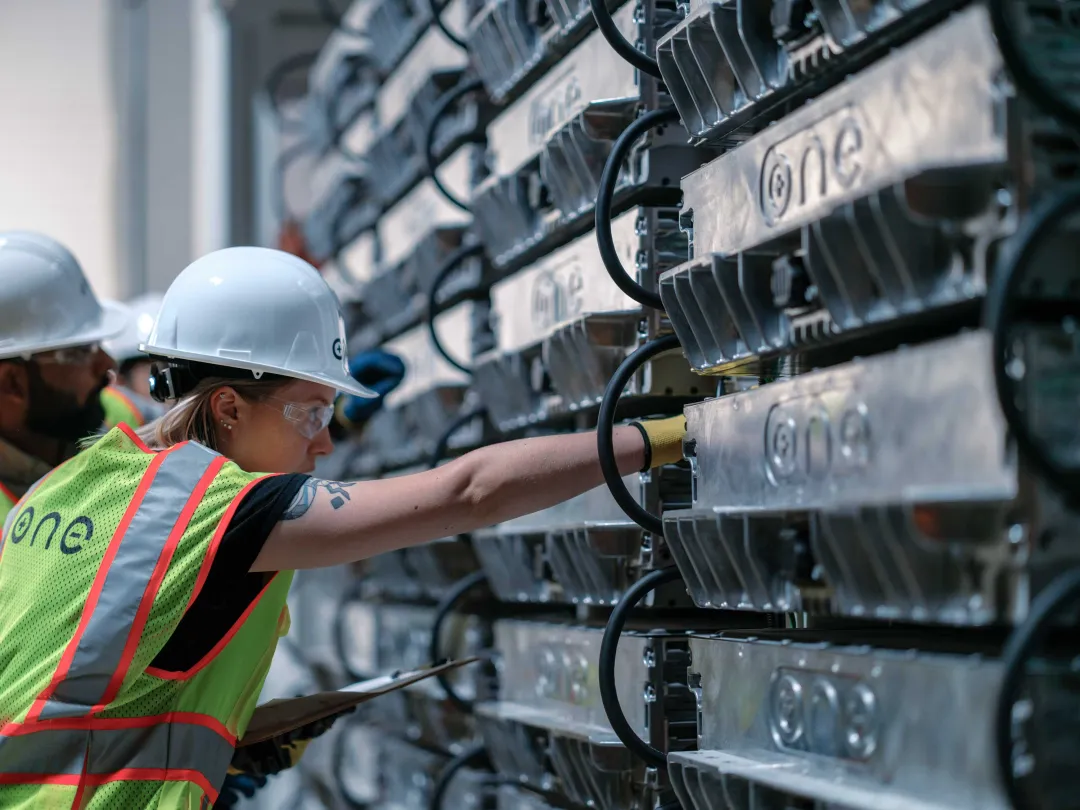
It has never been an easy path for battery startups operating within the United States. Over the past two decades, the graveyard of U.S. battery companies has steadily outgrown its roster of success stories. Constantly shifting federal policies, volatile capital markets, and fierce global competition have routinely forced domestic energy storage ventures to shutter their doors before ever reaching commercial scale.
Yet, survival is sometimes achieved against long odds. Our Next Energy, widely known as ONE, has weathered multiple near-death experiences and
is now preparing to go public through a special purpose acquisition company (SPAC) merger, the company exclusively told TechCrunch.
According to ONE, the transaction values the company at $600 million on a pre-money basis. The business combination with Wen Acquisition Corp. is projected to generate $400 million in gross proceeds, provided there are no shareholder redemptions. Once the deal is finalized, the newly combined entity is expected to trade on the Nasdaq stock exchange under the ticker symbol "ONEE," carrying a pro forma implied equity value of $1 billion.
Financial tracking data from PitchBook reveals that ONE has raised a cumulative $483 million over the years, reaching a peak private valuation of $1.3 billion at one point in its history. Furthermore, the company has secured tens of millions of dollars in economic development incentives tied directly to capital investments and job creation milestones in the state of Michigan.
The Origins of Dual-Chemistry Innovation
ONE was founded by Mujeeb Ijaz, a seasoned veteran of the automotive industry with engineering stints at both Ford and Apple. Ijaz originally conceptualized and designed a proprietary system enabling electric vehicles to draw electrical power simultaneously from two distinct battery chemistries.
In its initial configuration, the startup paired lithium-iron-phosphate (LFP) technology with an exotic, manganese-rich chemical composition. This dual-chemistry architecture allowed each component to operate where it was structurally strongest. The durable, stable LFP chemistry handled everyday driving needs, while the more fragile yet remarkably energy-dense manganese-rich chemistry stepped in to support long, infrequent road trips. During early testing, an initial prototype vehicle equipped with this technology successfully traveled more than 600 miles on a single battery charge.
However, broader market realities soon intervened. The electric vehicle market failed to accelerate at the breakneck pace anticipated by optimistic industry forecasts, and automakers increasingly demanded lower component pricing, frequently sourcing cheaper alternatives from overseas markets like China.
These converging pressures ultimately derailed ONE’s initial efforts to secure a Series C funding round in late 2023. Facing severe capital constraints, the startup was forced to execute significant workforce reductions and eventually walk away from its commercial lease for a planned $1.6 billion manufacturing plant in Michigan.
Leadership Turmoil and Strategic Realignment
The mounting financial strain and operational setbacks resulted in the ouster of Ijaz as chief executive officer in December 2023. That leadership vacuum persisted until March 2025, when Ijaz returned to the helm of the company following the successful closure of a fresh funding round, which was co-led by an investment firm managed by his brother.
During Ijaz’s initial tenure as CEO, critics frequently argued that the company spread its resources too thin by attempting to develop multiple complex product lines simultaneously, a departure from the laser-focused approach typically favored by early-stage hardware startups. Upon resuming leadership duties, Ijaz signaled a dramatic course correction, announcing that ONE would officially step back from the automotive market and pivot its primary operational focus toward grid-scale energy storage solutions.
ONE was far from alone in making this strategic retreat. American automakers had initially shared similarly bullish projections regarding domestic EV adoption, pouring billions of capital into massive battery factories and localized supply chains. When domestic consumer demand failed to match the rapid expansion witnessed in China or Europe, these companies were left with immense excess manufacturing capacity.
The electrical grid quickly emerged as the most viable outlet for this underutilized production capacity, particularly as the rapid proliferation of artificial intelligence data centers began placing unprecedented strains on utility infrastructure. Both Ford and General Motors subsequently announced their own dedicated energy storage ventures targeting the grid and commercial data center markets.
Targeting Niche Markets: Defense and Rail
Many contemporary grid-scale battery manufacturers rely heavily on LFP chemistry, which offers inherent safety advantages and lower production costs compared to the chemistries utilized in most American consumer EVs. This shift presented a natural opportunity for Ijaz, who more than a decade ago led the automotive division at A123 Systems, the pioneering company that originally commercialized LFP chemistry.
As Ijaz evaluated the broader landscape, he identified additional high-value verticals beyond stationary grid storage, specifically pointing toward the defense sector and the railway industry.
The pivot toward defense applications is a well-trodden path for many modern American battery developers. Because defense contracts require strict domestic supply chain compliance, Chinese manufacturers are entirely locked out of the market. This regulatory shield allows domestic producers to command significantly higher profit margins, even though the total addressable market volume is much smaller than the consumer automotive sector.
Railways, however, represented an unconventional target for a battery startup. In discussions regarding the company’s trajectory, Ijaz noted that ONE is finding considerable commercial traction within the rail industry. The company has successfully developed a hybrid locomotive powered by a 2.8 megawatt-hour battery system, alongside a smaller "micro-hybrid" configuration designed to accelerate diesel engine startup times, functioning similarly to start-stop systems found in modern combustion-engine passenger vehicles.
According to customer data cited by Ijaz, operators deploying these hybrid systems are experiencing a 50% improvement in diesel fuel consumption efficiency, representing substantial operating cost savings for freight and passenger rail operators.
Balancing Business Lines Under New Market Realities
While operating three distinct business lines could theoretically signal a return to the unfocused corporate culture that plagued the company in its earlier years, Ijaz insists that the expansion into defense and rail is strictly rooted in bottom-line pragmatism. Grid-scale battery customers often behave much like automotive buyers, remaining willing to purchase lower-cost components from Chinese suppliers whenever pricing considerations outweigh domestic origin.
Ijaz explained that while building a purely grid-focused enterprise would have been ideal, aggressive international pricing and shifting tariff structures frequently diverted potential customers toward foreign alternatives. Consequently, management concluded that the business required more durable, protected markets that genuinely valued an entirely American-made battery supply chain.
Today, ONE maintains an operational pack assembly facility located in Novi, Michigan. The plant possesses the capacity to assemble battery packs from individual cells at an annualized rate of 3 gigawatt-hours. The facility utilizes a mix of cells sourced from both domestic and international suppliers, alongside proprietary cells produced at a smaller nearby factory, which is currently undergoing upgrades to scale production to 50 megawatt-hours annually.
Internal investor documentation reviewed by TechCrunch indicates that ONE has structured its primary business focus around defense and rail applications. Drones and underwater submersibles represent the core of what the company defines as a $16.2 billion defense market. Defense-focused data infrastructure adds another $4.1 billion to the defense segment, serving as the primary outlet for the company’s grid-scale technology. Meanwhile, the rail industry vertical is projected to represent a separate addressable market valued at $28.2 billion.
Although these specialized markets are substantial, they remain relatively modest when compared to the broader electric vehicle sector, which is estimated to be worth roughly $73 billion today and could expand up to $200 billion by the end of the decade, according to market research compiled by Grand View Research. For the current fiscal year, ONE anticipates generating $30 million in total revenue, with expectations to double that figure the following year. The startup reports that it currently holds $200 million in binding, multi-year supply contracts secured with railway operators and defense contractors.
The Path Forward
Despite shifting its immediate commercial focus, ONE has not permanently closed the door on the automotive sector. Ijaz acknowledged that while automotive supply remains a hyper-competitive race to the bottom regarding operating margins, the company remains open to evaluating future vehicle battery contracts under strict financial discipline rather than pursuing volume at any cost.
The core of ONE’s ongoing commercial pitch centers on compliance with federal foreign entity of concern (FEOC) restrictions. Because federal procurement rules prohibit the U.S. government from acquiring batteries manufactured in China or built using minerals sourced from China-controlled supply chains, domestic suppliers positioned outside those regulatory boundaries hold a distinct advantage.
Whether public market investors ultimately embrace ONE’s strategic vision will hinge on their confidence that the company has successfully moved past its tumultuous operational history and established disciplined execution. Navigating the increasingly cutthroat global battery industry will demand both resilience and precise strategic focus.
| Source | : | Finance Poetry |
| Author | : | rifanmuazin |
| Editor | : | Finance Poetry Editorial Team |